


More news on this day
Tourism revenue at Cambodia’s Angkor Archaeological Park is losing momentum, with newly released figures showing declining ticket sales as economic pressures, renewed border tensions with Thailand, patchy air connectivity and traveler safety concerns weigh on demand for one of Southeast Asia’s most iconic heritage sites.
Get the latest news straight to your inbox!
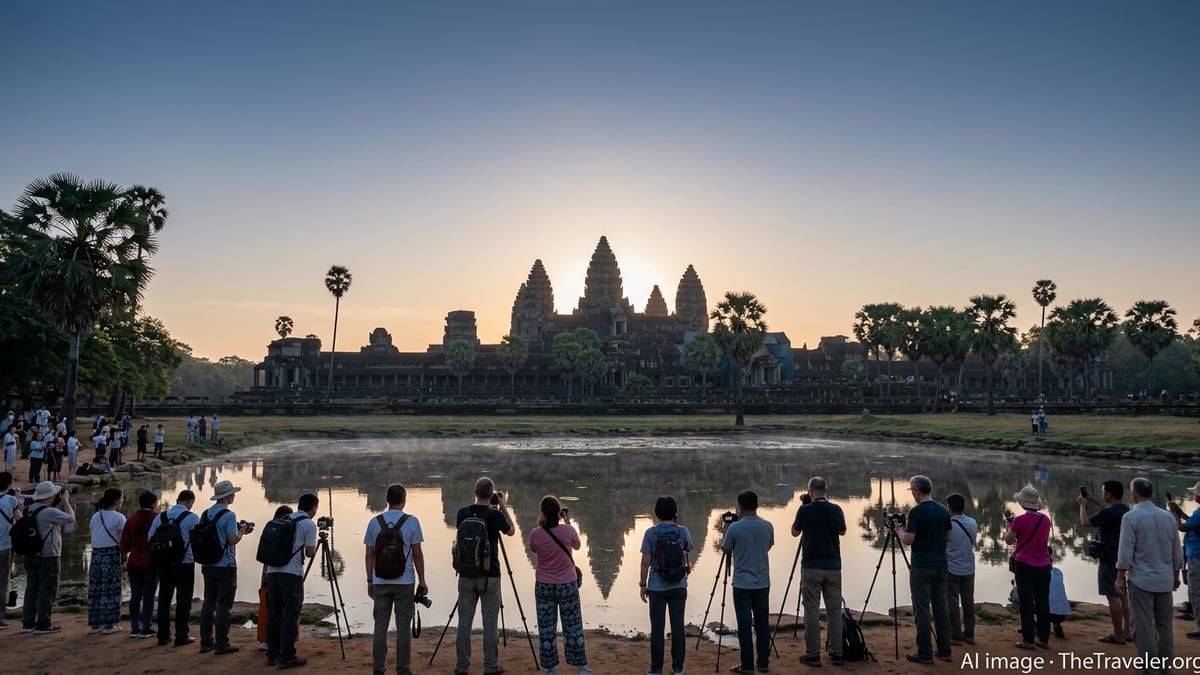
Revenue Momentum Weakens After Post-Pandemic Rebound
After a rapid rebound in 2023 and 2024, Angkor’s visitor economy is starting to stall. Angkor Enterprise data compiled in recent annual reports and financial disclosures shows that ticket revenue from the Angkor Archaeological Park and related sites reached roughly 49.5 million dollars in 2024, but slipped to about 44.7 million dollars in 2025, a decline of around 6.5 percent year on year.
Published coverage of Angkor Enterprise’s 2025 results indicates that about 955,000 foreign tourists purchased passes for Angkor that year, generating close to 45 million dollars in state revenue. While still far above the trough during the pandemic, both visitor volume and receipts remain significantly below 2019 levels, when several million international travelers visited the complex and ticket income was substantially higher.
The slowdown has become more visible in recent months. Local media reports citing Angkor Enterprise figures for early 2026 describe a fall of roughly one third in ticket sales for January and February compared with the same period a year earlier. That reversal comes despite broader growth in Cambodia’s nationwide tourism receipts, suggesting that the Siem Reap heritage zone is under particular pressure.
Officials have previously highlighted new airports and infrastructure as catalysts for Angkor’s recovery, but current revenue trends point to a more complicated picture in which geopolitical tensions, regional competition and changing traveler behavior are undercutting those gains.
Border Tensions With Thailand Rattle Regional Travel
Escalating friction along the Cambodia–Thailand frontier has emerged as a key drag on demand. Analytical papers by regional research institutes and multilateral agencies in 2025 and 2026 describe an armed border crisis that flared repeatedly, disrupting cross-border trade, displacing communities and chilling sentiment in nearby tourism hubs.
Thailand was one of Cambodia’s largest tourism source markets prior to the latest crisis, with millions of trips in both directions and busy land crossings feeding visitors toward Siem Reap and Angkor. As military incidents multiplied along contested stretches of the border in mid and late 2025, published commentary from economic observers warned that hotel occupancy in gateway towns and cross-border casino resorts had slumped, while tour operators reported cancellations and reroutings away from affected provinces.
Socioeconomic assessments released this year estimate double-digit percentage declines in visitor flows through some checkpoints following closures or restrictions associated with the fighting. Although major Cambodian tourist centers such as Phnom Penh and Siem Reap are situated well away from active conflict zones, the persistent headlines about clashes, ceasefires and renewed skirmishes appear to have dented confidence among regional travelers who rely on inexpensive overland routes.
Travel forums and trip reports from mid-2026 echo that unease, with some would-be visitors questioning whether to proceed with plans to combine northern Thailand and Angkor in a single itinerary. The result is a visible cooling in one of Angkor’s most important short-haul markets at a time when competition for regional tourists is intensifying.
Flight Disruptions and Air Connectivity Challenges
Air links to Siem Reap have also struggled to keep pace with demand seen elsewhere in Southeast Asia. Cambodia opened the Siem Reap Angkor International Airport in late 2023, replacing the old in-town facility with a larger greenfield hub designed to accommodate more international services. Yet travelers’ accounts and aviation data presented at regional air traffic meetings suggest that flight volumes into the new airport have remained thin, with some services operating at relatively low load factors.
Industry presentations prepared for Asia-Pacific air navigation groups show that while Cambodian air traffic has been recovering since 2022, growth has been uneven. Overflights have picked up, but scheduled international movements to tourist gateways like Siem Reap are still below pre-pandemic levels. Airlines have been cautious about deploying capacity amid uncertain demand, high fuel costs and shifting travel patterns toward neighboring countries that offer more extensive route networks.
Intermittent disruptions have compounded those structural issues. Travelers posting on public forums describe delays, limited options for direct connections from major hubs and occasional last-minute schedule changes that complicate itineraries built around Angkor sunrise visits or short regional breaks. With competing destinations such as Bangkok, Phuket, Danang and Bali served by dense webs of low-cost and full-service carriers, Siem Reap’s relative scarcity of convenient flights makes it easier for cost-conscious visitors to choose alternatives.
These connectivity challenges feed directly into Angkor’s revenue picture. Fewer flights and less reliable schedules translate into lower arrival numbers and shorter stays, which in turn reduce both ticket revenues for the park and broader tourism spending in hotels, restaurants and local transport.
Economic Pressures and Shifting Traveler Preferences
Macroeconomic headwinds are adding to the strain. International economic reports released in 2025 and 2026 highlight elevated living costs and tighter household budgets across key long-haul markets, particularly in Europe and parts of North America. Long-distance trips to Southeast Asia, which require substantial airfare outlays, are among the first to be postponed when consumers cut discretionary spending.
At the same time, Cambodia faces intensifying competition from regional neighbors that have rolled out more aggressive visa policies, expanded low-cost connectivity and large-scale marketing campaigns. Vietnam, for instance, has reported record international arrivals and strong tourism revenue growth, buoyed by expanded air links and relaxed entry rules that make it easier to combine beach resorts, cultural sites and urban experiences in a single trip.
Angkor remains a powerful global brand, but published analysis from tourism consultants notes that many visitors are opting to shorten their time in Cambodia, folding a quick temple visit into longer itineraries focused on Thailand or Vietnam. That shift reduces the per-trip revenue Angkor can capture, especially as more travelers seek to minimize costs by choosing one- or two-day passes rather than extended multi-day tickets.
Domestic economic pressures inside Cambodia also play a role. The tourism sector is a significant contributor to national income, and a prolonged slump in Angkor-related earnings risks constraining investment in conservation, infrastructure and marketing programs that could otherwise bolster the site’s appeal and resilience.
Visitor Safety Concerns and Reputation Risks
Beyond hard numbers, perception has become a critical fault line for Angkor’s tourism prospects. While most international travel advisories continue to regard major Cambodian tourist centers as accessible, updated guidance from several governments urges caution near the Thai border, citing armed clashes, landmine contamination and uncertain ceasefire arrangements. These advisories do not target Angkor specifically but nonetheless color how potential visitors view the country as a whole.
Travel discussion boards over the past year show a noticeable rise in questions about safety, human trafficking rumors and the reliability of border crossings. Some contributors describe quiet streets around Siem Reap and smaller tour groups at temples, interpreting the subdued atmosphere as evidence that others are staying away. Such anecdotal reports can amplify apprehension far beyond the underlying risk levels, particularly when combined with viral social media posts.
Reputation risks are heightened by the complexity of the current situation. Economic assessments point out that the conflict with Thailand is geographically confined and subject to periodic ceasefires and diplomatic interventions, yet the nuances of those developments are often lost in global coverage that reduces the story to recurring border clashes. In an environment where travelers have abundant alternatives, even a modest perception gap can translate into meaningful shifts in booking patterns.
For Angkor, the convergence of weaker regional demand, fragile air connectivity, economic uncertainty and persistent safety questions is now visible in the revenue ledger. Whether the park can stabilize ticket income in the coming seasons will depend on a combination of calmer borders, improved access, targeted promotion and renewed confidence among travelers that Cambodia’s signature attraction remains both compelling and accessible.