


More news on this day
Adora Magic City has completed China’s first cruise-to-nowhere itinerary from Shanghai, a three-day sailing that remained entirely at sea and is being seen as a new phase for the country’s cruise market.
Get the latest news straight to your inbox!
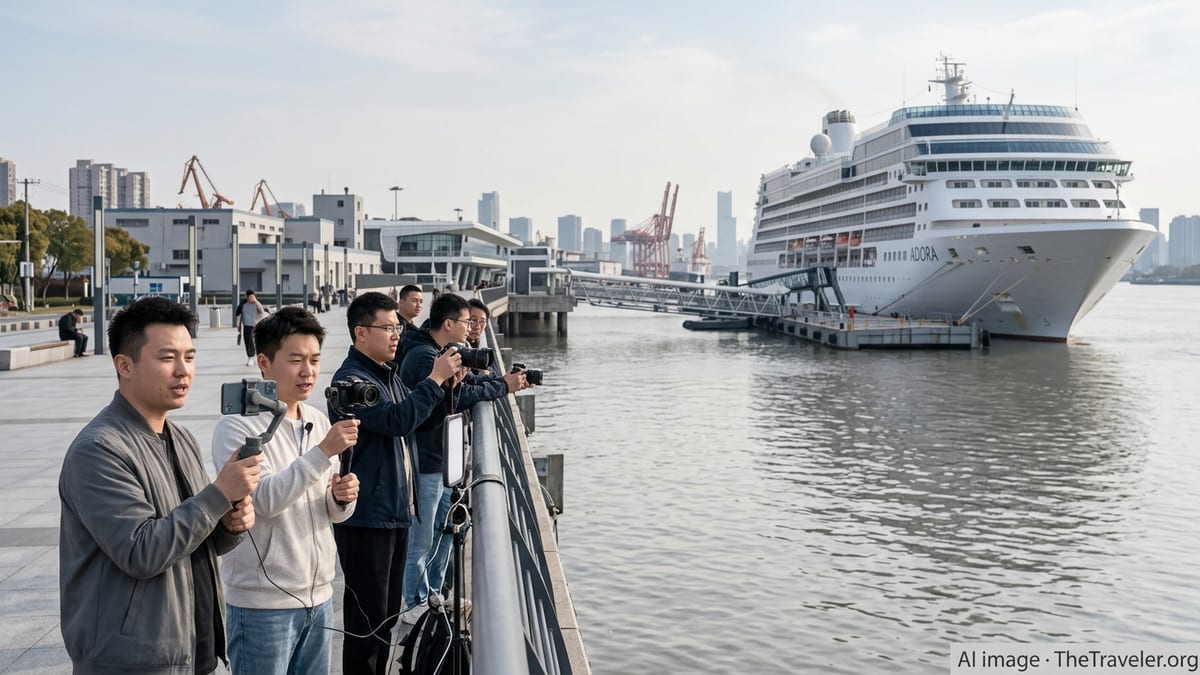
A Milestone Sailing With No Port Calls
The recently completed voyage departed from Shanghai Wusongkou International Cruise Terminal on June 6, 2026, and returned to the same homeport after three days at sea. Publicly available information describes it as China’s first cruise-to-nowhere itinerary, with Adora Magic City sailing exclusively on the high seas without making any intermediate calls.
The 135,000-gross-ton ship, operated by Adora Cruises and widely noted as China’s first domestically built large cruise ship, has previously focused on regional routes to Japan and South Korea. The latest sailing differs from those earlier itineraries by treating the vessel itself as the sole destination, with passengers spending the full duration on board.
Reports indicate that the voyage was timed for a weekend pattern, offering a three-day, two-night experience aimed at short-break travelers from Shanghai and the broader Yangtze River Delta. Industry coverage suggests that if demand holds, the concept could be repeated as part of Adora’s regular deployment from the city.
The cruise-to-nowhere format has been used in other markets during periods of travel restriction or when operators wish to emphasize onboard amenities. In this case, observers see the successful completion of the first such voyage by a Chinese-built ship as symbolically important for the country’s rapidly expanding cruise sector.
Turning the Ship Into the Destination
According to published coverage in Chinese and international outlets, the new itinerary is being framed as a distinct product rather than a reduced version of traditional cruising. With no shore excursions or port logistics, the focus shifts entirely to entertainment, dining, retail, and leisure activities on board Adora Magic City.
The ship is configured with multiple restaurants, show lounges, retail streets, family facilities, and large outdoor public decks, features that are central to the appeal of a voyage spent entirely at sea. By concentrating guests on the vessel for the full length of the journey, the operator is effectively testing whether onboard offerings alone can sustain interest among first-time and repeat Chinese cruisers.
Commentary in state-linked and trade publications notes that domestic policymakers view cruise-to-nowhere itineraries as a way to stimulate consumption in services such as high-end dining, duty-free style retail, and entertainment. The format keeps spending within the national jurisdiction for the duration of the trip while still providing passengers with an international-style vacation environment.
Industry observers also point out that the model aligns with broader trends in global cruising, where some newbuilds are designed to function as “resort islands at sea,” with elaborate water parks, themed districts, and immersive shows that can occupy passengers for multiple consecutive sea days.
Adora Magic City’s Rapid Operational Build-Up
The successful no-port sailing follows an intensive build-up of operations since Adora Magic City’s commercial debut in early 2024. Public data and previous reporting indicate that the ship has completed well over one hundred itineraries, and by early 2026 it had already carried several hundred thousand passengers on regional cruises.
The vessel has gradually expanded its footprint beyond Shanghai, adding coastal operations from ports such as Qingdao and building a network of short international routes to destinations including Busan and Jeju. This history of regular, high-occupancy sailings is seen as providing the operational foundation needed to experiment with more specialized products like the new cruise-to-nowhere.
Adora Cruises itself has been positioning as a domestically focused brand aimed at anchoring China’s presence in the global cruise industry. Alongside Adora Magic City, the company has introduced additional tonnage and is advancing newbuild projects that are expected to enter service over the next several years, suggesting that the line will have flexibility to diversify itineraries and test distinct market segments.
Analysts following the Asian cruise market note that the completion of the first no-port voyage comes at a time when capacity in East Asia is gradually rebuilding. For Adora Magic City, the milestone adds to a string of benchmarks that include its delivery as the country’s first large homegrown cruise vessel and its role in restarting international sailings for Chinese passengers.
Implications for China’s Domestic Cruise Market
The introduction of a cruise-to-nowhere product is being widely interpreted as part of a broader strategy to deepen the domestic customer base for cruising. By offering a shorter, more contained experience that departs from a major metropolitan area, operators are able to target travelers who may not yet be ready for longer or more distant itineraries.
Reports from Chinese-language business and tourism media emphasize that such voyages can serve as an entry point for first-time cruisers, allowing them to test the experience without concerns about immigration procedures, multiple port formalities, or extended time away from work. For the operator, a no-port pattern also enables more predictable scheduling and can simplify compliance and operational planning.
Shanghai, with its large catchment area and existing cruise infrastructure at Wusongkou, is seen as an ideal testing ground. If the model proves commercially successful, observers expect similar products could be introduced from other Chinese ports as vessels and terminal facilities come online.
More broadly, the pioneering sailing by Adora Magic City is being viewed as evidence of increasing confidence in the country’s ability to design, build, and profitably deploy large modern cruise ships. While the voyage covered no new destinations on the map, its completion is likely to feature prominently in discussions about how China will shape the next phase of cruise development in Asia.
A Test Case for Future At-Sea Itineraries
With the first no-port voyage now completed, attention is turning to how frequently Adora Cruises will operate similar itineraries and how passengers will respond over time. Early coverage frames the sailing as an experiment that could inform pricing, onboard programming, and marketing strategies for subsequent deployments.
Analysts note that cruise-to-nowhere products can be sensitive to economic conditions and consumer sentiment. When discretionary spending is strong, short at-sea breaks may appeal to urban professionals and families seeking quick getaways. In more challenging periods, however, demand could shift back toward itineraries that combine shipboard leisure with visits to recognizable destinations.
In the near term, the voyage by Adora Magic City provides a high-profile demonstration of what a domestically built Chinese cruise ship can deliver when the entire travel experience is concentrated on board. As additional newbuilds enter the fleet and other regional operators evaluate similar concepts, China’s first completed cruise-to-nowhere is likely to be seen as an early reference point for at-sea-only itineraries in Asia.