


More news on this day
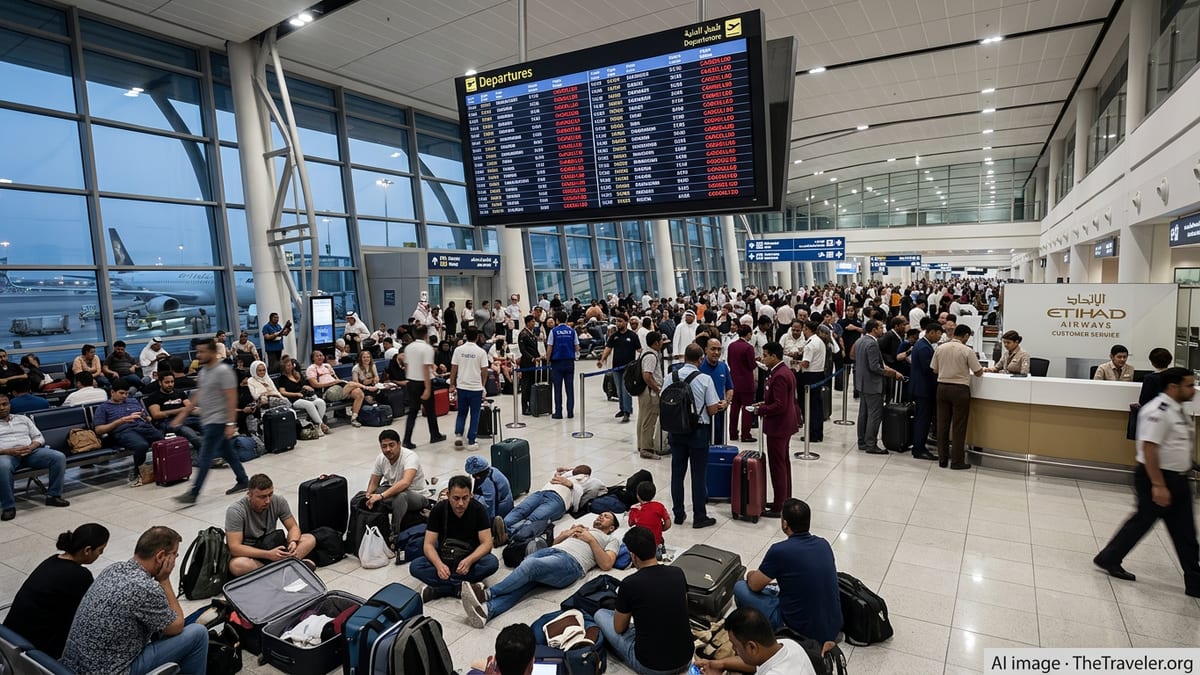
UAE travellers face another day of patchy flight schedules on July 25, 2026, as Emirates, Etihad Airways, flydubai and Air Arabia adjust services amid ongoing regional disruption affecting Kuwait, Bahrain and parts of Saudi Arabia.
Get the latest news straight to your inbox!
Latest status for Emirates, Etihad, flydubai and Air Arabia
Publicly available airport departure boards and regional media reports indicate that major UAE carriers are operating broadly normal schedules on core routes today, but with targeted cancellations and timetable changes on services to Kuwait, Bahrain and selected Saudi Arabian airports. The pattern follows several days of intermittent disruption linked to airspace constraints and operational pressures across the northern Gulf.
Coverage from regional business outlets shows that Emirates has cancelled some rotations to Kuwait and Bahrain in recent days, citing operational reasons, while maintaining long haul and key regional services from Dubai International Airport on schedule. Other destinations, particularly in Europe and South Asia, appear largely unaffected, although passengers are being advised to reconfirm departure times before travelling to the airport.
Etihad Airways is following a similar approach from Abu Dhabi, where most long haul flights are operating while certain Gulf services remain disrupted. Reports summarising airline advisories note that Etihad’s flights between Abu Dhabi’s Zayed International Airport and Kuwait have faced rolling cancellations and schedule changes over the past week, with some suspensions extended through this weekend.
Low cost carriers flydubai and Air Arabia, which operate dense networks into secondary Gulf and Saudi cities, continue to report a mix of cancellations and rescheduled flights on routes such as Dubai to Abha and Sharjah to Abha. Local media and airline operational updates show that Bahrain services have been particularly affected for these carriers, even as many other regional routes proceed as planned.
Focus on Kuwait, Bahrain and Saudi Arabia disruptions
Travel industry coverage this week has highlighted Kuwait and Bahrain as the main pressure points for UAE airlines. News outlets in the Gulf region report that some UAE carriers extended earlier flight suspensions to both countries, with services intermittently cancelled or consolidated as airlines react to capacity constraints and evolving security assessments.
For Kuwait, Etihad’s Abu Dhabi route has been one of the most visibly affected, with repeated cancellations of flights EY653 and EY654 on multiple days in July. Reports indicate that similar patterns have been seen on certain Emirates and Air Arabia flights serving Kuwait, though schedules have not been uniformly suspended and some services continue to operate.
In Bahrain, local news coverage and Bahrain International Airport’s own listings show a mixed picture. Several Emirates and Etihad flights were cancelled on July 24 and July 25, while other carriers, including Gulf Air, maintained largely regular operations. flydubai and Air Arabia services into Bahrain have also seen adjustments, with select flights cancelled even as others depart as scheduled.
Saudi Arabia’s Abha International Airport remains another hotspot. Regional reporting notes that flydubai services between Dubai and Abha and certain Air Arabia flights between Sharjah and Abha have faced ongoing disruption this month. Other Saudi destinations from the UAE, including Jeddah and Riyadh, appear more stable, although travellers are still being advised to monitor updates closely.
Operational context and UAE airspace management
The current wave of schedule changes comes only a few months after a broader period of disruption in March 2026, when regional airspace closures prompted temporary suspension of many flights into and out of the UAE. At that time, all four major UAE based carriers cut services across multiple routes, gradually rebuilding schedules as air corridors reopened.
In response to those earlier events, the UAE’s General Civil Aviation Authority issued updated guidance on how the country’s airspace is managed during severe disruptions. The circular describes procedures that allow air traffic control to halt departures from certain regional airports bound for UAE destinations when capacity is constrained, in order to avoid airborne holding and diversions.
This framework remains relevant to today’s situation. While there is no blanket closure of UAE airspace on July 25, 2026, the same capacity management tools can contribute to short notice changes on specific high density routes, especially in the northern Gulf. Airlines then respond with targeted cancellations, retiming of flights and equipment swaps to balance demand with available slots.
Industry data compiled by aviation analytics platforms also suggests that, despite the disruption, overall operations by Emirates, Etihad, flydubai and Air Arabia across their global networks have recovered to near pre crisis levels in recent months. The impact is therefore concentrated on a limited number of gateways rather than a system wide shutdown.
Advice for travellers flying today
For passengers with imminent departures from Dubai, Abu Dhabi or Sharjah, travel experts and airport information channels are emphasising the importance of checking flight status repeatedly on the day of travel. Schedules are generally published in advance, but several cancellations affecting Kuwait, Bahrain and Abha this week were only confirmed closer to departure time.
UAE based carriers continue to advise passengers to register accurate contact details in their bookings so they can receive email or SMS updates in case of last minute changes. Where flights are cancelled, standard options typically include rebooking on the next available service or requesting a refund, depending on the fare rules and the specific airline policy.
Travellers connecting through the UAE from other regions are being urged to pay particular attention if their itineraries include onward segments to Kuwait, Bahrain or southern Saudi Arabia. Reports from travel forums show that many long haul flights into Dubai and Abu Dhabi are operating normally, but missed or cancelled short haul connections can still disrupt overall journeys.
Passengers transiting with tight layovers are being encouraged to consider allowing extra time where possible, especially if travelling with checked baggage. Those with flexible dates may choose to avoid the most affected airports for the next few days, or reroute through alternative hubs in the region that are currently experiencing fewer disruptions.
What to watch over the coming days
Looking ahead, observers of regional aviation expect a rolling pattern of adjustments rather than a sudden return to completely normal operations. Airline timetables for the coming week remain published, but the recent record suggests that some services to Kuwait, Bahrain and Abha may continue to be altered at short notice as the situation evolves.
Travel industry analysts note that the four main UAE carriers have become adept at rapidly rebuilding schedules after shocks, as seen following earlier disruptions this year. As airspace conditions stabilise, more suspended flights are likely to be reinstated, often starting with limited frequencies before scaling back up to full service.
At the same time, aviation authorities in the UAE and neighbouring states are keeping capacity management procedures in place so they can be activated quickly if further bottlenecks emerge. This could mean intermittent holds on departures to certain airports even during periods when overall traffic appears close to normal.
For now, the most practical approach for travellers remains close monitoring of bookings and awareness that flight plans involving Kuwait, Bahrain or Abha may be more vulnerable to change than other routes. With the peak summer travel period under way, demand for seats on unaffected flights out of the UAE remains strong, making early rebooking especially important if a cancellation does occur.