


More news on this day
Aegean Airlines has reported a 5 percent increase in consolidated revenue and a 6 percent rise in passenger numbers for 2025, underscoring both the carrier’s resilience and the continued expansion of Greece’s tourism sector in a still-challenging European aviation market.
Get the latest news straight to your inbox!
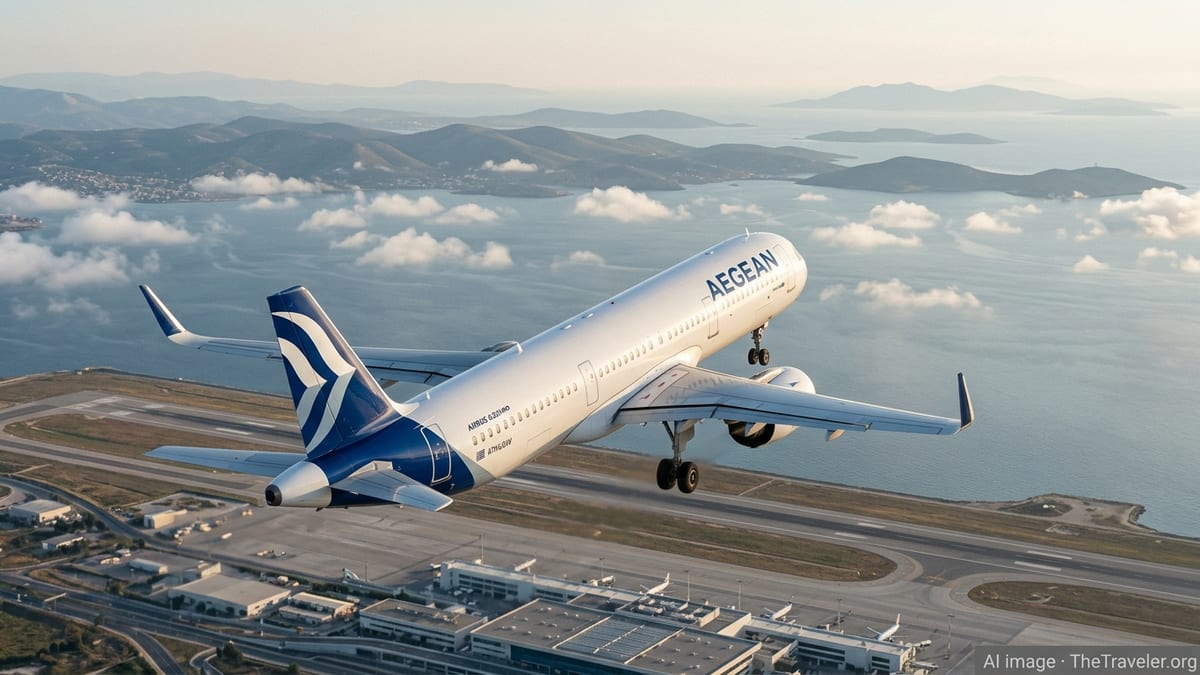
Solid 2025 Results After Consecutive Record Years
Publicly available 2025 results show that Aegean’s consolidated revenue reached about 1.86 billion euros, a 5 percent increase compared with 2024. Passenger traffic climbed to approximately 17.3 million travelers, nearly 1 million more than the previous year, reflecting a 6 percent uplift in volumes across the network.
The performance built on already strong figures from 2024, when Aegean carried 16.3 million passengers and had fully recovered and exceeded pre-pandemic levels of demand. The 2025 outcome indicates that growth has shifted from post-crisis rebound to a pattern of more incremental, sustainable expansion.
Reports indicate that profitability also improved, with net profit rising at a faster pace than revenue. This points to stable yields and operating discipline at a time when many European carriers have faced pressure from rising fuel prices, wage inflation, and air traffic control disruptions.
Industry coverage notes that the airline’s ability to deliver growth on top of record comparatives sets it apart from some regional peers that have seen demand normalize more quickly after the initial surge in post-pandemic travel.
Capacity Expansion and Network Strategy Drive Passenger Gains
Aegean’s 6 percent increase in passengers in 2025 was underpinned by a similar rise in capacity, with available seats reported at around 21 million for the year. This represented an expansion of roughly 6 percent compared with 2024, signaling a deliberate strategy to add supply in line with demand rather than pursue aggressive overcapacity.
According to published coverage, the additional seats were spread across both domestic and international routes, with particular emphasis on high-demand leisure markets feeding into Greek destinations. The airline has continued to use its Athens, Thessaloniki, and other regional bases as gateways, connecting inbound tourists from Europe and the Middle East with popular islands and secondary cities.
Analysts highlight the deployment of larger and more fuel-efficient aircraft, notably Airbus A321neo jets, as a key factor in boosting capacity while controlling unit costs. By increasing the number of seats per flight and improving fuel efficiency, the carrier has been able to support higher passenger volumes without a proportional increase in operating expenses.
Traffic data published during 2025 indicated that growth was broad-based, with both domestic and international sectors contributing. Domestic routes benefited from an extended travel season and improving connectivity within Greece, while international services captured rising demand from core European source markets.
Tourism Sector Momentum Supports Continued Growth
The airline’s 2025 performance is closely tied to the broader strength of Greece’s tourism sector, which has become one of the country’s most important economic drivers. Recent industry analyses show that inbound tourism to Greece has remained robust despite macroeconomic uncertainty and geopolitical tensions in parts of the wider region.
Greece has benefited from its reputation as a safe, accessible, and relatively affordable Mediterranean destination, attracting both traditional European visitors and an increasing number of travelers from markets such as the Middle East. This has translated into strong demand for air connectivity to island and coastal destinations, particularly during an increasingly long summer season.
Reports from tourism bodies and airport operators point to record or near-record passenger flows through key Greek gateways during the peak months of 2025. Aegean’s role as the largest Greek carrier has positioned it to capture a significant share of this traffic, both through scheduled services and through cooperation with foreign airlines via codeshare and interline arrangements.
Observers note that the airline’s careful alignment of capacity with tourism trends has helped sustain load factors and support pricing, allowing Aegean to convert visitor demand into higher revenue without excessive discounting.
Resilience Amid Cost Pressures and Operational Challenges
While headline numbers for 2025 were positive, the year was not without challenges. Across Europe, airlines contended with volatile fuel prices, inflationary pressures on wages and airport services, and sporadic disruption linked to air traffic control issues and weather events. Publicly available commentary on Aegean’s results indicates that these headwinds also affected the Greek carrier.
Despite this backdrop, the company maintained growth in both revenue and passengers, suggesting a degree of resilience supported by strong demand and an increasingly efficient fleet. Industry analyses point to continued cost control measures, optimization of schedules, and prioritization of profitable routes as tools used to offset external pressures.
Comparisons with 2026 first-quarter figures, which show further though more moderate growth in revenue and passenger traffic, suggest that 2025’s performance was not a one-off spike but part of a broader, steady trajectory. However, rising fuel costs and foreign exchange impacts seen in early 2026 underline that the environment remains challenging.
For investors and industry watchers, Aegean’s 2025 results are being interpreted as evidence that focused regional carriers with strong home markets can still grow in a mature European aviation landscape, provided they remain disciplined on capacity deployment and operating costs.
Implications for Greece’s Connectivity and Future Tourism Growth
Aegean’s 5 percent revenue growth and 6 percent increase in passengers in 2025 carry broader implications for Greece’s connectivity and tourism development. As the country seeks to spread visitor flows beyond the peak summer months and into lesser-known destinations, reliable air links will be essential.
Published information on the airline’s route plans suggests continued expansion of seasonal and year-round services to secondary islands and regional airports, often in cooperation with local tourism stakeholders. This network diversification supports efforts to reduce pressure on overcrowded hotspots while distributing economic benefits more widely.
Looking ahead, analysts expect that a combination of fleet renewal, digital investments, and targeted route growth will shape Aegean’s strategy. The introduction of additional next-generation aircraft is likely to further improve fuel efficiency and environmental performance, an increasingly important consideration for both regulators and travelers.
As Greece positions itself to sustain tourism growth in the coming years, Aegean’s 2025 performance highlights the role of a strong national carrier in underpinning air access, supporting regional development, and maintaining the country’s competitiveness in the global travel market.