


More news on this day
Flight operations at Incheon International Airport near Seoul faced fresh disruption on May 27 as a key cancellation on the Seoul to Kuala Lumpur route left dozens of passengers stranded and contributed to delays rippling across interconnected services in Asia and beyond, according to real time flight tracking data and local media coverage.
Get the latest news straight to your inbox!
Key Seoul–Kuala Lumpur Service Abruptly Removed From Schedule
Publicly available flight tracking platforms for May 27 show that at least one regularly scheduled Incheon to Kuala Lumpur service was withdrawn from active operations at short notice, despite appearing in longer term timetables for the spring and summer 2026 season. The affected flight was part of a cluster of departures linking Incheon with Kuala Lumpur International Airport, a key Southeast Asian hub used by both point to point travelers and connecting passengers.
Timetable data for the current season indicates a dense pattern of operations between the two airports, including non stop services by Malaysia based and Korea based carriers scheduled across morning and late afternoon departure banks. The removal of a single widebody rotation on a busy travel day reduced capacity on the route by several hundred seats at once, tightening options for same day rebooking.
Information compiled from booking engines and flight status services suggests that the cancellation came after seats had already been sold well in advance, leaving many travelers to seek alternatives at the airport itself. With limited spare seats remaining on other carriers operating between Incheon and Kuala Lumpur on May 27, many disrupted passengers faced extended waits for re routing.
While no immediate technical or weather related cause was highlighted in early reporting, regional analysts note that long haul and medium haul Asian routes remain vulnerable to late operational changes this year due to aircraft rotations, crew availability, and evolving demand patterns.
Knock On Delays Across Regional and Long Haul Networks
The canceled Incheon–Kuala Lumpur leg did not affect only passengers booked on that specific flight. Kuala Lumpur International Airport serves as a regional gateway and connection point for services to South Asia, the Middle East, Australia, and secondary Southeast Asian cities, meaning missed connections cascaded through a wider network.
Travel data providers tracking minimum connection times between the two airports indicate that many passengers on the disrupted flight held onward tickets to other destinations, including evening departures from Kuala Lumpur. Once the original sector was removed from the schedule, those itineraries fell out of sequence, creating a wave of missed onward connections and reissued boarding passes.
Reports from airline and travel discussion forums on May 27 describe travelers attempting to piece together new routings through other hubs, including via Tokyo, Bangkok, and Singapore, as well as trying to secure seats on later Kuala Lumpur departures in the same 24 hour window. With late May traditionally marking a busy period for intra Asian travel and connecting long haul journeys, spare capacity on alternate routes appeared limited.
The disruption came amid a broader backdrop of schedule adjustments across Asia that have already seen some airlines trim or retime services in response to fuel prices and shifting demand. That environment has reduced the margin for error for passengers relying on tightly timed self connections, especially when a major hub like Incheon experiences even a single high profile cancellation.
Stranded Passengers Face Long Queues and Limited Alternatives
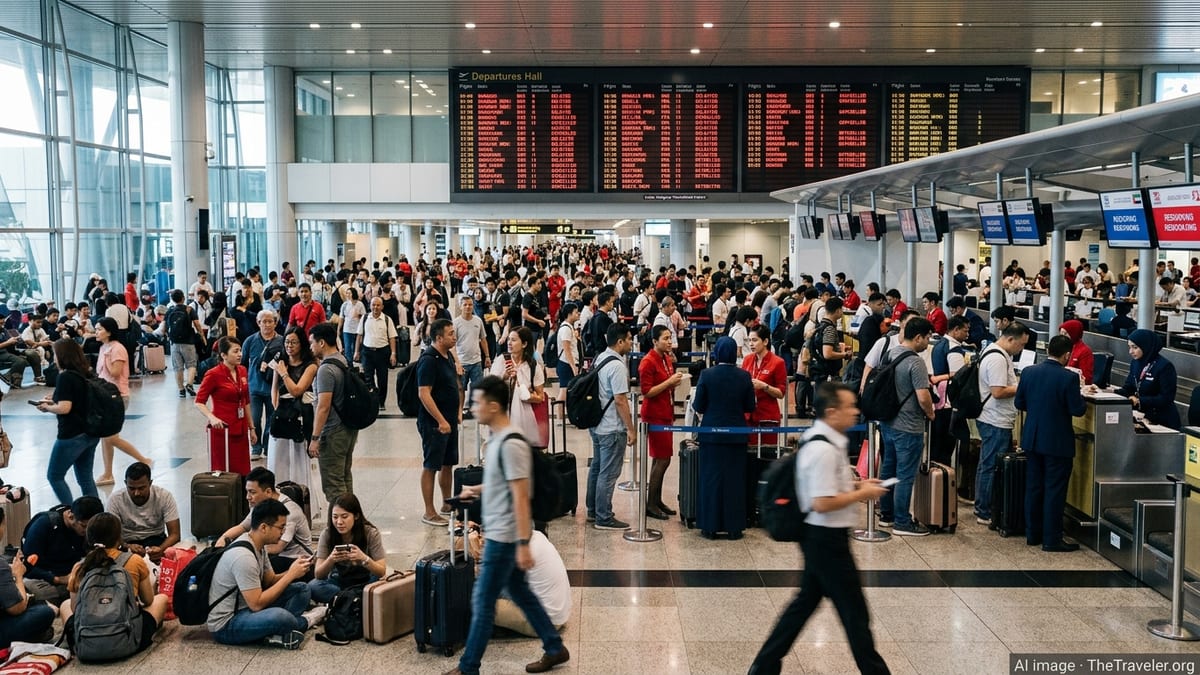
Local language media accounts and social media posts from Incheon on May 27 indicate that the cancellation generated significant queues at airline service counters, with disrupted passengers seeking rebooking options, accommodation, and updated information on their rights. Photographs shared publicly showed crowded check in areas and departure halls as travelers waited for clarification on revised itineraries.
Some passengers with flexible schedules were reportedly offered rerouting via other Northeast Asian hubs, adding several hours to overall travel time but preserving onward connections from Kuala Lumpur on subsequent days. Others were advised that they would need to depart a day later, depending on seat availability. For travelers holding non changeable or heavily restricted tickets, options were more constrained, leaving them reliant on any discretionary waivers applied in response to the disruption.
Travelers arriving into Incheon from domestic Korean cities and secondary international points were also affected if their itineraries relied on the canceled Kuala Lumpur connection. With same day alternatives scarce, some opted to return to their origin or accept overnight stays in airport hotels, adding extra accommodation and meal costs to their journeys.
Consumer advocacy groups in the region have repeatedly urged passengers to build longer connection buffers into itineraries, particularly when combining tickets across multiple carriers, noting that even a single cancellation at a major hub can leave travelers exposed to significant out of pocket expenses.
Operational Strain at One of Asia’s Busiest Hubs
Incheon International Airport is one of Asia’s largest passenger and cargo gateways, handling tens of millions of travelers each year across two main terminals and extensive satellite facilities. The airport hosts a mix of full service and low cost carriers linking South Korea to major destinations in Europe, North America, the Middle East, and the wider Asia Pacific region.
Infrastructure expansions in recent years, including terminal upgrades and enhancements to automated processing systems, have allowed Incheon to add new airlines and destinations. However, industry observers note that peak travel periods continue to test the resilience of ground handling and airline operations, particularly when irregular operations such as late cancellations or diversions occur.
The May 27 disruption on the Kuala Lumpur route underlined how quickly operations at a large hub can feel the strain from a single cancellation that affects a high demand city pair. Passenger flows through security, immigration, and transfer zones are carefully calibrated against expected departure volumes, and sudden changes can amplify congestion for both disrupted and unaffected travelers.
Sector analysts point out that while Incheon consistently ranks highly for efficiency and passenger satisfaction, ongoing schedule volatility across the region means that airports, airlines, and service providers must maintain robust contingency plans, especially on routes that connect to secondary hubs where alternative flights are less frequent.
Advice for Travelers Heading to or Via Kuala Lumpur
In the wake of the latest disruption, travel experts and online advisories are reiterating practical steps for passengers flying between Incheon and Kuala Lumpur, or using either airport as a transfer point. One recurring recommendation is to monitor flight status closely in the 24 to 48 hours before departure through airline channels and independent tracking tools, as late adjustments may not always be immediately reflected in all booking systems.
Travelers are also urged to consider purchasing itineraries on a single ticket when possible, particularly when onward long haul sectors are involved. Single ticket bookings generally provide stronger protection when irregular operations occur, compared with separate tickets that place more risk on the passenger if a misconnection arises from an earlier delay or cancellation.
For those with time sensitive plans, industry guidance suggests allowing longer than the minimum connection times advertised between arriving and departing flights in Kuala Lumpur and Incheon, particularly during peak hours and holiday periods. Building in an additional buffer can provide a margin of safety if earlier sectors experience moderate delays that fall short of full cancellations.
Finally, passengers affected by the May 27 disruption are being advised by consumer information outlets to retain all documentation related to their disrupted journey, including boarding passes, receipts for meals and accommodation, and any written notices provided at the airport. Such records can be important when pursuing refunds, travel insurance claims, or requests for goodwill compensation after operations return to normal.