


More news on this day
Peak summer air travel in Greece faced fresh disruption this weekend as around 85 flights operated by Aegean Airlines and Ryanair to and from Athens and Thessaloniki were reported delayed, creating long queues, missed connections and mounting frustration for passengers at two of the country’s busiest airports.
Get the latest news straight to your inbox!
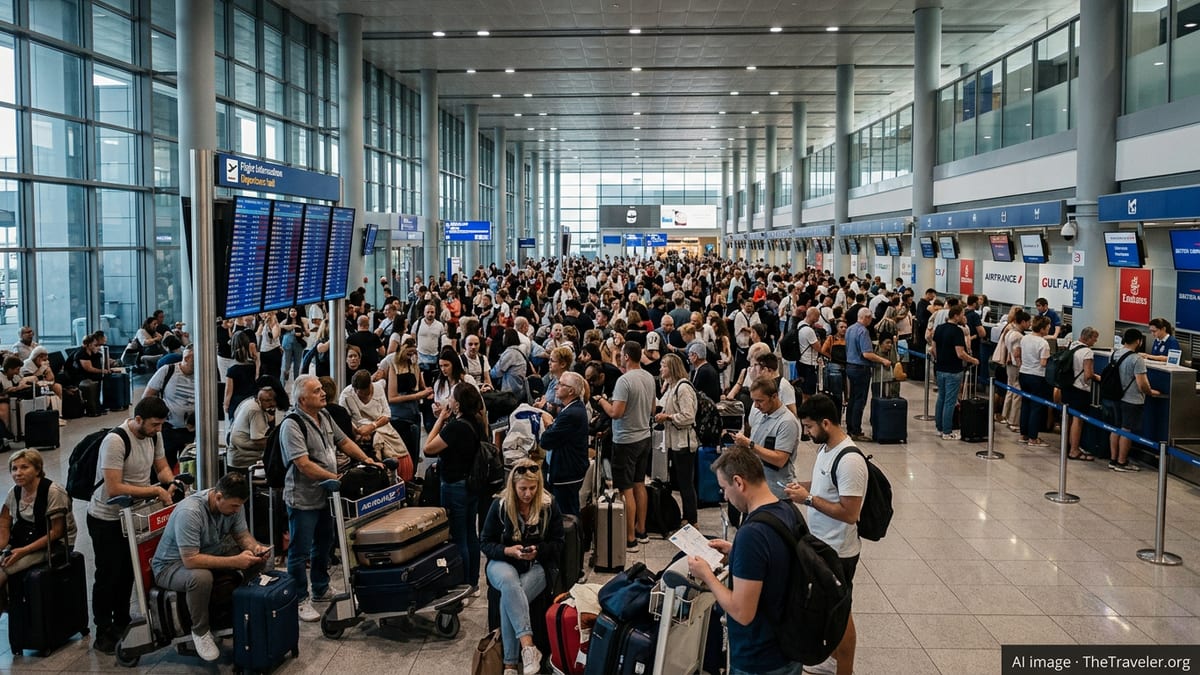
Widespread Delays at Athens and Thessaloniki Hubs
Athens International Airport and Thessaloniki’s main airport, two key gateways for domestic and international traffic in Greece, saw a sharp spike in delayed departures and arrivals involving Aegean Airlines and Ryanair. Publicly available tracking data and local coverage indicate that roughly 85 flights operated by the two carriers were affected over a concentrated period, with delays often extending well beyond an hour.
The disruptions hit at a time when Greek airports are handling some of their heaviest traffic of the year, with July holiday demand pushing daily movements close to or above pre-pandemic peaks. Aegean, Greece’s flag carrier and the dominant airline at both airports, and Ryanair, a major low-cost operator on domestic and regional routes, together account for a large share of daily movements in and out of Athens and Thessaloniki. Even moderate disruption to their schedules can quickly ripple across the network.
While exact delay durations varied by route and time of day, passenger reports from both airports described rolling gate changes, late aircraft arrivals and crowded departure halls as travelers waited for updated departure times. Some domestic sectors, including short hops between Athens and Thessaloniki and onward island connections, were among those experiencing knock-on delays.
Available information suggests that most affected flights ultimately operated rather than being cancelled outright, but the cumulative effect of dozens of late departures and arrivals strained airport capacity and ground services during critical peak periods.
Operational Strain and Air Traffic Constraints
Industry data and recent traffic assessments for Greek airspace point to a combination of factors that can contribute to delays, including tight summer schedules, congested airspace and constraints in air traffic management. When flight operations are running near maximum capacity, relatively small disruptions such as late inbound aircraft, slot restrictions or local weather issues can rapidly cascade into broader timetable slippage.
For Aegean Airlines, which operates an extensive domestic and regional network centered on Athens with significant activity in Thessaloniki, any disruption to key trunk routes can affect multiple rotations later in the day. Ryanair, which typically sequences several sectors on each aircraft daily, can also see delays compound across its schedule when an early flight runs late, especially on busy weekend days.
Reports from recent months have already highlighted Athens as an airport experiencing persistent pressure during peak periods, with arrival and departure flows periodically exceeding optimal capacity. When additional factors such as temporary staffing constraints, ground handling bottlenecks or air traffic control measures are added to the mix, flight punctuality can deteriorate quickly, particularly for carriers with dense turn-around schedules.
The situation this weekend appears to reflect that broader pattern, with delays clustering around certain high-demand banks of flights and then spilling over into subsequent waves of departures and arrivals.
Passenger Impact: Long Queues and Missed Connections
Travelers caught up in the wave of delays at Athens and Thessaloniki reported long lines at check-in, security and boarding gates as departure times slipped and gate assignments shifted. For many passengers, especially those on tight itineraries involving onward connections within Greece or to other European hubs, the disruption translated into missed flights and unscheduled overnight stays.
According to published coverage and social media accounts monitored over the weekend, some passengers traveling on Aegean’s domestic network faced challenges rebooking island connections after late arrivals into Athens or Thessaloniki. Others flying with Ryanair on point-to-point routes reported multi-hour waits at departure gates, with information screens and mobile notifications updated incrementally as new estimated departure times were assigned.
For families and tourists traveling in peak season, the delays added stress to journeys often planned months in advance. Reports describe crowded terminal areas, limited seating and stretched food and beverage facilities, particularly when multiple flights were delayed simultaneously and passengers remained airside for extended periods.
While most affected travelers were ultimately able to continue their journeys the same day, a subset faced more serious disruption, including missed long-haul connections on separate tickets and the need to seek accommodation at short notice in Athens or Thessaloniki.
Rights, Compensation and What Travelers Can Do
The latest disruption has renewed attention on passenger rights under European air travel regulations, including circumstances in which travelers may be entitled to assistance, rerouting or financial compensation when flights are significantly delayed. Publicly available guidance emphasizes that eligibility often depends on the length of delay, the distance of the flight and whether the cause of disruption is considered within the airline’s control.
Consumer groups and travel advisers note that passengers affected by long waits or missed connections should carefully document their experience, including boarding passes, booking confirmations, delay notifications and any additional expenses incurred. This documentation can support later claims submitted to airlines or, where applicable, to national enforcement bodies or dispute resolution schemes.
Advisers also recommend that travelers transiting through Athens or Thessaloniki build in additional buffer time during the peak summer months, especially when connecting between separate tickets or switching between airlines. With both Aegean and Ryanair operating intensive schedules out of the two airports, even modest disruptions can make tight connections risky.
The latest cluster of delays serves as a reminder that while overall traffic levels in Greece remain strong and connectivity is robust, the infrastructure and operating environment at key hubs leave limited margin for error once the summer holiday season reaches its height.
Outlook for the Remainder of the Summer Season
As July progresses and travel demand continues to build toward the mid-summer peak, attention is turning to how resilient airline operations at Athens and Thessaloniki will be in the coming weeks. Aegean Airlines and Ryanair both have extensive summer schedules designed to capture strong demand from European leisure travelers and Greek domestic passengers.
Recent traffic and operations reports for European airspace indicate that pressure on capacity is likely to remain elevated throughout the season, with southern European hubs such as Athens facing particular challenges due to intense holiday traffic patterns. Any recurrence of large clusters of delayed flights could strain airport operations, ground handling capacity and passenger services during the busiest days.
Travel industry observers note that both airlines and airports in Greece have an incentive to maintain on-time performance as much as possible, given the importance of tourism to the national economy and the competitive landscape among carriers serving the broader Mediterranean region. However, with schedules already running close to their practical limits on some peak days, avoiding further disruption may depend on a combination of favorable weather, stable air traffic management conditions and adequate staffing across the system.
For travelers planning trips through Athens or Thessaloniki later this summer, the latest disruptions are a signal to monitor flight status closely, allow generous connection times and remain prepared for potential schedule changes, particularly on busy weekend days when networks are operating at full stretch.