


More news on this day
Palma de Mallorca Airport is rolling out dedicated lanes for British travellers as Spain’s gateway to the Balearic Islands races to keep queues under control during the launch of Europe’s new biometric Entry/Exit System.
Get the latest news straight to your inbox!
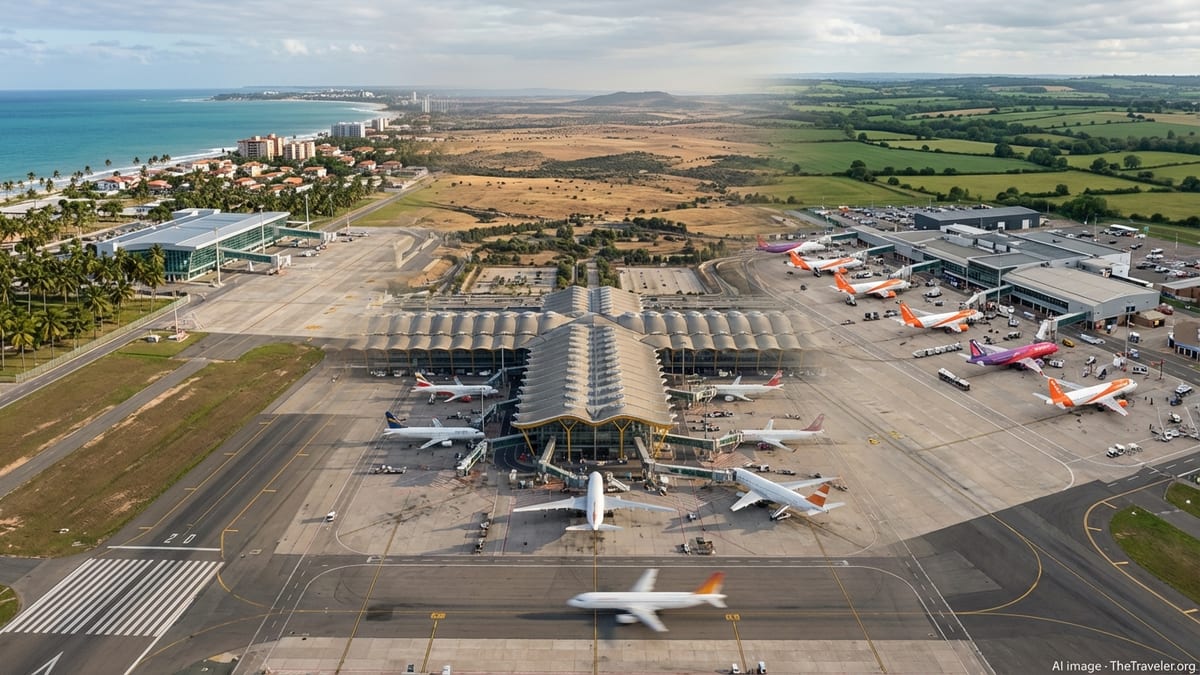
What Aena is changing at Palma de Mallorca Airport
Airport operator Aena has confirmed that Palma de Mallorca Airport is introducing exclusive passport-control lanes for UK nationals as part of a wider redesign of border flows in the non-Schengen arrivals hall. The move comes in the opening phase of the European Union’s Entry/Exit System (EES), which records biometric data for non-EU visitors and is already being tested across Spain’s busiest leisure hubs.
Reports from local media in Mallorca indicate that the new “UK only” or “non-Schengen British” channels sit alongside existing non-EU lines, giving airport staff flexibility to direct the largest single nationality group on the island into a dedicated stream. British visitors account for roughly a quarter of all international arrivals to the Balearic Islands, making them a critical focus for capacity planning at Palma, Spain’s third-busiest airport by passenger numbers.
According to published coverage, Aena and Spain’s border police have also installed additional biometric kiosks near the main passport control hall to support the dedicated British lanes. Early information suggests around ten kiosks are being used initially, with the configuration described as temporary and adaptable as EES volumes build through the spring and summer holiday periods.
Local business organisations on Mallorca have spent months warning that, without targeted measures, the combination of summer peaks and new EES checks could lead to severe congestion. Industry-facing reports have cited internal modeling that shows first-time EES enrolment taking several minutes per traveller, a figure that quickly multiplies when multiple UK holiday flights land within the same 30-minute window.
How the EU’s Entry/Exit System changes the arrival experience
The Entry/Exit System is a flagship EU border project that replaces manual passport stamping for non-EU nationals with a shared digital register of crossings into and out of the Schengen area. Public information from European institutions explains that the system captures facial images and fingerprints on a traveller’s first entry, then logs subsequent arrivals and departures electronically for short-stay visits of up to 90 days in any 180-day period.
For British travellers, who are now treated as “third-country nationals” after Brexit, the practical effect is a more involved first encounter at the border compared with the pre-Brexit, free-movement era. Initial trials cited in industry analyses suggest a first-time EES registration can take two to four minutes per person, depending on how smoothly the biometric capture proceeds and how familiar passengers are with the process.
Aviation and travel bodies have repeatedly warned that this extra processing time, multiplied across full holiday flights, risks long queues at certain airports that depend heavily on British leisure traffic. Palma has featured prominently in these projections because of its dense wave of morning UK arrivals, with thousands of passengers funnelling into the same non-Schengen control area in a short window.
While the EES is designed to tighten compliance with the 90-day rule and improve security screening, early rollouts elsewhere in Europe have already produced reports of lengthy waits and a noticeable increase in denied entries for travellers who fall foul of overstay rules. This wider backdrop has made Balearic authorities eager to demonstrate that they can implement the technology while preserving the region’s reputation for smooth, holiday-friendly arrivals.
What British travellers will actually see at Palma
For most UK holidaymakers, the new arrangements at Palma mean a slightly different choreography on arrival rather than an entirely unfamiliar experience. After disembarkation, British passport holders are being routed toward signage indicating “UK only” or similar wording, which marks out the dedicated EES registration and passport-control channels from the general non-Schengen lines.
Once in the British lanes, travellers are directed to biometric kiosks where they present their passport, have a facial image captured and provide fingerprints as required. The kiosks generate an electronic record that is linked to the traveller’s passport and inspected by an officer at a staffed control point. On later trips, those who have already been enrolled in EES should move more quickly through the process, as the system recalls stored biometrics and focuses on verifying identity and stay entitlement.
Airport-focused reports describe the layout as flexible, so staff can open or close the British-only channels depending on flight schedules and demand. At quieter times, UK visitors may find the distinction between the lanes less pronounced, with passengers merged back into wider non-Schengen queues. At peak times, especially during summer weekends, the presence of clearly segregated British streams is expected to make it easier to prevent blockages and keep families and groups together.
Travellers should also be prepared for small operational changes that often accompany new technology at border posts. These may include staff directing passengers to remove hats or glasses for photos, asking individuals to repeat fingerprint scans if the first attempt fails and occasionally diverting some travellers to manual desks if the kiosks experience technical issues.
Delays, queues and the summer Balearic rush
Industry forecasts and travel trade commentary have been blunt about the risk of long queues for British holidaymakers at certain EU airports as EES scales up. Passenger groups and airlines have raised scenarios of waits approaching four hours in worst-case peak scenarios if staffing, infrastructure and passenger communication are not carefully managed.
In this context, Palma’s move to ring-fence British travellers into bespoke lanes is being framed locally as a preemptive measure to avoid scenes that could damage the Balearic tourism brand. Business associations in Mallorca have underlined that many UK visitors travel with young children, strollers and substantial baggage for long stays, making protracted, slow-moving lines particularly disruptive.
Travel industry analysis suggests that Palma is better placed than some older, space-constrained airports to absorb the new border infrastructure, thanks to its relatively modern terminal design and the ability to deploy extra kiosks or staff during the highest-demand waves. Nonetheless, there is broad acknowledgment that the first major summer under EES will be a stress test for the system and for the new British lanes, with lessons likely to be applied in real time.
Observers within the European aviation sector point out that the impact on queuing times will not be uniform. Factors such as the precise timing of UK arrivals, the share of first-time versus returning EES users and the responsiveness of local staffing plans will all influence the experience on any given day. Palma’s high season, heavily concentrated around school holidays in the United Kingdom, will therefore remain the period of greatest concern.
Practical tips for a smoother route to the Balearic shores
While the dedicated British lanes at Palma are designed to preserve a sense of seamless arrival, British travellers still have a role to play in keeping the flow moving smoothly. Travel organisations and official EES guidance recommend arriving with passports valid for the required period, knowing the length and address of stay and being ready to remove covers or holders for scanning.
Passengers can reduce friction at the kiosk stage by keeping fingers clean and dry before fingerprint capture and by following on-screen instructions carefully. Families are advised to explain the process to children in advance, as each person, including minors, may need to complete individual biometric steps, which can add time if youngsters are anxious or uncooperative.
Airlines and travel agents have begun advising UK customers to allow extra time at departure airports when flying into Schengen states operating EES, to minimise the risk of missed connections due to outbound delays cascading into busy arrival banks. At Palma, where most UK visitors arrive on point-to-point holiday services rather than tight connections, the main priority is mental preparation for a potentially slower arrival than in previous summers.
For now, the dedicated British lanes, additional kiosks and intensified staffing represent Palma’s attempt to balance the EU’s tougher digital border rules with the island’s image as an easy, breezy gateway to Mediterranean escape. As the first full summer with EES unfolds, the experience of British travellers at this Balearic hub is likely to become a bellwether for how well Europe’s new border architecture can coexist with mass-market tourism.