


More news on this day
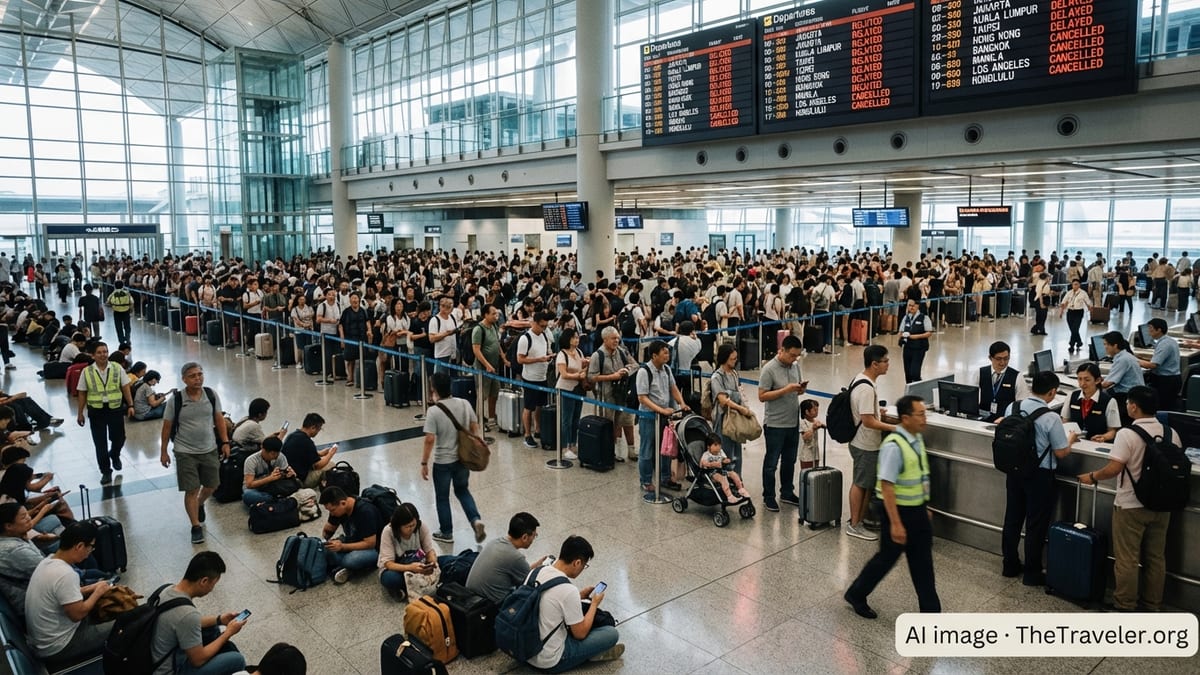
Air travel across Asia faced another bruising day as publicly available flight-tracking data indicated at least 105 cancellations and 234 delays involving China Eastern, Shenzhen Airlines, Batik Air, Garuda Indonesia, Juneyao Airlines and United Eagle Airlines across China, Indonesia, Thailand, Vietnam and other regional markets, leaving passengers scrambling to rebook and reroute journeys at already congested airports.
Get the latest news straight to your inbox!
Fresh Wave of Disruption Across Asian Skies
The latest operational snapshot builds on a pattern of rolling disruption that has dogged Asian aviation through late May 2026. Monitoring of regional dashboards shows clusters of cancellations and late-running services concentrated on short and medium-haul routes, where dense schedules give airlines limited slack when problems arise.
China Eastern and Shenzhen Airlines again feature prominently, with cancellations and delays spreading across key domestic corridors in mainland China and onto regional links into Southeast Asia. Juneyao Airlines and United Eagle, smaller but fast-growing Chinese carriers, have also appeared in disruption tallies as the network strain spills beyond the country’s largest brands.
In Southeast Asia, Batik Air and Garuda Indonesia have reported a mix of canceled and heavily delayed departures, particularly on routes linking Indonesia with Malaysia, Thailand and Vietnam. These services are vital for both leisure and business travel, and any operational turbulence rapidly cascades through connecting itineraries.
While the headline figure of 105 cancellations appears modest compared with some of the worst global disruption days, the combination with more than 200 delays across a relatively tight geographic band significantly increases the risk of missed connections, misconnections and last-minute overnight stays for passengers.
China’s Domestic Hubs Under Sustained Pressure
Available flight-status boards for Beijing, Shanghai and major interior cities indicate that China’s domestic network continues to shoulder a large share of the region’s disruption. China Eastern, Juneyao Airlines and United Eagle operate high-frequency services on trunk routes where aircraft cycle rapidly between cities, leaving little room for recovery when one leg runs late.
Recent data from late May shows waves of late departures and arrivals building through the afternoon and evening peaks at mainland hubs, with scattered cancellations used as a last resort to reset schedules. When an early rotation is delayed for technical, weather or airspace reasons, the same aircraft often arrives late for its next assignment, compounding the problem across multiple flights.
Regulators and airport operators across China have spent the past several years tightening on-time performance targets and encouraging more efficient ground handling. However, current conditions highlight how quickly operational resilience can be tested when traffic rebounds and spare capacity in fleets and crews remains limited after the pandemic-era downsizing.
The pattern also underscores the vulnerability of secondary and regional airports that rely heavily on feed from larger hubs. When airlines trim rotations or consolidate frequencies to protect core routes, smaller cities are frequently the first to lose seats or see departure times pushed back.
Ripples Felt From Bangkok to Ho Chi Minh City
The disruption is not confined to China’s domestic system. Publicly available data and airport dashboards across Southeast Asia have shown repeated clusters of late and canceled services touching Bangkok, Kuala Lumpur, Ho Chi Minh City and Manila throughout the month, and the latest figures continue that trend.
Batik Air and Garuda Indonesia, both important players on Indonesia’s international and domestic network, have been among the carriers contending with these pressures. Delays on outbound flights from Jakarta or Bali can quickly translate into late arrivals at regional hubs, where tight turnaround times and gate constraints leave little margin to absorb further slippage.
Thailand and Vietnam, which act as major transfer points for intra-Asia traffic, are particularly exposed to knock-on effects. Passengers traveling on multi-leg journeys between secondary cities in China and Indonesia, or between Southeast Asia and North Asia, often rely on single connections via Bangkok or Ho Chi Minh City. When one sector is canceled or delayed, the entire itinerary can unravel, forcing rebookings onto later flights that may already be close to full.
Travel data platforms tracking recent weeks’ performance highlight that these recurring delay waves are no longer isolated incidents at one or two airports but part of a broader, regional pattern, with today’s 105 cancellations and 234 delays fitting into a longer series of operationally challenging days across the continent.
Complex Mix of Weather, Airspace and Capacity Constraints
The precise causes behind each individual cancellation or delay vary, but the wider context points to a complex blend of weather, airspace restrictions and capacity limitations. Earlier waves of disruption this year have been linked to severe storms, airspace reroutes related to geopolitical tensions, and lingering staffing and fleet imbalances as airlines rebuild networks.
Industry analyses published in recent weeks describe how even localized storms or temporary ground-delay programs at one major hub can send shockwaves through closely timed schedules, especially when aircraft and crews are operating near their regulatory duty limits. When a flight runs too late to remain within those limits, airlines may be forced to cancel a subsequent leg to avoid exceeding safety rules.
Higher fuel prices and persistent cost pressures are also shaping how carriers respond to irregular operations. Aviation briefings note that some airlines are choosing to proactively trim frequencies or consolidate lightly booked rotations rather than fly marginal services during periods of operational stress, a strategy that can support finances but may leave passengers with fewer alternatives when disruptions strike suddenly.
Analysts observing the current Asian disruption cycle emphasize that while airlines have restored much of their pre-pandemic capacity, the buffers that once allowed them to recover quickly from shocks are still thinner than before. This means that what might once have been a localized problem can now ripple more widely and last longer.
Passengers Scramble as Rebooking Options Tighten
For travelers caught up in today’s disruption, the most immediate impact is uncertainty around when and how they will reach their destinations. Social media posts and traveler forums from recent disruption days across Asia describe long queues at transfer desks, limited same-day rebooking options on popular routes and, in some cases, difficulty accessing clear information about revised departure times.
Consumer advocates and travel advisory platforms consistently recommend that passengers monitor their flight status through airline apps and official channels, rather than relying solely on airport departure boards. When disruption hits, same-day options can disappear quickly, particularly on busy domestic corridors in China and key leisure routes in Southeast Asia.
Passenger-rights information published by regulators and watchdog organizations underscores that travelers generally have a right to rebooking or refunds when flights are canceled, though the precise entitlements vary widely between jurisdictions and depend on the cause of disruption. In some cases, airlines or local rules also provide for meals, accommodation and ground transport when delays stretch into many hours.
With disruption patterns across Asia showing little sign of easing, experienced travelers are increasingly building additional buffers into itineraries, favoring longer connection windows and earlier departures. Today’s tally of 105 cancellations and 234 delays serves as another reminder that, in the current operating environment, even routine journeys across the region can be derailed with little warning.