


More news on this day
Delta Air Lines suffered another sharp operational setback as 38 flight cancellations and more than 600 delays rippled through its Atlanta and New York City hubs, stranding passengers and intensifying scrutiny of the carrier’s reliability after last year’s high profile meltdown.
Get the latest news straight to your inbox!
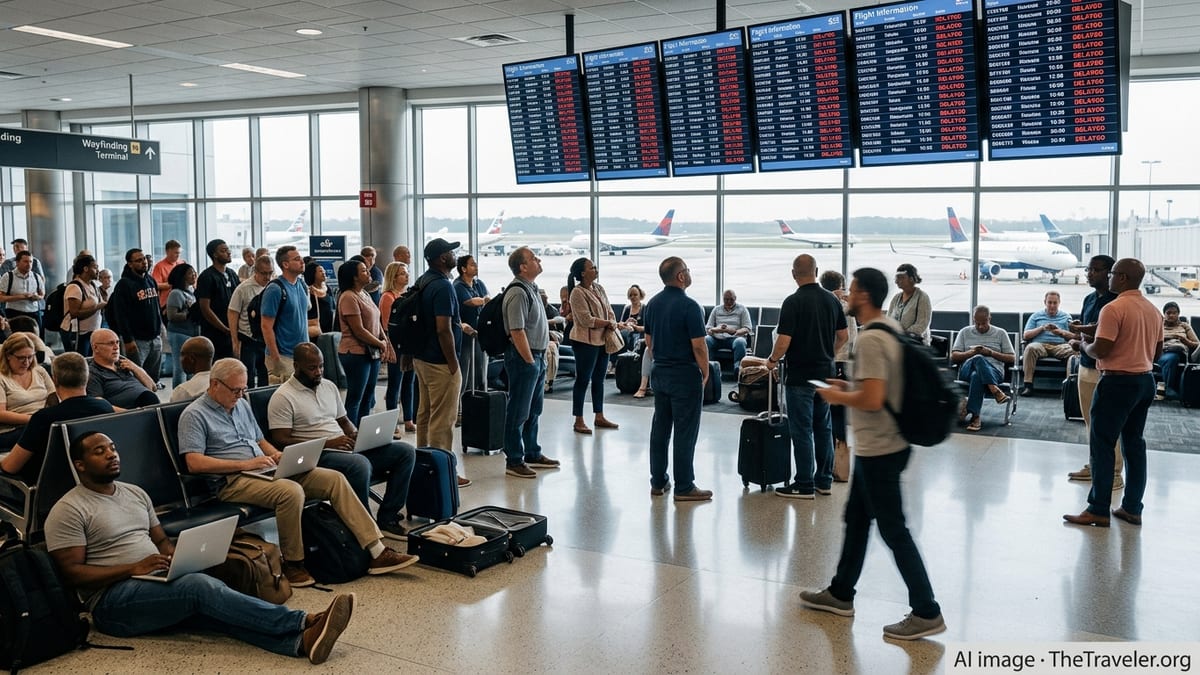
Fresh Wave of Disruption at Key Delta Hubs
Tracking data from major flight-monitoring services indicates that Delta’s latest bout of disruption has been concentrated at Hartsfield Jackson Atlanta International Airport and New York’s LaGuardia and John F. Kennedy airports, where cancellations and rolling delays stacked up over the course of the day. While overall cancellation numbers remained well below the worst levels seen during the July 2024 IT crisis, the disruption was significant enough to snarl schedules for thousands of travelers on some of the airline’s most heavily used routes.
The imbalance between a relatively modest number of outright cancellations and a far larger wave of delays is consistent with patterns airline analysts have observed in recent operational shocks. With crews and aircraft slightly out of position, carriers often attempt to preserve as much of the schedule as possible, leading to long queues on departure boards and late arrivals that can cascade into the evening.
Publicly available information shows that Delta has continued to market its strong overall on time performance in recent quarters, even as individual days bring severe pressure on its network. That tension is especially visible at fortress hubs like Atlanta, where even a small degradation in punctuality can have outsized effects on connections across the United States and beyond.
Lingering Shadows of the 2024 IT Meltdown
The latest operational stumble lands less than a year after Delta’s severe systemwide disruption in July 2024, when a CrowdStrike related IT outage triggered what federal transportation officials later classified as a controllable event for the airline. Published coverage and regulatory summaries of that episode describe more than seven thousand Delta and Delta Connection flights canceled over several days, with Atlanta and New York among the hardest hit airports.
In the aftermath of the 2024 meltdown, Delta faced intense public criticism, government scrutiny and class action litigation over how long it took the carrier to restore normal operations compared with some competitors. Analyses by business outlets and local media in Atlanta highlighted structural vulnerabilities in Delta’s crew scheduling and recovery processes, particularly when aircraft and staff are scattered across multiple hubs after a shock to the system.
That history has raised expectations that even smaller scale disruptions will be closely watched. Each new wave of cancellations and delays now tends to be interpreted against the backdrop of last year’s crisis, with travelers and consumer advocates examining whether promised improvements to technology, staffing buffers and recovery planning are meaningfully reducing the impact on customers.
Atlanta and New York Under Pressure
Atlanta remains Delta’s largest hub and a central node in the carrier’s global network. When operations there slow, the effects are quickly felt on domestic spokes and international connections, including transatlantic flights that depend on tight bank structures in the morning and evening. Recent aviation data sets show that July 2024 was among Delta’s roughest months for on time performance, in part because of the strain placed on Atlanta during and after the IT outage.
New York presents a different but equally unforgiving environment. LaGuardia and JFK are both slot constrained, high traffic airports where even minor schedule disruptions can trigger ground delays and airborne holding patterns. For an airline like Delta, which has invested heavily in New York as a strategic market, irregular operations at those airports can create high visibility problems that ripple into corporate accounts and premium leisure segments.
During the latest disruption, the concentration of delays at these three airports amplified missed connections and overnight misplacements of crews. Industry observers note that once aircraft and staff begin ending the day in the wrong cities, the following morning’s schedule can be compromised even if weather and air traffic conditions are favorable, forcing airlines to choose between more delays or preemptive cancellations.
Customer Frustration and Compensation Commitments
Delta’s handling of stranded customers remains a sensitive topic after the 2024 meltdown, when the airline issued public apologies and offered bonus miles and reimbursements to many affected passengers. Consumer reporting and court filings that followed documented long lines, difficulty rebooking and disputes over hotel and meal coverage when cancellations were deemed within the airline’s control.
With this latest wave of operational problems, travelers once again turned to social platforms to share images of crowded concourses and congested call centers, echoing frustrations expressed during earlier disruptions. Many posts focused on inconsistent information between the Delta app, airport displays and frontline employees, an issue experts say often reflects underlying complexity in modern airline operations rather than a lack of effort by staff.
Publicly available statements from the airline in recent months emphasize investments in technology and staffing designed to speed recovery from irregular operations, along with commitments to reimburse out of pocket expenses when Delta is responsible for cancellations. How those policies are applied in specific events, and whether passengers feel the process is transparent, remains a key factor in the company’s reputation.
Renewed Focus on Reliability Ahead of Busy Travel Periods
The timing of the latest disruptions is awkward for Delta as it heads into another stretch of heavy travel demand, with spring and summer peaks placing sustained pressure on aircraft utilization and crew availability. Aviation performance databases show that the carrier’s overall statistics remain comparatively strong by North American standards, yet individual high impact days can quickly erode consumer confidence.
Analysts point out that major network airlines walk a fine line between maximizing capacity and preserving operational resilience. Running aircraft and crews near their legal and logistical limits can be efficient in normal conditions, but it leaves less margin when weather, technology issues or air traffic constraints converge at core hubs such as Atlanta and New York.
For travelers, the pattern of modest cancellation counts combined with extensive delays carries practical implications. Experts often recommend building longer connection times at busy hubs, traveling earlier in the day when possible and monitoring flight status closely in the 24 hours before departure. As Delta works to demonstrate that it has learned from last year’s crisis, the extent and frequency of events like the latest 38 cancellations and 600 plus delays will likely serve as a barometer of its progress.