


More news on this day
Africa World Airlines has issued a public apology after passengers were left stranded at Kumasi’s Prempeh I International Airport when a Kumasi to Accra service was cancelled on October 26, 2026, sharpening debate over how domestic carriers in Ghana handle disruption and compensation.
Get the latest news straight to your inbox!
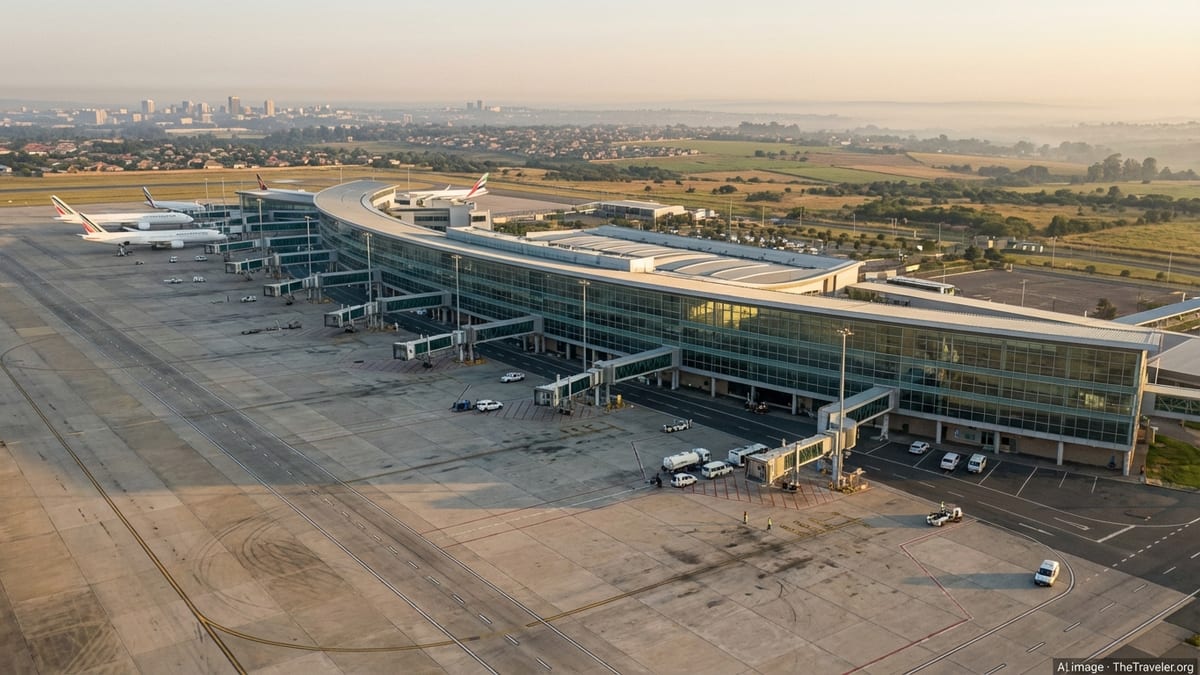
Passengers stranded on key Kumasi–Accra route
According to published coverage from local outlets, travellers booked on Africa World Airlines and rival carrier Passion Air found themselves unable to complete journeys from Kumasi to Accra on Monday, October 26, 2026, after both airlines cancelled scheduled services on the busy domestic corridor.
Reports indicate that passengers waited in the terminal at Prempeh I International Airport as departure times were pushed back before flights were ultimately marked as cancelled. Video posted on Ghanaian social media channels showed visibly frustrated travellers confronting airline staff and demanding explanations.
Several accounts carried by Ghanaian news platforms describe confusion over what options were available, with some passengers indicating that they received limited information on rebooking, refunds or alternative transport at the airport. Others reported additional out-of-pocket expenses for last-minute accommodation in Kumasi or missed onward connections in Accra.
The disruption hit a route that has been central to Ghana’s domestic aviation network for more than a decade, linking the political and commercial capital Accra with Kumasi, a major hub for business, education and tourism in the Ashanti Region.
AWA’s public apology and response
In the wake of the widespread criticism and viral footage from the terminal, Africa World Airlines issued a public apology addressing the chaos surrounding its cancelled Kumasi service. Publicly available information shows that the airline acknowledged the disruption to travel plans and referred affected customers to the rebooking and refund options set out in its existing policies.
Media summaries of the statement indicate that Africa World Airlines highlighted its willingness to rebook passengers on later services where seats were available or to process refunds for those who chose not to travel. The airline did not publish a detailed breakdown of how many customers were assisted in each way, and reports suggest that the speed and clarity of communication on the ground varied.
Some passengers quoted in local news reports praised individual staff for trying to help under pressure, while others argued that communication at the airport lagged behind the reality of the cancellations. Questions have also been raised in commentaries about whether additional support, such as transport or hotel arrangements for those stranded overnight and far from home, should have been offered more proactively.
The apology has drawn attention to how Africa World Airlines interprets its own service commitments during large-scale disruption, particularly on short domestic routes where travellers often have tight schedules and limited same-day alternatives.
What Africa World Airlines’ policies promise
Africa World Airlines publishes a customer commitment and conditions of carriage that outline how it intends to handle delays, cancellations and other irregular operations. The documents state that when a flight is cancelled by the airline, customers may request a full refund of the unused portion of the ticket or be placed, at no additional fare, on the next available AWA service on the same route, subject to seat availability and applicable fare rules.
The airline’s customer commitment further states that Africa World Airlines aims to provide timely information on known delays and cancellations, including updates at the airport and through contact channels, within a set period after becoming aware of a change in flight status. For cancellations and significant schedule changes on tickets purchased directly from the airline, guidance indicates that refunds for international itineraries paid by card are generally processed within a published time frame once a complete request is received.
Hotel accommodation is referenced more narrowly, typically in connection with situations such as involuntary denied boarding when no same-day alternative is available and the passenger is away from home. The policies also explain that tickets issued through travel or corporate agencies are usually refunded through those third parties rather than directly by the airline at the airport.
In addition, Africa World Airlines notes that it does not accept responsibility for missed onward connections on other airlines when a domestic sector is delayed or cancelled. That limitation has become a focal point in commentary around the Kumasi incident, given that some stranded passengers reported missing international departures from Accra after the domestic leg was cancelled.
Gaps between passenger expectations and Ghana’s rules
The Kumasi disruption has revived public discussion about the broader framework for air passenger protection in Ghana. Reports on the incident point out that domestic travellers largely depend on each airline’s own policies to define their rights when flights are cancelled, delayed or oversold, rather than on a single, detailed national compensation regime.
Consumer advocates quoted in local analysis have contrasted this with more prescriptive systems in other regions that set out standardized compensation levels, clear duty-of-care obligations such as meals and hotel stays, and strict timelines for refund processing. In Ghana, publicly available information suggests that while service and safety standards are regulated, there is less specific guidance on what carriers must provide domestically in cases of disruption.
This context helps explain the intensity of the reaction to the events in Kumasi. Many passengers expressed frustration not only with the cancellations themselves, but also with uncertainty over whether they could expect meal vouchers, accommodation, ground transport or compensation for missed connections. Commentators have argued that clearer, more accessible information at the time of booking and at airports would help align expectations with what airlines currently commit to offer.
The debate has also highlighted the importance for travellers of understanding fare conditions and airline policies before flying, especially on domestic routes where alternatives may be limited and disruptions can have knock-on effects for international trips.
Implications for domestic travel on the Kumasi corridor
The events at Prempeh I International Airport come at a time when demand for flights between Kumasi and Accra remains strong among business travellers, civil servants, students and visitors who wish to avoid the lengthy road journey between the two cities. Both Africa World Airlines and Passion Air have built their domestic networks around this and a handful of other high-traffic routes connecting Ghana’s regional centres.
Industry observers commenting on the Kumasi cancellations note that competition on this corridor, alongside increasing public scrutiny generated by social media, is likely to intensify pressure on carriers to refine disruption-handling procedures. How Africa World Airlines applies its stated policies on refunds, rebooking and communication in the aftermath of this incident is expected to be watched closely by frequent flyers.
Some commentary has suggested that clearer standard operating procedures at airports, including more prominent signage about passenger options during disruptions and faster escalation to central customer service teams, could help reduce confusion when multiple flights on the same route are affected at once. Others have urged airlines to explore cooperative arrangements or interline-style solutions on busy domestic sectors so that stranded passengers can be moved more easily when one carrier experiences operational difficulties.
For now, the October 26 cancellations and subsequent apology have underscored both the reliance many travellers place on the Kumasi–Accra air link and the reputational risk for airlines when contingency plans and passenger communication fall short during unexpected disruptions.