


More news on this day
British travellers planning winter breaks or long haul connections through Dubai are being urged to reassess their plans as UK travel and aviation bodies highlight renewed security risks and possible disruption from any further escalation of conflict in the wider Middle East.
Get the latest news straight to your inbox!
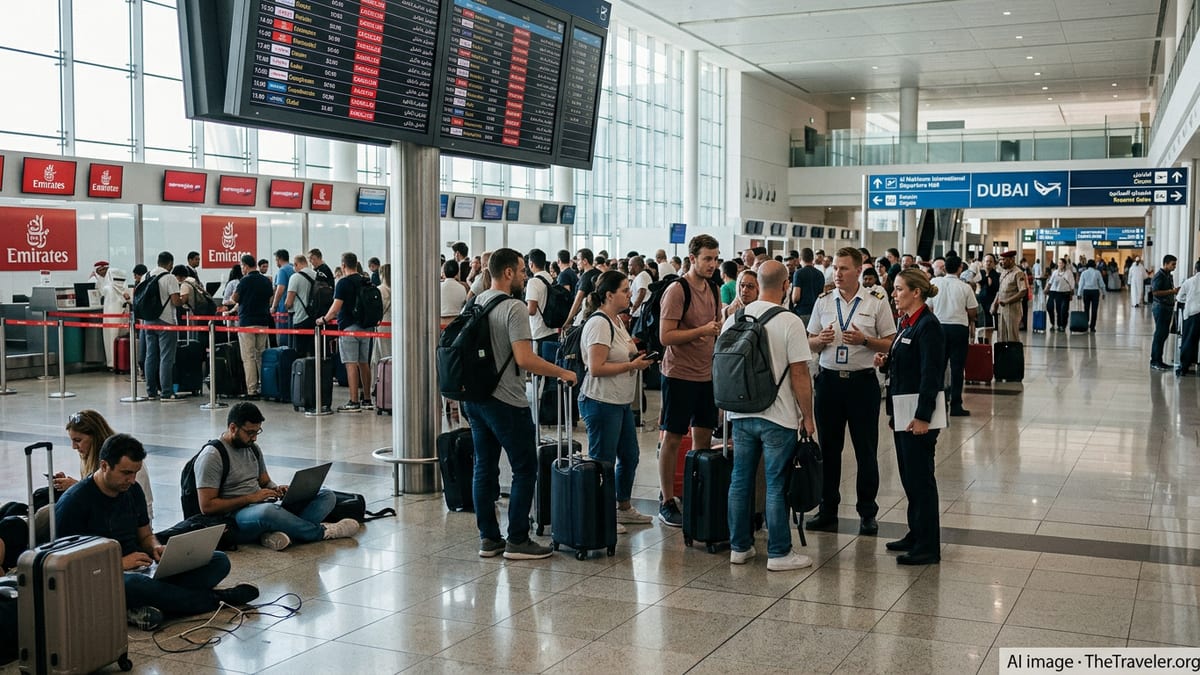
UK Guidance Highlights Volatile Regional Backdrop
Publicly available UK government travel advice continues to flag a highly unpredictable security environment across the Middle East, with officials warning that the risk of sudden escalation remains elevated. Updated travel guidance for Israel and the Palestinian territories on 28 October 2026 notes that the regional context is deeply unstable and that a rapid deterioration could affect air travel across nearby hubs.
While the United Arab Emirates itself is not currently subject to UK advice against all but essential travel, the broader region remains under a patchwork of heightened warnings. Separate guidance for countries such as Saudi Arabia has been tightened in recent weeks, reflecting concerns over missile and drone activity and the knock on implications for civilian aviation and overflight corridors.
UK civil aviation regulators have also maintained dedicated information pages for passengers booked to or through the Middle East. Earlier this year, the UK Civil Aviation Authority reminded travellers heading to Gulf hubs, including Dubai, to monitor Foreign, Commonwealth & Development Office updates closely and to confirm the status of flights before travelling to the airport, given the potential for rapid changes in airspace availability and airline schedules.
Travel trade organisations in the UK have echoed that message. Recent guidance from British industry bodies advises holidaymakers and business travellers to treat the situation as fluid, to keep checking official travel advice for all countries on their route and to maintain regular contact with airlines or tour operators in case routings need to be adjusted at short notice.
Dubai’s Role as a Hub Exposed to Regional Shocks
Dubai International Airport remains one of the world’s busiest intercontinental hubs, handling tens of millions of passengers a year on routes linking Europe, Asia, Africa and Australasia. Its connectivity has made it a default transit point for many UK travellers heading beyond the Gulf. That same reliance on regional overflight, however, leaves schedules exposed whenever tensions rise along key air corridors.
Recent advisories from several governments, including Australia and New Zealand, explicitly warn that military conflict in the region could trigger sudden airspace closures, flight cancellations and diversions across the Gulf. These notices point out that airports in the UAE, including Dubai and Abu Dhabi, may be affected if regional actors target infrastructure or if defensive operations lead to temporary restrictions on civilian traffic.
In early 2026, partial or complete closures of airspace over countries such as Iran, Iraq and Israel forced large scale rerouting of commercial flights and, in some cases, the temporary suspension of services into the UAE itself. Industry digests tracking the crisis recorded widespread cancellations by major carriers, along with official appeals for passengers to avoid travelling to airports until flights had been confirmed as operating.
Although the airspace picture has since improved and Dubai is currently functioning as normal, many of the temporary routings and contingency plans developed during those disruptions remain in place. Analysts note that this makes it easier for airlines to react quickly if tensions spike again, but it does not remove the risk of abrupt schedule changes for passengers passing through the city.
Airlines Adjust Dubai Schedules Amid Ongoing Uncertainty
Airlines serving Dubai have taken differing approaches to the evolving risk environment. Gulf carriers based in the UAE, including Emirates and flydubai, are operating extensive networks from Dubai, but with selective suspensions to destinations considered higher risk. Publicly available route data shows ongoing pauses to some services in Saudi Arabia, Kuwait, Bahrain, Iran and Israel as operators respond to changing security assessments and airspace restrictions.
European and Asian airlines have been more cautious in their return to Dubai following the most intense phase of the 2026 Middle East crisis. Information compiled by aviation and education consultancies indicates that several major European carriers, including Air France, Lufthansa, Swiss and KLM, have pushed back the resumption of their Dubai services to late 2026 or into 2027. In some cases, entire winter seasons have been cancelled for Dubai routes, even as services to other Gulf destinations resume earlier.
For UK based travellers, the position of British Airways has been particularly closely watched. Trade press reports earlier this year detailed an extended suspension of the airline’s Heathrow to Dubai flights into late October 2026, following repeated timetable revisions prompted by regional instability. Updated route listings now indicate a planned resumption of daily London to Dubai services in early November 2026, although travel experts caution that this remains subject to further review if the regional security picture worsens.
Other carriers that feed UK originating passengers into Dubai via European or Asian hubs continue to operate, but often with amended timings or reduced frequencies. Travel industry analyses recommend that passengers check not only whether their specific flight is operating, but also whether connecting services beyond Dubai are still aligned, as retimed schedules can result in missed or very tight connections even when all individual legs remain in place.
What UK Travellers Need to Do Before Flying
Given the mix of official government warnings and commercial schedule changes, passengers planning to fly from the UK to or through Dubai in the coming months are being encouraged to take a more hands on approach to trip preparation. Travel advisories from multiple governments emphasise that airspace or airport restrictions can be imposed at very short notice, leaving limited time for airlines to notify customers.
Consumer guidance from UK aviation and travel bodies stresses the importance of monitoring both Foreign, Commonwealth & Development Office advice and airline specific travel alerts from the time of booking until return. Travellers are being advised to download airline apps, enable notifications and recheck flight status the day before departure and again before leaving for the airport.
Specialist travel advisories also urge passengers to review their insurance policies closely. Several national foreign ministries, including those of New Zealand and Canada, have warned that cover may be affected if travellers enter countries or transit zones against official advice related to conflict or terrorism risk. Policy wording can also differ on whether knock on disruption from airspace closures outside the UAE would be covered for trips that include a Dubai connection.
For itineraries involving tight connections in Dubai, travel planners suggest building in extra buffer time where possible. During previous rounds of disruption in 2026, some passengers reported missed onward flights due to last minute rerouting or extended security checks, even when their original inbound service operated. Allowing longer connection windows, they argue, is a practical way to reduce the risk of being stranded if regional tensions affect punctuality across the network.
Outlook: Elevated Risk but Dubai Remains Operational
Security assessments published over the past month by several governments consistently describe the Middle East environment as unpredictable, with the potential for a rapid shift in conditions if hostilities escalate. Against that backdrop, Dubai remains a key node in global aviation and continues to handle large volumes of passenger traffic, including from the UK.
For now, most official travel advisories stop short of urging people to avoid the UAE entirely, instead highlighting a combination of terrorism risk, possible missile or drone activity in the wider region and the prospect of sudden disruptions to flight schedules. Industry observers note that airports and airlines in the Gulf have considerable experience operating amid regional tensions and have well rehearsed plans for adjusting routings and capacity.
For British holidaymakers and business travellers, the message emerging from publicly available guidance is one of heightened vigilance rather than outright abandonment of travel plans. Those prepared to stay flexible, stay informed and maintain close contact with their airline or travel provider are, according to current assessments, still able to use Dubai as a transit or destination point, even as the possibility of further Middle East escalation keeps flights under close watch.