


More news on this day
Major disruptions involving British Airways at London Heathrow and Qantas on a long-haul route between Melbourne and Dallas Fort Worth are drawing fresh attention to how crew error and escalating passenger behavior can upend carefully planned global flight schedules.
Get the latest news straight to your inbox!
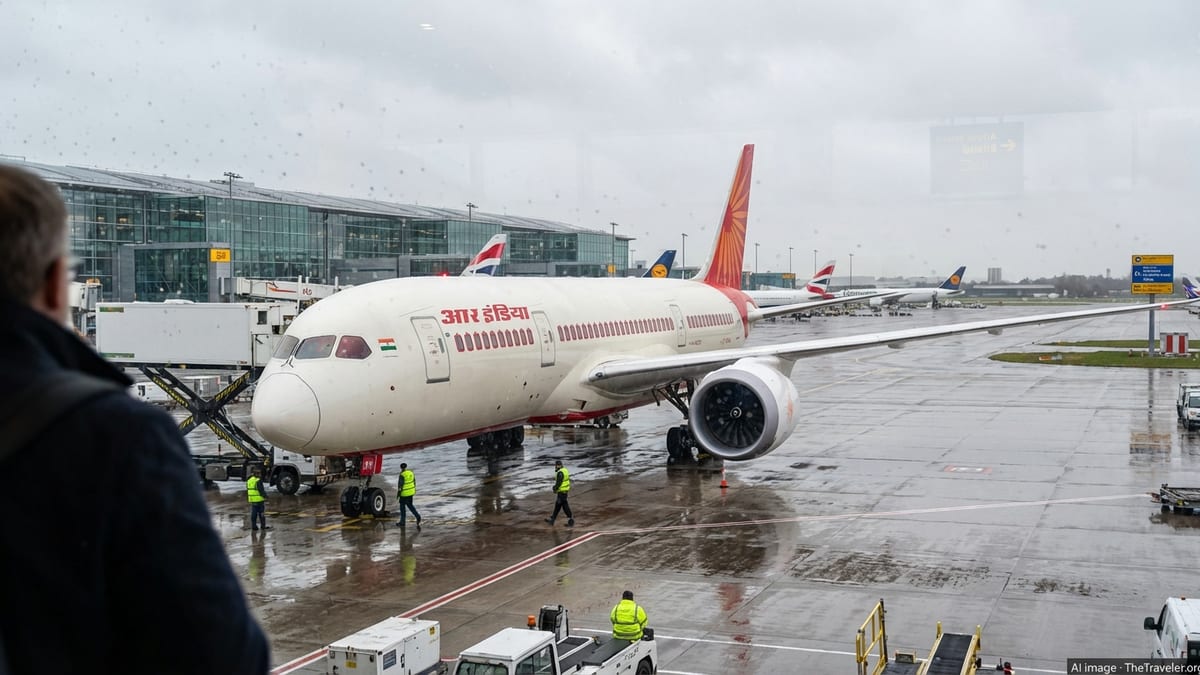
Heathrow Slide Blunder Delays British Airways Washington Service
Operations at London Heathrow came under fresh scrutiny after an inadvertent emergency slide deployment on a British Airways Boeing 777 left passengers bound for Washington Dulles facing an extended delay. Publicly available incident summaries indicate that on May 16 2026, flight BA217 from Heathrow Terminal 5 to Washington Dulles was preparing to depart when a cabin crew member activated a door lever and triggered the inflation of an evacuation slide onto the tarmac.
Specialist aviation outlets report that the crew member was newly qualified and on only a second live flight when the error occurred. The aircraft, already pushed back from the gate, was forced to return for the slide assembly to be removed and for safety checks to be conducted. Departure for the transatlantic sector was delayed by more than six hours, with some passengers arriving in the United States late on May 16 or into the following day depending on onward connections.
Tracking data and independent flight status services show that the affected 777 eventually continued its journey to Washington after being cleared to operate. However, the episode added to a series of operational headaches for British Airways at its Heathrow hub, where passengers had already reported disruption linked to a recent baggage system fault and knock-on delays across parts of the schedule.
Industry commentators note that accidental slide deployments can cost airlines hundreds of thousands of dollars once aircraft downtime, replacement equipment, additional staffing, and passenger compensation are added up. For Heathrow, where runway and gate capacity are tightly managed, such incidents also put extra pressure on already congested departure banks.
Training Pressures and Crew Error Under the Spotlight
The Heathrow event has refocused discussion on how carriers train and supervise newly qualified cabin crew during their first weeks in service. Aviation analysis sites point out that British Airways has recorded several inadvertent slide deployments in recent years, prompting the airline to introduce additional safeguards such as “point and call” procedures designed to reduce human error when arming and disarming doors.
Analysts suggest that such techniques, while effective in controlled environments, can be more difficult to apply consistently in the time-pressured, distraction-prone conditions of real departures. New recruits in particular may struggle to override instinctive movements if they misinterpret commands or feel rushed. The Heathrow slide deployment is being widely cited as an example of how even small lapses in procedure can carry outsize operational and financial consequences for airlines operating at large hubs.
More broadly, the episode illustrates the fragile balance of modern hub operations. At Heathrow, where British Airways concentrates a large portion of its long haul network, a crew error on a single widebody jet has the potential to ripple through connecting banks of flights to North America, Europe, and beyond. Passenger reports from recent days describe missed connections, rebookings, and uncertainty as staff worked to re-accommodate travelers delayed by the Washington service disruption.
Consultants who study airline reliability note that carriers continue to refine human factors training in response to such cases, combining classroom instruction with virtual reality simulations and additional mentoring on line flights. The Heathrow incident is expected to feed into that ongoing review as operators examine how to give less experienced crew members more structured support during the critical first months of flying.
Qantas Melbourne to Dallas Flight Diverts to Tahiti After Violent Outburst
While British Airways grappled with consequences of crew error at Heathrow, Qantas confronted a starkly different disruption on the other side of the world. Reports from Australian and international outlets describe how Qantas flight QF21 from Melbourne to Dallas Fort Worth diverted to Papeete, in French Polynesia, on May 16 2026 after a passenger allegedly became violent several hours into the trans-Pacific journey.
According to published coverage, the widebody aircraft was en route across the Pacific when a male passenger is reported to have assaulted cabin crew and bitten a flight attendant. Fellow travelers helped restrain the individual as the crew requested a diversion, with the flight eventually landing at Faa’a International Airport, which serves Papeete and is the main gateway to Tahiti.
Information released through news reports indicates that local law enforcement in Tahiti met the aircraft on arrival and removed the passenger. Qantas later barred the individual from future travel on the airline. The aircraft was refueled and continued on to Dallas Fort Worth, arriving several hours behind schedule and leaving passengers to rebook missed connections across the United States and beyond.
Aviation analysts estimate that the diversion added substantial extra flying time and cost, given the remote location of Tahiti relative to the direct great-circle path between Melbourne and Dallas. The episode highlighted the operational challenges carriers face when violent or severely disruptive behavior erupts midflight on long overwater sectors, where diversion options may be limited and each decision carries significant knock-on effects.
Unruly Passenger Trend Raises Concerns for Long Haul Routes
The Tahiti diversion has rapidly become one of the most widely discussed recent examples of a growing category of incidents involving unruly passengers. Data cited in recent industry briefings suggest that while the overall volume of commercial flights has rebounded toward or beyond pre-pandemic levels, reports of aggressive or non-compliant behavior on board have remained elevated compared with a decade ago.
Regulators in several jurisdictions, including authorities in Australia, Europe, and the United States, have emphasised a zero-tolerance stance toward violent acts in the cabin, with substantial fines and potential criminal charges for offenders. Airlines, including Qantas, have increasingly sought lifetime bans and recovery of diversion-related costs in civil proceedings, aiming to deter behavior that jeopardizes the safety of passengers and crew.
Observers point to a mix of factors behind the rise in air rage cases, from higher cabin density and alcohol consumption to stress associated with tight connections, complex travel rules, and lingering frustrations from previous disruption. On ultra long haul services such as Melbourne to Dallas Fort Worth, fatigue and confinement can further heighten tensions, complicating the task of flight attendants who must monitor, de-escalate, and, when necessary, physically intervene.
The Tahiti incident also underscores the role of airports like Faa’a International as critical diversion points in the vast stretches of the Pacific. Although relatively small compared with major hubs such as Heathrow or Dallas Fort Worth, these airports must be ready to receive large widebody jets at short notice, coordinate with local law enforcement, and assist in onward travel arrangements for hundreds of stranded passengers.
Global Networks Feel the Impact of Localized Incidents
Taken together, the British Airways disruption at Heathrow and the Qantas diversion through Faa’a International illustrate how localized events, whether triggered by a single crew error or the actions of one passenger, can reverberate across global airline networks. At Washington Dulles, travelers awaiting BA217 encountered hours of uncertainty, while in Dallas Fort Worth, late arriving Qantas passengers faced missed connections and rebookings throughout the United States.
For airports such as Heathrow, Washington Dulles, Melbourne, Dallas Fort Worth, and Faa’a International, these events highlight the importance of coordination among airlines, ground handlers, and local agencies. Real-time communication, rapid contingency planning, and flexible staffing are increasingly viewed as essential in mitigating the fallout from incidents that cannot be fully prevented, even in highly regulated and safety-conscious environments.
Industry observers suggest that the latest disruptions will add fuel to ongoing debates about investment in crew training, mental health support, and passenger management strategies. Carriers are under pressure to demonstrate that they can protect the safety of those on board while limiting the broader travel chaos that follows when flights are delayed, diverted, or forced to return to departure points.
While both British Airways and Qantas maintain strong safety records, the recent events at Heathrow and over the Pacific serve as a reminder that modern aviation remains vulnerable to the human element on either side of the cabin door. For travelers transiting the affected airports in the coming days, residual delays and schedule adjustments are likely as airlines work to absorb the shock of yet another turbulent weekend in global air travel.