


More news on this day
A fire connected to an incident involving AIM technology at a major port facility has prompted heightened emergency readiness measures, with operators reassessing how terminals worldwide prepare for fast-moving safety and security threats.
Get the latest news straight to your inbox!
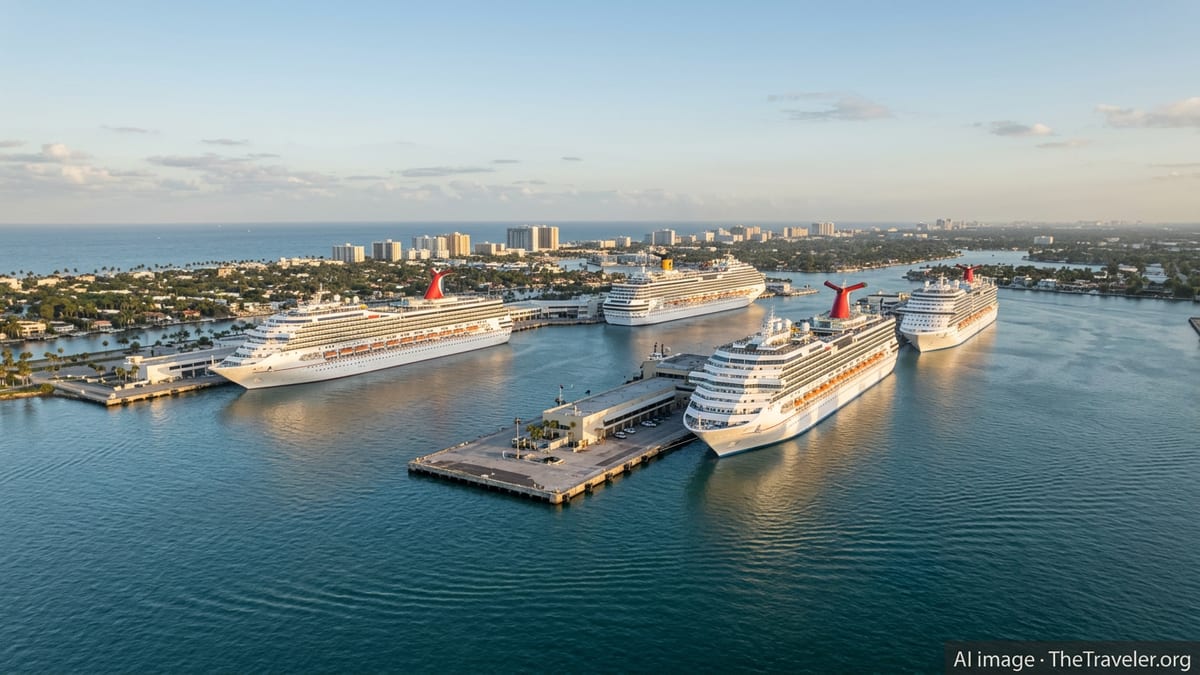
Incident Highlights Growing Convergence of Security and Safety Risks
Publicly available reports indicate that the AIM-related fire began in a restricted operations area, triggering a rapid local response and a broader review of the port’s crisis playbook. While the blaze was contained within the facility perimeter, the circumstances around how it started and how quickly it spread have drawn attention from port executives, regulators and risk analysts.
The port’s chief executive framed the episode as a stress test for existing emergency plans, stating in public remarks that the event prompted an immediate check of fire suppression systems, communications procedures and incident command structures. Those comments underscored a wider concern across the maritime sector that traditional contingency plans are being challenged by new types of technology-driven hazards.
Industry coverage suggests that the AIM-linked incident played out against a backdrop of rising worries about fires at ports and on vessels, especially in facilities that handle hazardous materials, fuels and advanced equipment. Recent fires on cargo ships and at terminals in key trade corridors have already pushed insurance costs higher and forced risk managers to revise their assumptions about worst-case scenarios.
Analysts note that the AIM fire fits into a pattern in which security incidents, technology failures and conventional industrial hazards increasingly overlap. For port authorities, that overlap is blurring the line between routine safety drills and what now resembles comprehensive crisis and continuity planning.
Port CEO Orders Heightened Readiness and New Drills
According to published coverage of the aftermath, the port’s CEO responded by directing a broad tightening of emergency readiness protocols. That directive included orders for more frequent fire and evacuation drills, expanded tabletop exercises that simulate complex, multi-hour incidents, and refreshed training on hazardous cargo handling.
The new posture places emphasis on speed of detection and initial decision-making. Internal guidance described in trade media highlights faster notification of municipal responders, earlier activation of unified command structures and pre-cleared thresholds for temporarily halting terminal operations when a fire is accompanied by a possible security or technology failure signal.
The CEO’s approach appears closely aligned with evolving best practices documented in port security and emergency management literature, which stresses layered readiness. That includes physical safeguards such as firebreaks, inert gas systems and remote shutoffs, as well as procedural safeguards such as pre-scripted alerts, redundant communications and clear authority for on-scene coordinators to escalate.
Observers in the maritime insurance sector note that in the wake of incidents involving advanced systems, such as automated platforms and remotely operated equipment, underwriters are increasingly scrutinizing how ports demonstrate readiness through documented drills and independent audits. The heightened stance ordered after the AIM fire is expected to factor into upcoming policy reviews and risk ratings for the facility.
Technology, Automation and AIM Systems Under Fresh Scrutiny
The AIM-related aspect of the fire has focused new attention on how ports integrate automation, intelligent monitoring and emerging platforms into high-risk environments. Open-source technical briefings on recent port and shipping incidents show that as terminals deploy more automated handling equipment and networked sensors, the potential for cascading failures grows if systems are not rigorously tested under emergency conditions.
Specialists in maritime cyber and physical security cited in recent industry conferences have warned that automated or semi-autonomous systems can complicate emergency response if they are not designed to default to safe modes during a fire or security alert. The AIM fire has therefore reopened debate over fail-safe design, manual override capabilities and the extent to which frontline staff are trained to diagnose and isolate technology-driven faults during a crisis.
Port operators are also re-examining how data from AIM and other intelligent systems is shared with local fire services and emergency managers. Publicly available material on past port emergencies shows that confusion about sensor readings, hazardous material inventories and access controls can slow the first critical minutes of a response. After the latest incident, risk consultants report a renewed push to harmonize data formats, test real-time information sharing and clarify who has authority to trigger broader alerts.
For technology suppliers, the heightened scrutiny is likely to translate into stricter procurement terms, more demanding acceptance testing and tighter service-level agreements related to resilience and emergency behavior. Several large ports have already begun incorporating explicit fire and incident-response benchmarks into their contracts for advanced equipment and software platforms.
Regional and Global Port Community Watches Closely
The AIM fire has drawn attention from other port authorities that have recently experienced fires, drone-related disruptions and hazardous cargo incidents. Coverage in maritime and logistics outlets shows that facilities in Europe, the Middle East and North America are particularly focused on lessons about how quickly emergency plans can be activated and how long critical operations must be suspended during a response.
In several recent cases, fires at ports have forced temporary shutdowns of container terminals, bulk facilities or oil storage areas, with ripple effects across shipping schedules and supply chains. Analysts observing those events note that the economic and reputational costs of a prolonged outage can rival the direct physical damage from a fire, pushing port leadership to treat emergency readiness as a board-level priority.
Regional port associations and international industry bodies are expected to incorporate elements from the AIM incident into upcoming guidance on resilience. Draft materials referenced in public consultations emphasize cross-border information sharing about near misses, standardized terminology for incident reporting and shared training modules that can be adapted by ports of different sizes.
For nearby communities, the episode has reinforced longstanding questions about how ports communicate risk and coordinate with local hospitals, schools and businesses during emergencies. Public documents from prior incidents show growing interest in clear notification protocols, real-time air quality and hazard updates, and transparent timelines for when normal activity can safely resume after a fire.
Travel and Trade Implications for Port-Linked Destinations
While the AIM fire did not lead to long-term closure of the facility, the heightened readiness posture has short-term implications for shippers, cruise operators and travelers passing through the surrounding region. Port calls may be subject to tighter scheduling windows, additional safety checks and occasional hold periods as new procedures are tested and refined.
Travel industry analysis points out that disruptions at major ports can affect ferry connections, cruise embarkations and cargo flows that support tourism-dependent economies. Even brief slowdowns can influence the timing of ship arrivals, the availability of local excursions and the movement of essential supplies that hotels, restaurants and tour operators rely on.
For logistics planners, freight forwarders and cruise itinerary designers, the incident is a reminder to build more flexibility into schedules and to maintain alternative routing options where geography allows. Industry guidance suggests maintaining close contact with port agents, monitoring official bulletins and allowing extra time for embarkation and cargo handling when a facility is operating at heightened readiness.
As ports worldwide take stock of the AIM fire and its aftermath, the episode is emerging as another data point in a broader trend toward more complex, technology-tinged emergencies. For travelers and trade professionals alike, it underscores how critical port resilience and emergency preparedness have become to the smooth functioning of global mobility and commerce.