


More news on this day
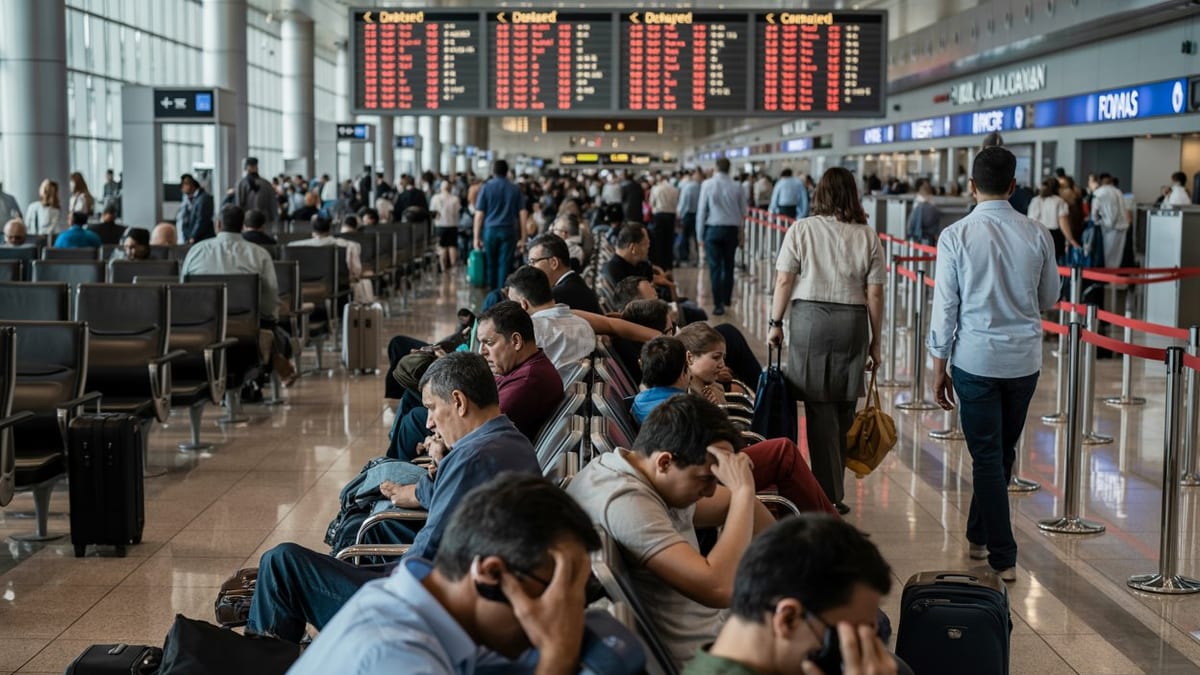
Travelers at Moscow Domodedovo International Airport faced hours of uncertainty on July 1 as 53 flights were delayed and three canceled, disrupting both domestic and international operations for carriers including Aeroflot, S7 Airlines, Ural Airlines, Emirates, and Turkish Airlines.
Get the latest news straight to your inbox!
Operational Disruptions Ripple Across Major Carriers
According to operational data published on July 1, the disruption at Domodedovo affected a mix of departures and arrivals, with 53 services delayed and three flights canceled. The impact stretched across Russia’s largest airlines as well as several foreign carriers that use the airport as a key gateway to Moscow.
Publicly available flight boards and airport information show that Aeroflot, S7 Airlines, and Ural Airlines were among the most affected on domestic and regional routes. International services operated by Emirates and Turkish Airlines also experienced schedule changes, illustrating how quickly local disruption can reverberate through wider global networks.
While specific delay durations varied by route, many departures appeared to be pushed back by at least an hour, with knock-on effects for connections and onward journeys. Canceled services compounded the strain for travelers whose options for same-day rebooking were limited by high summer-season demand.
The volume of affected flights underscores Domodedovo’s role as one of Moscow’s primary air hubs, handling a substantial share of traffic for both Russia-focused airlines and major international carriers linking the capital to the Middle East, Turkey, and beyond.
Weather, Airspace Restrictions, and Recent Security Alerts
The disruption at Domodedovo did not occur in isolation. In recent weeks, Moscow’s airspace has repeatedly faced temporary restrictions on arrivals and departures related to security concerns, including drone activity targeting the wider Moscow region. Earlier in June, all four of the city’s main airports, including Domodedovo, briefly halted operations in response to heightened security events, according to international media coverage and Russian aviation updates.
On July 1, Russian aviation and regional news outlets reported that operational limitations affecting Domodedovo and other Moscow-area airports were lifted in the afternoon, suggesting that early-day restrictions contributed to the wave of delays that followed as airlines attempted to restore normal traffic flows.
When flight operations are paused or restricted for even a short period, aircraft and crews can quickly fall out of position. Analysts and industry observers note that once airspace reopens, airports must process a backlog of delayed departures and rerouted arrivals, which often results in cascading delays throughout the day.
Domodedovo’s experience on July 1 reflects this pattern. Published coverage indicates that once restrictions were relaxed, the airport resumed normal handling of flights, but carriers still had to work through accumulated queues, schedule reshuffles, and crew-duty limitations that limited their ability to recover quickly.
Stranded Passengers Face Long Queues and Limited Options
Domestic and international travel forums, social media updates, and eyewitness descriptions circulating online describe long check-in lines, crowded waiting areas, and mounting frustration among passengers at Domodedovo. With three flights canceled outright and dozens delayed, many travelers attempting to reach other Russian cities or international destinations faced disrupted itineraries and uncertain arrival times.
Rebooking proved particularly challenging for those on popular seasonal routes, where remaining seats on later departures were scarce. Some passengers opted to reroute through other Moscow airports or alternative hubs, while others reportedly chose to postpone or cancel their trips altogether due to the lack of immediate options.
Families traveling with children and passengers on tight business schedules appeared especially affected, as even modest delays could cause missed connections or lost working days. For international travelers, the disruption also raised concerns over visa validity, accommodation bookings, and missed tours or events in onward destinations.
Observers of the situation at Domodedovo note that while irregular operations are a known risk of air travel, high-traffic hubs can struggle to provide timely information and assistance when dozens of flights are simultaneously affected, leaving many passengers dependent on airline apps, messaging channels, and unofficial online updates to track developments.
Impact on Airline Operations and Network Reliability
The July 1 disruption at Domodedovo also highlights the operational challenges faced by airlines that use Moscow as a key node in their route structures. For Russia-based carriers such as Aeroflot, S7 Airlines, and Ural Airlines, delays and cancellations can throw off carefully calibrated aircraft rotations that support domestic services as well as international links to Europe, Asia, and the Middle East.
For global airlines like Emirates and Turkish Airlines, disruptions at Moscow’s airports can reverberate across their broader networks. When a flight from Domodedovo leaves late or fails to depart at all, passengers may miss onward connections at major hubs such as Dubai and Istanbul, forcing carriers to arrange rebookings, overnight accommodation, or alternative routings.
Aviation analysts point out that modern airline scheduling is designed to maximize aircraft utilization, leaving limited slack in the system to absorb unexpected operational shocks. As a result, a short-lived airspace restriction or local disruption can lead to hours of downstream delays, crew reassignments, and aircraft repositioning flights that are not visible to passengers but significantly increase operating costs.
The Domodedovo episode adds to a broader pattern of operational volatility seen at airports worldwide in recent seasons, where weather events, technical issues, and airspace safety measures have combined to pressure on-time performance and strain both carrier and airport resources.
Calls for Clearer Communication and Passenger Protections
The disruptions at Domodedovo have renewed attention on how airlines and airports communicate during sudden operational breakdowns. Public commentary on social platforms and in traveler communities suggests that many passengers struggled to obtain clear, timely information on the status of their flights, rebooking options, and baggage handling.
Travel advocacy groups and consumer-facing publications have repeatedly emphasized the importance of transparent communication when large-scale delays or cancellations occur, urging carriers and airports to provide regular updates via display boards, public announcements, and digital channels. In the Domodedovo case, much of the most detailed information appeared to come from live flight-tracking tools, airline apps, and independent aviation dashboards consulted by passengers and observers.
Experts in passenger rights note that the protections available to affected travelers vary significantly by jurisdiction and ticket type. While some international routes fall under regimes that set out compensation or care obligations in the event of long delays or cancellations, others are governed by more limited frameworks, leaving travelers dependent on individual airline policies.
For now, the situation at Domodedovo serves as a reminder for travelers heading into the busy summer period to build extra time into itineraries involving complex connections, monitor flight status closely on the day of travel, and familiarize themselves with their carrier’s policies in case of unexpected disruption.