


More news on this day
A Vietnam Airlines Boeing 787-9 operating from Munich to Hanoi was forced to dump fuel and return to the German hub after its tail struck the runway during a dramatic late liftoff on Saturday, prompting an emergency landing and temporary disruption to airport operations.
Get the latest news straight to your inbox!
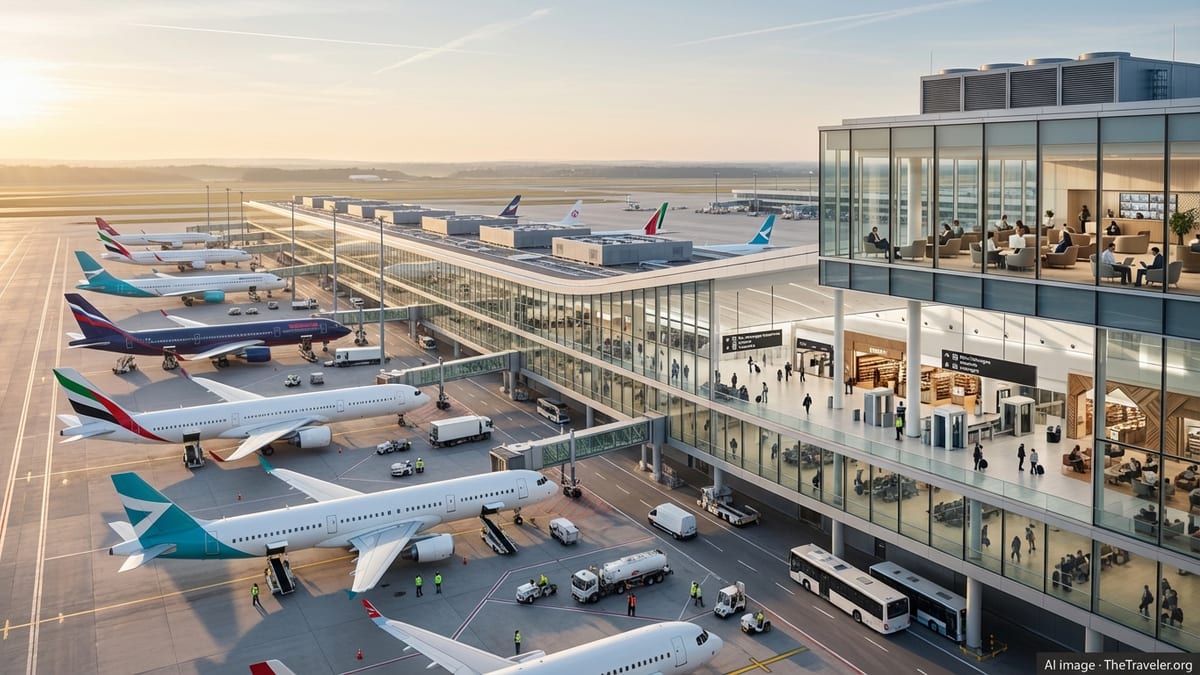
Incident on Flight VN34 from Munich to Hanoi
Publicly available flight tracking data and aviation community reports indicate that the incident involved Vietnam Airlines flight VN34 from Munich to Hanoi on August 15, 2026. The aircraft, a Boeing 787-9 registered VN-A867, was departing from Munich Airport when it appeared to accelerate almost to the end of runway 26L before lifting off, with video and eyewitness accounts suggesting contact between the tail and the runway.
Footage shared on aviation forums shows the twin-aisle jet rotating very late, with dust and smoke visible behind the aircraft at the moment of liftoff, a pattern typically associated with a tail strike. Despite the abnormal departure, the aircraft climbed away and joined a holding pattern rather than continuing on its long-haul route to Vietnam.
According to descriptions compiled from flight tracking services, the jet initially climbed to an intermediate altitude of around 9,000 feet and remained in the vicinity of Munich rather than proceeding along its normal route toward Eastern Europe and Asia. This behavior, combined with the observed departure profile, quickly led aviation enthusiasts and analysts to conclude that the crew were managing a possible structural damage event.
Fuel Dump and Emergency Return to Munich
Data from public tracking platforms and commentary from aviation observers show that the 787-9 spent roughly one to two hours circling near Munich after the problematic takeoff. Analysts note that such extended holding is consistent with a need to reduce the aircraft’s weight before an unscheduled landing, particularly after a suspected tail strike on a heavily fueled long-haul flight.
Reports from aviation discussion boards describe the aircraft as dumping fuel while flying racetrack patterns over southern Germany, a standard procedure for widebody jets that need to descend from heavy takeoff weight to a safer landing weight. Commenters familiar with European procedures noted that fuel jettisoning is typically conducted at higher altitudes and in designated areas to allow rapid evaporation and dispersion before any fuel can reach the ground.
After the fuel dump, the aircraft returned to Munich and carried out a low pass over the airfield, which online observers interpreted as a possible visual inspection run from the ground to assess any visible tail damage. The aircraft then positioned for an emergency landing on runway 26R, the airport’s northern runway, which had been prepared with emergency response vehicles standing by.
Shredded Tires and Runway Disruption
Images shared on aviation-focused social media and forums after the landing show significant damage to multiple main landing gear tires on the Vietnam Airlines 787, with rubber fragments and debris visible on the runway surface. Commentators stated that the aircraft came to a stop on 26R with deflated or shredded tires, leading to a prolonged runway inspection and cleanup.
Accounts from passengers at Munich Airport and plane spotters watching live streams describe buses positioned on the runway to transfer travelers back to the terminal, indicating that the aircraft remained on the runway for some time after coming to a halt. The need to manage passengers directly from the runway and to remove debris reportedly caused delays for other flights.
Public posts referencing air traffic information suggest that one of Munich’s two runways was closed for an extended period while the aircraft was secured and the surface was checked for foreign object debris. At one point, both runways were briefly unavailable while fire and rescue resources were concentrated around the Vietnam Airlines jet, leading some arriving aircraft to hold or divert.
Safety Context and Ongoing Assessment
There have been no publicly reported injuries among passengers or crew as of Sunday, according to information circulating through aviation news summaries and online forums. Travelers were seen disembarking by stairway and boarding ground transport vehicles, and subsequent posts referenced hotel arrangements and rebooking efforts for those originally bound for Hanoi.
Tail strikes on large commercial jets are considered serious occurrences because they can damage the rear fuselage, structure around the pressure bulkhead, and flight control systems housed in the tail section. In some previous long-haul incidents involving other carriers, aircraft undergoing tail strikes have required extensive inspections and repairs, and have remained out of service for weeks or months.
Initial commentary from pilots and aviation enthusiasts online has focused on possible issues with takeoff performance calculations, such as incorrect weight data or flap settings, although no official cause has been published. Observers stress that such theories remain speculative until investigators can review flight data recorders, cockpit voice recordings, and detailed maintenance and load documentation for the flight.
Vietnam Airlines, the flag carrier of Vietnam, operates a fleet of Boeing 787-9s on routes linking European gateways such as Munich with its main hub in Hanoi. The aircraft involved in Saturday’s event is one of the airline’s long-haul workhorses, and its status will depend on the outcome of structural inspections and any repair assessments by the manufacturer.
Investigations and Passenger Impact
According to published coverage from aviation news outlets and widely shared online reports, the incident has been classified as a serious occurrence that will be subject to a formal safety investigation under European regulations. The process typically involves national accident investigation authorities, the airline, the aircraft manufacturer and relevant regulatory bodies.
Investigators are expected to examine the aircraft’s takeoff performance data, runway conditions, crew training records, and any potential technical issues that could have affected acceleration or rotation. They are also likely to review air traffic control recordings and airport surveillance footage showing the aircraft’s late liftoff and the apparent contact between the tail and the runway.
For passengers, the immediate effects included the cancellation of their nonstop journey to Hanoi and the need for rebooking on later flights or alternative routings. Public comments posted over the weekend describe disrupted travel plans and missed connections, but also highlight that the aircraft ultimately returned safely to Munich and that emergency services were pre-positioned for the landing.
The event has drawn significant interest within the global aviation community, not only because of the dramatic takeoff and fuel-dumping sequence but also because it occurred at a major European hub at the height of the summer travel season. As formal findings emerge, analysts expect renewed discussion around performance planning on long-haul departures and the procedures crews follow when runway margins and aircraft weight are pushed close to operational limits.