


More news on this day
An early morning Air Algérie departure from Istanbul to Algiers was cancelled at short notice, leaving travelers stranded in Türkiye and raising fresh questions about the resilience of one of the Middle East and North Africa region’s key air corridors.
Get the latest news straight to your inbox!
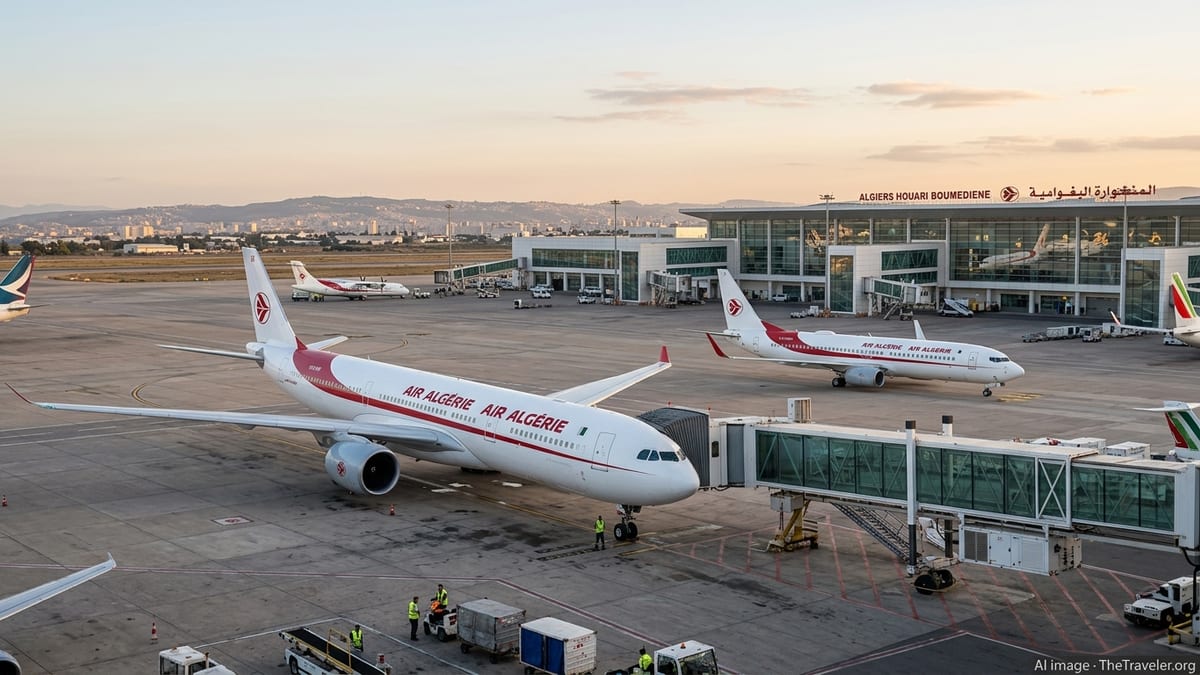
Early Morning Departure Scrubbed at Istanbul Airport
Publicly available flight tracking data and airport schedule information indicate that an Air Algérie service linking Istanbul Airport with Algiers, typically operating in the early hours as part of the carrier’s overnight bank of flights, did not depart as planned. Passengers expecting to travel on the non stop Istanbul–Algiers sector instead faced a cancellation once at the airport, disrupting onward connections into North and West Africa.
The Istanbul–Algiers city pair is normally served by both Air Algérie and Turkish Airlines, with early morning departures timed to connect into first wave arrivals at Algiers Houari Boumediene Airport. When one of these early rotations is removed from the schedule, travelers can lose same day access to domestic Algerian destinations as well as regional links into the wider Middle East and Saharan Africa.
Reports emerging from passenger forums and flight status platforms suggest that the cancelled service was part of a pattern of recent schedule instability affecting several North African and Middle Eastern routes. In some cases, services have been retimed or consolidated on the same day, but in this instance, travelers described being left without an immediate replacement option from Istanbul.
Stranded Travelers Face Limited Same Day Alternatives
For travelers already at Istanbul Airport, the abrupt removal of an early morning Air Algérie departure meant limited alternatives for reaching Algiers the same day. While Turkish Airlines maintains its own direct flights on the route, available seats are often constrained at short notice, especially during peak travel periods tied to school holidays, religious travel and summer bookings.
Passengers holding complex itineraries, including onward domestic legs inside Algeria or regional connections onward to cities such as Cairo, Tunis or West African hubs, were particularly exposed. A missed arrival window into Algiers can mean losing entire connection chains, forcing travelers to rebook multiple tickets or accept overnight delays. In a hub structure that relies heavily on carefully timed early morning flows, a single cancelled rotation can have disproportionate knock on effects.
Some accounts shared on social platforms reference travelers spending long hours in the terminal while attempting to rebook through third party agencies or online tools. Others highlight the challenge of securing food, rest areas and up to date information in crowded departure halls when a cancellation coincides with a busy early morning wave of flights across different airlines.
Operational Headwinds and a Sensitive Regional Corridor
Air Algérie has faced a period of operational headwinds in recent months, including schedule changes linked to weather disruptions, particularly dense coastal fog affecting Algerian airports, along with a broader drive to adjust its network and fleet utilization. Industry and aviation association publications describe an ambitious transformation plan that aims to grow passenger numbers while modernizing operations, even as the carrier continues to navigate a complex regional environment.
The Istanbul–Algiers link sits within a broader corridor that connects the Middle East, Türkiye and North Africa. Istanbul Airport functions as a major transit node for travelers heading between Europe, the Gulf, North Africa and Sub Saharan Africa. When services on this axis are disrupted, impacts can ripple well beyond origin and destination passengers, affecting those who have intentionally routed through Algiers to reach cities without direct long haul connectivity.
Recent months have also seen heightened sensitivity around flight reliability across parts of the Middle East and Eastern Mediterranean. Airspace constraints, weather events and commercial decisions to consolidate low demand services have all contributed to a more fragile operating environment. Against this backdrop, the cancellation of an early morning Istanbul–Algiers service underscores how thin margins in airline scheduling can translate swiftly into real world disruption for travelers.
What the Disruption Means for Passenger Rights
Travel rights advocates note that passengers affected by cancellations on routes touching Türkiye and Algeria occupy a complex regulatory landscape. Istanbul Airport is outside the European Union, and Algiers is not covered by EU Regulation 261, which clearly defines compensation and assistance obligations for carriers operating from EU airports or using EU based airlines. Instead, travelers must navigate a mix of national consumer rules, airline specific policies and the contractual terms of their tickets.
Publicly available policy summaries and consumer guides indicate that Air Algérie, like many airlines in the region, typically offers rebooking on the next available service when a flight is cancelled. Access to meals, hotel accommodation and ground transport may depend on whether the disruption is categorized as an operational issue within the airline’s control or as a consequence of factors such as weather or wider airspace restrictions.
For travelers who purchased tickets through online travel agencies, additional complexity can arise. Rebooking and refund requests are often routed through the intermediary, which can slow response times during fast moving disruptions. Consumer forums show repeated complaints about long waits for confirmation, limited proactive communication and confusion over which party is responsible for care and assistance at the airport.
Practical Steps for Affected Travelers and Future Bookings
Passenger advocacy organizations and travel compensation platforms generally recommend that anyone impacted by a cancellation like the Istanbul–Algiers disruption first secures written confirmation of the flight status, either via the airport, the airline’s digital channels or a recognized flight tracking service. Keeping boarding passes, booking confirmations and receipts for any out of pocket expenses is also considered important for any later reimbursement claim.
Travel specialists advise that stranded travelers prioritize confirming their onward routing before arranging accommodation or secondary ground transport. Given the limited number of daily non stop options between Istanbul and Algiers, some passengers may find it necessary to connect via a third hub such as Paris, Rome or a Gulf city, even if that adds time and cost. Those with time sensitive commitments, including group tours or business meetings, may wish to proactively explore backup routings when planning future trips along this corridor.
The latest disruption highlights the value of carefully checking minimum connection times at Algiers Houari Boumediene Airport and avoiding very tight self connections on separate tickets. Booking all legs on a single itinerary, where possible, can help ensure that missed connections caused by an upstream cancellation remain the airline’s responsibility rather than solely the passenger’s risk.
As airlines serving North Africa and the Middle East continue to adjust schedules in response to operational pressures and shifting demand, travelers using the Istanbul–Algiers route may need to build more flexibility into their plans. Monitoring flight status closely in the 24 hours before departure and allowing extra time for contingencies are emerging as key strategies for reducing the impact of sudden cancellations on this strategically important link between Türkiye, Algeria and the wider region.