


More news on this day
Passengers transiting through Doha faced hours of disruption after a series of last-minute cancellations by Air Arabia and Kuwait Airways reduced connectivity from Hamad International Airport to Sharjah and Kuwait City, highlighting the fragility of Gulf regional networks amid ongoing airspace constraints.
Get the latest news straight to your inbox!
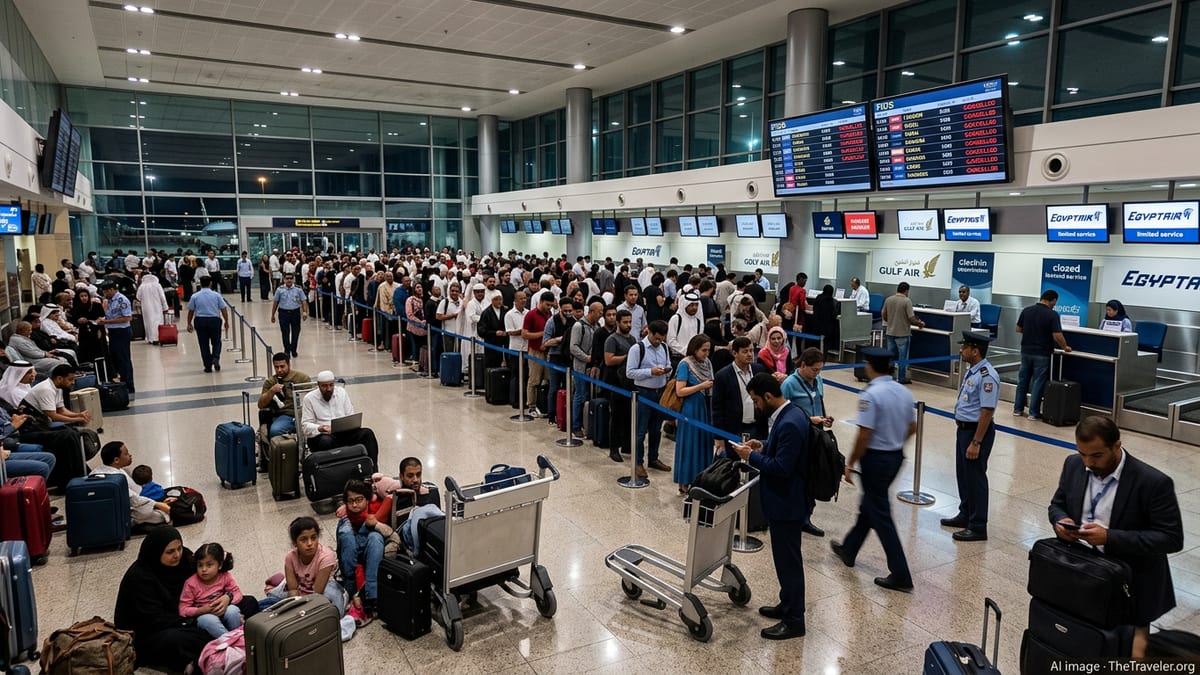
Three Key Departures Scrubbed at Hamad International
Publicly available schedules and tracking data for May 2026 indicate that at least three key regional departures from Doha to Sharjah and Kuwait City were withdrawn within a short window, forcing rebookings and leaving some travelers stranded at Hamad International Airport. Air Arabia, which operates under the ICAO code ABY and uses Sharjah as its primary hub, was among the carriers affected, alongside Kuwait Airways services into Kuwait City.
The cancellations effectively severed two of Doha’s shortest regional links for several hours, reducing options for travelers relying on Hamad International as a transfer point between Qatar and the wider Gulf. Passengers connecting from overnight long haul arrivals into morning departures toward Sharjah and Kuwait City were particularly exposed, as the scrubbed flights narrowed the already limited bank of early regional services.
Operational data for recent weeks shows that Gulf regional flying remains more volatile than long haul segments, with higher rates of schedule changes and day-of-operation cancellations on short hops such as Doha–Sharjah. Analysts tracking the region note that low cost operators and state carriers alike have adopted a more conservative approach to regional frequencies while they rebuild networks after months of airspace disruption.
For Hamad International, the incident underscores how a handful of regional cancellations can ripple outward. When multiple departures to key Gulf hubs disappear from the screen within hours, passenger flows through security, transfer desks, and baggage reclaim rapidly become unbalanced, creating visible congestion even if the total number of affected flights appears modest.
Air Arabia’s ABY Operations Under Pressure on the Doha–Sharjah Corridor
Air Arabia’s operations into Doha have already been under scrutiny since a run of disruptions on the Doha–Sharjah corridor in April 2026, when two services were pulled at short notice and travelers reported being stuck at Hamad International until late-night alternatives could be arranged. Industry coverage at the time linked those cancellations to regional airspace restrictions and shifting routings that constrained aircraft availability on short-haul runs.
The carrier, which is headquartered in Sharjah and marketed as the Middle East’s first and largest low cost airline, relies on dense shuttle-style operations between Gulf cities to feed its broader network. Any disturbance to the Sharjah–Doha link can therefore create knock-on issues, as passengers miss onward connections from Sharjah to South Asia, North Africa, and secondary Middle Eastern destinations.
Recent route analysis suggests that, while Air Arabia has restored many of its Gulf frequencies compared with earlier in the year, its Doha services remain more vulnerable to day-of-operation changes than higher yielding trunk routes from Sharjah to major South Asian or European gateways. Observers point out that low cost carriers typically prioritize core hubs and strongest markets when aircraft rotations are tight, leaving thinner regional spokes like Doha exposed when disruption strikes.
For budget-conscious travelers who had chosen Air Arabia and similar carriers to minimize costs between Qatar and the UAE, the sudden Doha cancellations have served as a reminder that low fares can come with increased schedule risk in a still-fragile regional environment.
Kuwait Airways Cancellations Intensify Regional Strain
While Air Arabia’s ABY-coded operations have drawn attention on the Doha–Sharjah route, Kuwait Airways has been facing its own operational headwinds. Published reports from early May describe Kuwait Airways canceling multiple departures in a single day out of Kuwait International Airport, leaving travelers there queueing for rebooking and hotel arrangements as schedules were reworked.
Against that backdrop, the withdrawal of a Doha–Kuwait City rotation compounds the strain on an already stretched network. Kuwait City functions as both an origin and a connecting point for traffic between the northern Gulf and South Asia, and any gaps in the timetable reduce the flexibility available to passengers aiming to route through the Kuwaiti capital.
The timing of the Doha-linked cancellation is particularly sensitive. With regional airspace still partially restricted and some carriers operating elongated routings around closed corridors, flight times and aircraft utilization remain under pressure. Even a single lost rotation in and out of Kuwait City can alter crew schedules and knock on to later services in the day.
Travel industry analysts note that Kuwait Airways has been juggling its recovery plan with operational limits similar to those affecting peers across the region, including aircraft availability, maintenance windows compressed by earlier disruptions, and fluctuating demand patterns on Gulf short-haul sectors.
Wider Gulf Network Feels the Impact
The short-lived but acute interruption of Doha’s links to Sharjah and Kuwait City illustrates how closely intertwined Gulf aviation networks have become. Hamad International, Sharjah, and Kuwait City all act as connector hubs, each feeding traffic into overlapping markets across the Middle East, South Asia, and beyond. When flights along any side of this triangle are removed, the effect cascades through connecting banks and reduces redundancy across the system.
Data-driven assessments of the Middle East have already highlighted above-average cancellation rates in the region in early 2026, particularly on short- and medium-haul routes. Analysts attribute the pattern to a combination of lingering airspace closures, rerouted traffic flows, and strategic capacity trimming by carriers seeking to stabilize load factors after several volatile seasons.
Competitive dynamics further complicate the picture. As Qatar Airways, Air Arabia, Kuwait Airways, and other players adjust their schedules, overlapping routes between the Gulf hubs can experience both surges and sudden dips in capacity. The Doha disruptions arrived just as some airlines were signaling a measured ramp-up of summer services, injecting fresh uncertainty into planning for travel agents and corporate travel buyers.
For regional tourism boards and business centers that rely on seamless short-haul links between Gulf capitals, the episode serves as another reminder that the broader recovery in Middle Eastern aviation remains vulnerable to shocks, even as passenger numbers rebound.
What Passengers Can Expect in the Near Term
For travelers with upcoming itineraries involving Doha, Sharjah, or Kuwait City, publicly available information suggests that schedules remain fluid, particularly on lower frequency regional routes. Airlines across the Gulf continue to advise passengers to monitor their bookings closely on the day of departure and to allow additional buffer time for connections when possible.
Consumer advocates in the region point to existing airline policies that typically offer rebooking or refunds when flights are canceled, though the practical experience can involve long queues at airport service desks and limited same-day alternatives, especially when multiple carriers trim services simultaneously. With some Gulf routes still not back to pre-disruption frequencies, spare seats on alternative flights may be scarce.
Analysts also highlight that modes of recovery vary by carrier. Full service airlines with extensive interline partnerships may be better placed to rebook affected passengers via alternative hubs, while low cost operators with point-to-point models often provide fewer rerouting options if a particular sector is canceled. Travelers relying on Air Arabia’s Doha–Sharjah shuttle or Kuwait Airways links to Kuwait City may therefore face a narrower range of solutions when irregular operations occur.
Looking ahead into the summer schedule, network forecasts indicate gradual capacity growth across major Gulf hubs, but industry watchers caution that further tactical cancellations are likely as airlines continue to navigate airspace constraints and operational bottlenecks. For now, the recent disruptions at Hamad International stand as a case study in how quickly regional connectivity can unravel when just a handful of pivotal flights are removed from the board.