


More news on this day
Air Arabia is set to add Uzbekistan to its expanding United Arab Emirates hub network, joining existing services into Kazakhstan, Russia, India and Saudi Arabia as the low-cost carrier sharpens its focus on Central Asia, South Asia and Middle East connectivity.
Get the latest news straight to your inbox!
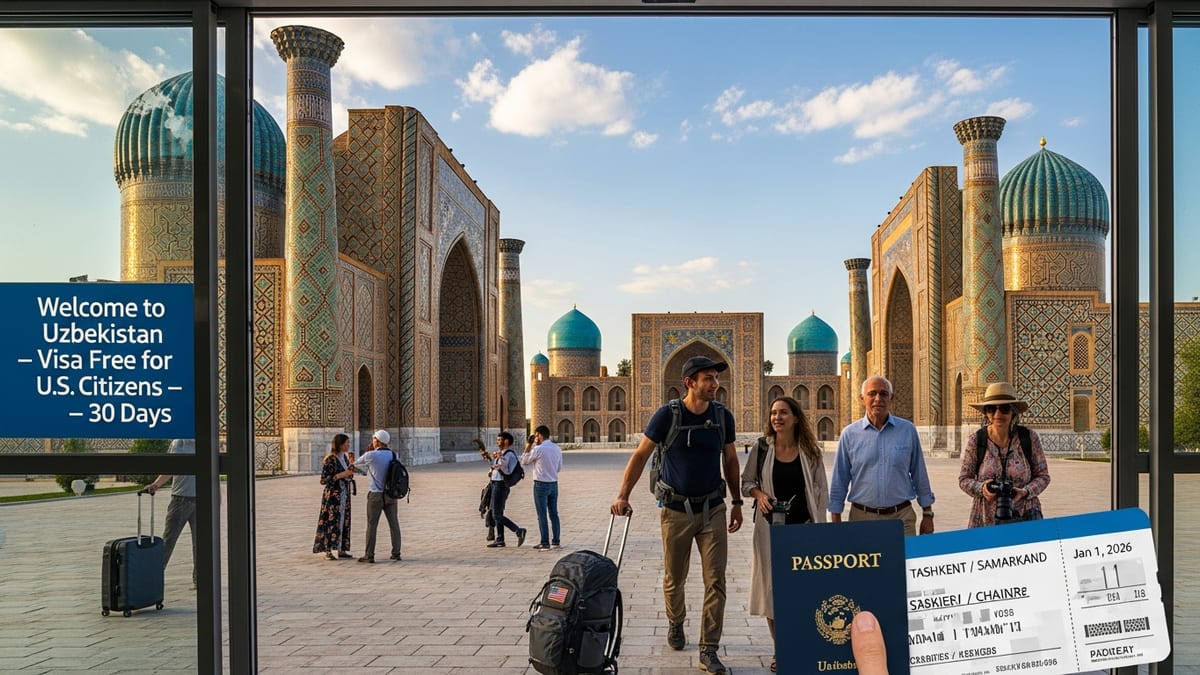
Uzbekistan Becomes Latest Link in Sharjah-Centric Growth Strategy
Publicly available schedule data and booking channels indicate that Air Arabia is preparing direct links between Sharjah and cities in Uzbekistan, building on the carrier’s earlier launch of services to Tashkent and plans highlighting Uzbekistan within its Central Asia portfolio. The move positions Uzbekistan alongside Kazakhstan and Russia as core markets in the airline’s push deeper into the region.
Uzbekistan’s inclusion reflects a broader strategy in which Sharjah International Airport continues to function as the group’s primary connective hub. From Sharjah, Air Arabia already serves a wide network across the Indian subcontinent and the Gulf, with new Central Asian points designed to plug into that same low-cost, high-frequency model. The result is an expanding web of relatively short- and medium-haul routes radiating from the UAE.
Industry observers note that the carrier has been steadily filling gaps in point-to-point connectivity from the UAE to secondary and emerging destinations. By adding Uzbekistan to its map alongside Kazakhstan and Russia, Air Arabia is effectively building a chain of markets around the Caspian basin that can be reached in a single hop from the Gulf, in many cases without direct competition from full-service rivals.
While full commercial details are yet to be fully reflected in long-term schedules, the Uzbekistan development aligns with Air Arabia’s recent pattern of route announcements. Over the past two years, the airline has consistently prioritized new destinations that offer both strong migrant worker flows and rising tourism demand, a profile that Uzbekistan closely matches.
Strengthening Central Asia’s Links to the Gulf
Uzbekistan’s addition to Air Arabia’s network underlines the emergence of Central Asia as a strategic growth area for Gulf-based airlines. Tashkent and other Uzbek cities are increasingly positioning themselves as gateways for trade, tourism and labor mobility, and a direct low-cost link to the UAE can serve all three segments simultaneously.
According to published coverage on regional aviation trends, Central Asian governments have been actively seeking new air links to diversify their economic partners and tap Gulf tourism, investment and transit traffic. For Uzbekistan, improved connectivity to Sharjah promises easier access not only to the UAE market but also to onward links across the Middle East, India and North Africa via Air Arabia’s hub.
For Air Arabia, deeper penetration into Central Asia complements existing routes into Kazakhstan and Russia, where the airline has already established a presence from Sharjah. When combined, these markets create a multi-point footprint that can be served by a standardized narrow-body fleet, helping the airline maintain tight cost control while reaching a wider geography.
The carrier’s cargo documents also show Uzbekistan classified as a distinct region for freight uplift from Sharjah, confirming its role within the broader commercial network. That categorization suggests expectations not only for passenger traffic but also for growing small-scale trade flows between the UAE and Uzbekistan as air links mature.
Bolstering South Asian and Saudi Connectivity via the UAE
Air Arabia’s network expansion into Uzbekistan does not occur in isolation. It arrives as the airline continues to reinforce links into India and Saudi Arabia, two of its most important markets. Flight schedules and investor reports highlight dense connectivity from Sharjah into multiple Indian cities and a joint venture structure supporting a separate airline platform in Saudi Arabia.
These developments collectively underpin a wider strategy: using the UAE as a bridge between populous South Asian markets, resource-rich Gulf economies and emerging destinations in Central Asia. Passengers traveling between India and Uzbekistan, for example, can increasingly route via Sharjah on a single carrier, benefiting from simplified itineraries and generally lower fares than full-service one-stop options.
Saudi Arabia also plays a growing role in this network story. With demand rising on routes between the kingdom and both South Asia and Central Asia, Air Arabia’s Saudi-based operations are positioned to mirror some of the connectivity patterns seen from Sharjah. Over time, that could create a dual-hub effect, with the UAE and Saudi Arabia jointly funnelling traffic into the airline’s extended neighborhood.
The combined effect is a lattice of routes that improves travel options for migrant workers, business travelers and religious pilgrims alike. As frequencies grow, the network likely becomes more attractive for price-sensitive travelers who prioritize direct or single-connection journeys over premium onboard services.
Sharjah’s Role in the Low-Cost Competition for Regional Hubs
Sharjah’s importance in Air Arabia’s expansion across Central and South Asia reinforces the emirate’s status as a competitive low-cost hub in the Gulf. While neighboring Dubai and Abu Dhabi are known for long-haul, full-service connectivity, Sharjah is increasingly associated with point-to-point routes operated by single-class narrow-body aircraft at lower fares.
Recent network additions into Europe, including new services to destinations such as Rome and Warsaw, illustrate the airline’s readiness to connect Sharjah with both established and emerging tourism cities. Those moves sit alongside expanding services within the Middle East and to North Africa, giving the hub a diverse mix of leisure and labor traffic.
Uzbekistan’s integration into this ecosystem further broadens Sharjah’s catchment. It offers travelers from Central Asia a new entry point into the Gulf that is distinct from Dubai International Airport, while still benefitting from geographic proximity and surface transport links between the emirates.
For the wider UAE, the growing role of Sharjah as a base for low-cost connectivity complements the premium-focused strategies pursued from Dubai and Abu Dhabi. The resulting multi-airport system increases overall capacity and choice for passengers moving among Central Asia, South Asia and the Middle East.
Implications for Travelers and Regional Tourism
For travelers, Air Arabia’s entry into Uzbekistan opens new possibilities for affordable trips between Central Asia and the Gulf. Leisure visitors from the UAE gain easier access to Uzbekistan’s cultural and historical attractions, while Uzbek travelers see improved options for visiting family members working across the Middle East or for pursuing medical and shopping trips in the UAE.
Tourism boards in both Uzbekistan and the UAE are likely to view the enhanced connectivity as an opportunity to diversify visitor profiles. Low-cost flights can encourage shorter, more frequent visits, particularly among younger travelers and those combining work and leisure trips.
At the same time, the new routes may intensify competition among airlines serving Central Asia from the Gulf. Other regional carriers already connect cities such as Tashkent and Almaty with Dubai and Doha, and Air Arabia’s pricing and schedule decisions from Sharjah could put downward pressure on fares.
As Air Arabia knits Uzbekistan into a wider network that also spans Kazakhstan, Russia, India and Saudi Arabia, the cumulative effect is a denser web of air links within a broad arc from Eastern Europe to the Indian Ocean. For a growing number of passengers and small businesses, that network promises more direct options, greater frequency and a wider set of connections anchored in the UAE.