


More news on this day
Georgia is moving to the forefront of airline technology, joining Texas, Illinois, New York, Washington, California and other innovation leaders as airports and carriers race to deliver faster in-flight internet and more connected digital services across the United States.
Get the latest news straight to your inbox!
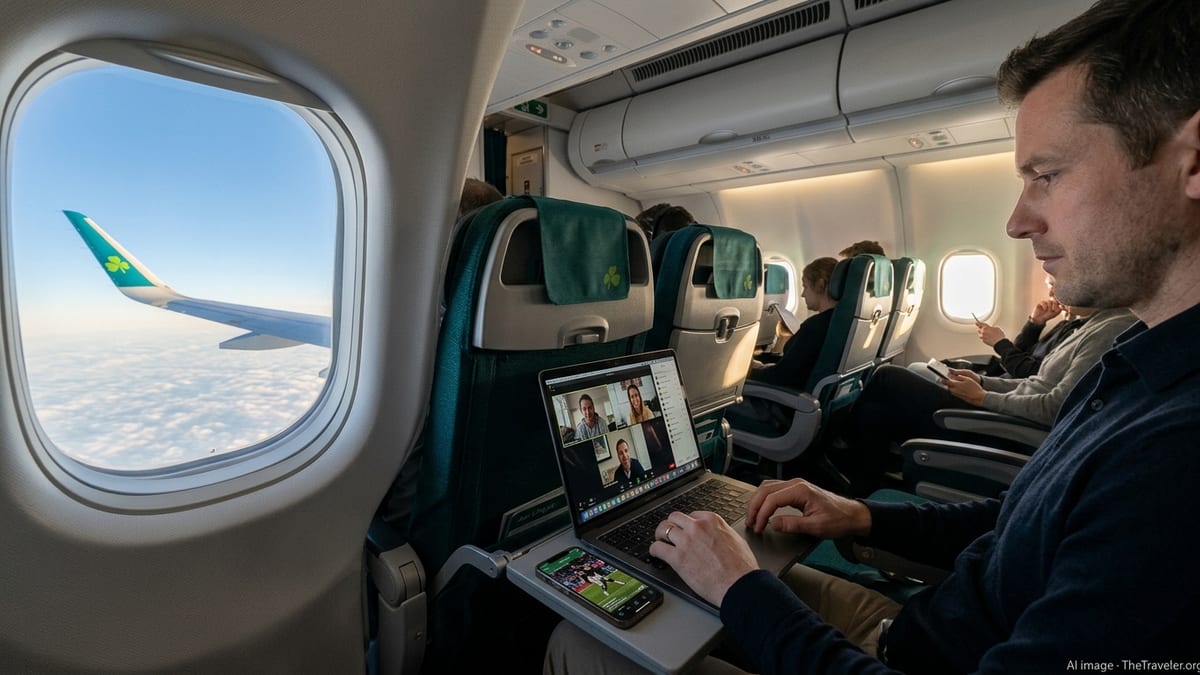
Georgia Steps Into the National In-Flight Connectivity Race
Long viewed primarily as a logistics powerhouse, Georgia is increasingly being recognized as a digital aviation hub. Hartsfield-Jackson Atlanta International Airport, the state’s primary gateway, is pairing its role as one of the world’s busiest airports with a growing portfolio of connectivity and technology upgrades aimed at improving in-flight internet performance and on-the-ground digital services.
Publicly available infrastructure plans indicate that Atlanta’s airport is in the midst of major modernization efforts that include upgraded electrical systems, expanded data capacity and new smart monitoring tools designed to support bandwidth-intensive services. Industry analysts note that these types of investments are essential for airlines rolling out faster satellite-based and ground-enabled in-flight Wi-Fi, which depends on robust power and fiber networks inside terminal and airfield operations.
The shift comes as travelers treat aircraft cabins as extensions of their offices and homes, expecting video conferencing, streaming and real-time messaging to work reliably at cruising altitude. Georgia’s role in this transformation is increasingly comparable to early adopter states such as California and Washington, where technology ecosystems, aerospace clusters and major carriers helped set the benchmark for connected flying.
In this emerging landscape, state-level leadership is being measured less by formal regulation and more by how quickly airports, telecom providers and airlines can deploy, test and scale new digital services that shrink the gap between ground and in-flight connectivity.
Atlanta’s Airport Lays the Groundwork for High-Capacity Wi-Fi
At the center of Georgia’s push is Hartsfield-Jackson Atlanta International Airport, which has been rolling out projects to strengthen its digital backbone. Recent upgrades to power management and monitoring systems are designed to support a denser network of access points, antennas and critical IT equipment across terminals and concourses. Public documents and trade coverage describe a more data-driven approach to managing the airport’s energy and communications infrastructure, with real-time visibility into thousands of connected devices.
Industry reports also highlight efforts to improve cellular and Wi-Fi coverage in historically challenging parts of the facility, including the international terminal. Distributed antenna systems and modern radio equipment are being introduced to smooth out dead zones and handle peak demand when heavily booked long-haul flights depart within tight time windows. These improvements are central to delivering stable backhaul for next-generation in-flight Wi-Fi and for the ground systems that support it.
In parallel, the airport is expanding smart wayfinding and digital signage, integrating live operational data into the screens passengers use to navigate the terminal. This same digital layer is increasingly intertwined with the connectivity that enables travelers to board aircraft with devices already authenticated and synced, setting the stage for a smoother transition from terminal networks to in-cabin internet services.
Observers say this focus on foundational utilities is a critical, if less visible, factor in whether airlines can deliver consistent high-speed Wi-Fi gate-to-gate. Without resilient power, extensive fiber and dense radio coverage at the airport level, even the most advanced satellite link on an aircraft can struggle to reach its full potential.
States Compete on Speed as In-Flight Internet Benchmarks Rise
Georgia’s moves come at a time when network testing firms and aviation data providers are closely tracking in-flight connectivity performance across routes that crisscross major U.S. states. Recent reports on airport and airline Wi-Fi speeds show significant gains on flights touching leading tech markets such as California, Washington and New York, where carriers have aggressively adopted low Earth orbit satellite systems and upgraded traditional air-to-ground networks.
Texas and Illinois have also emerged as important nodes in these performance rankings, with their major hubs serving as proving grounds for new antennas, modems and carrier partnerships. As airlines layer on premium connectivity packages and free messaging offers, state-to-state comparisons are beginning to resemble the league tables that once focused primarily on mobile network coverage or fixed broadband speeds.
Industry analysis suggests that Georgia is now part of that competitive set. With Atlanta’s airport operating as a primary hub for cross-country and international connections, its ability to support high-throughput links on both domestic and long-haul routes gives the state outsized influence on national averages. As more aircraft serving Georgia adopt advanced Wi-Fi systems, flight segments that originate or terminate in the state are expected to show measurable performance improvements over the next several years.
For travelers, the practical impact is already visible in more reliable streaming, faster email sync and better stability for cloud-based work tools on flights that link Georgia with the tech corridors of the West Coast and Northeast. As carriers publish more detailed coverage maps and performance claims, the states anchoring those networks are becoming key markers of what passengers can expect in the air.
Delta and Partners Drive a New Era of Airline Digital Services
Georgia’s flagship carrier, Delta Air Lines, is playing a prominent role in the broader shift toward digitally enabled journeys. Based in Atlanta, the airline has been expanding free Wi-Fi offerings on many domestic routes, integrating richer entertainment libraries and experimenting with new ways to personalize content through its mobile app and onboard portals. Trade coverage and company announcements describe a strategy that sees connectivity not as an add-on but as the backbone of a wider digital ecosystem.
Recent initiatives have included the rollout of AI-informed travel tools inside the airline’s app and deeper integration with ground transportation partners, allowing passengers to coordinate rides and itinerary changes in near real time. These services rely heavily on consistent in-flight internet so that itineraries, gate changes and ground connections can be updated continuously while customers are still in the air.
Onboard, airlines based in or operating heavily through Georgia are steadily equipping aircraft with higher-capacity satellite systems that can keep up with growing demand for video and collaboration tools. Aviation analysts note that this is part of a nationwide trend in which carriers serving major hubs in states like California, Washington and New York adopt similar technologies, creating a more uniform digital experience across coast-to-coast networks.
As these investments mature, Georgia’s skies are becoming a testbed for features such as cloud-synced seatback profiles, context-aware retail offers and more responsive customer support channels, all dependent on reliable high-bandwidth connections from the cabin.
Beyond the Cabin: Autonomous Pods and Smart Ground Mobility
Georgia’s aviation innovation story is not confined to what happens after takeoff. Around Atlanta’s airport, local districts and technology partners are piloting autonomous pod systems and other new mobility options that could eventually integrate with airline apps and in-flight connectivity. A recently announced test route near the airport will use small self-driving vehicles to shuttle passengers between nearby convention facilities and the airport’s automated people mover.
Urban mobility specialists see these pilots as early steps toward a more seamless curb-to-gate and gate-to-city experience, where digital platforms orchestrate multiple modes of transport. In that vision, in-flight internet becomes a critical link that allows travelers to confirm ground transport, receive real-time congestion updates and adjust routes before they land.
Georgia’s experimentation with autonomous shuttles mirrors efforts in innovation-oriented states such as California and Washington, where cities are testing electric vertical takeoff aircraft, driverless transit and smart curb management. By situating these pilots in the orbit of a major global hub, Georgia is positioning itself as a laboratory for how airborne and ground-based connectivity can work together.
For business and leisure travelers, the result could be a future in which a high-speed connection established in the air persists through the journey’s final mile, linking aircraft, airport infrastructure and city streets into a single digital corridor that begins in Georgia and extends across the national air network.