


More news on this day
Travelers across the Middle East are facing renewed disruption as Kuwait contends with delays and intermittent airport closures, while Singapore Airlines and Air France extend suspensions on key routes amid ongoing security concerns and shifting airspace restrictions.
Get the latest news straight to your inbox!
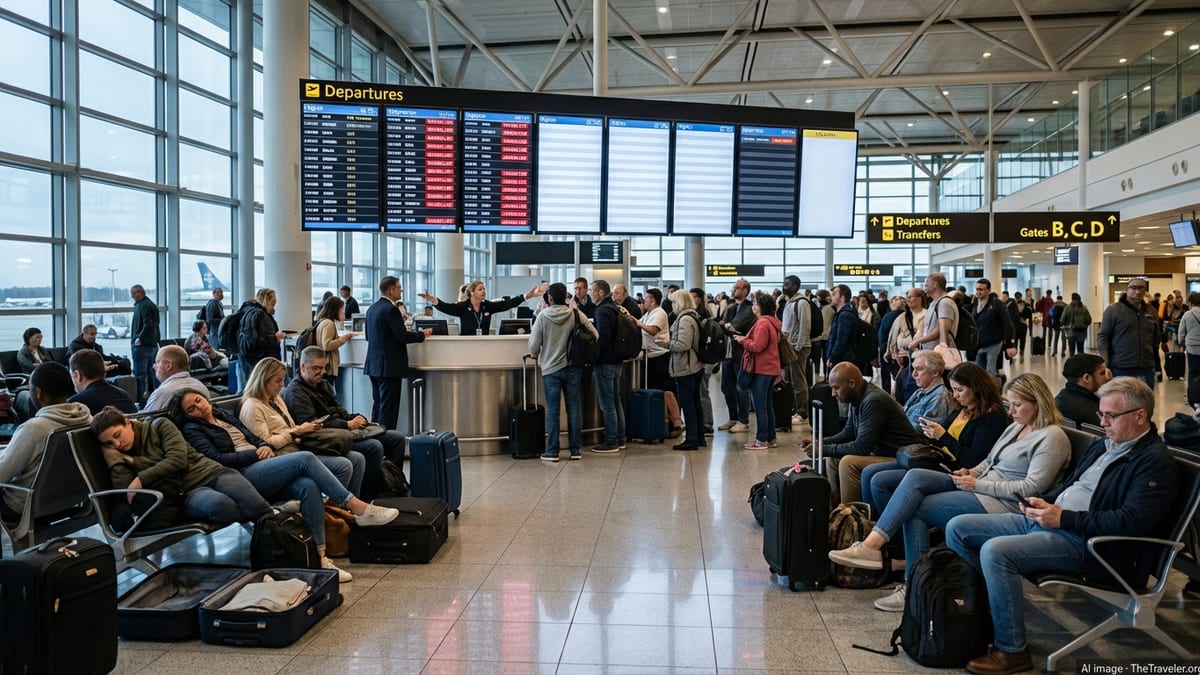
Kuwait passengers hit by rolling delays and partial closures
Operations at Kuwait International Airport remain fragile, with reports indicating that intermittent airspace restrictions and earlier drone attacks continue to reverberate through flight schedules. Kuwait’s main hub has periodically shifted traffic between terminals and adjusted capacity, creating a patchwork of arrivals and departures that is proving difficult for airlines and travelers to navigate.
Recent travel advisories highlight that Kuwait-bound passengers should be prepared for late-notice schedule changes, with some services diverted to alternative terminals or nearby airports when airspace alerts are raised. Even when the airport is technically open, knock-on effects from earlier closures are leaving aircraft and crews out of position, feeding into a cycle of rolling delays.
Local carriers and regional airlines have warned that residual disruption may persist even on days without new security incidents. As flights bunch into narrower operational windows, travelers are experiencing longer queues at check-in and security, as well as extended waits on board while aircraft await departure slots.
For transit passengers who once relied on Kuwait as a straightforward Gulf connection point, the uncertainty is prompting last-minute rebookings via other regional hubs and adding pressure to an already strained Middle East aviation network.
Air France prolongs halt to Dubai, Riyadh and Beirut services
Air France has become one of the most visible European carriers to lengthen its absence from parts of the Middle East. According to published coverage, the airline has temporarily suspended flights between Paris and Dubai and between Paris and Riyadh, and has extended an earlier halt to services to Beirut.
Updates issued this week indicate that flights to and from Riyadh are suspended at least until late July, while the Dubai route is paused until around July 27. The Beirut suspension now runs into early August, reflecting what the carrier describes in public statements as a fast-moving security picture and evolving airspace restrictions.
These decisions come on top of a broader program that had already seen Air France maintain a pause on certain Middle East destinations in its summer schedule. Industry analysis notes that the airline is instead redeploying some long-haul capacity to Asia and North America, where demand remains comparatively robust and routing is less exposed to the Gulf’s complex overflight environment.
For travelers, the extended suspensions mean fewer nonstop options between France and Gulf or Levant destinations at the height of the northern summer holiday period. Many passengers are being rebooked via partner airlines and alternative hubs, adding extra stops and longer journey times to what were previously direct routes.
Singapore Airlines keeps Dubai suspension in place
Singapore Airlines is also keeping its distance from the most constrained parts of the region. Public advisories from the carrier show that flights SQ494 and SQ495 between Singapore and Dubai remain cancelled for an extended period, now running through October 24. The airline attributes the move to the continuing geopolitical situation in the Middle East and the resulting impact on flight safety and routings.
The long horizon on the Dubai suspension underlines how seriously airlines are treating the risk of sudden airspace closures or nearby conflict activity. Singapore Airlines is instead focusing on maintaining other long-haul links where it can route aircraft clear of higher-risk zones, balancing passenger demand with conservative risk assessments.
Its low-cost sister airline Scoot has adopted a more selective approach, resuming some services such as flights to Jeddah only after detailed reviews of operational and security conditions. Even so, both carriers are retaining the option to modify schedules at short notice should the regional situation deteriorate again.
For travelers in Southeast Asia who traditionally used Dubai as a connection point to Europe or the Middle East, the extended cancellation window is encouraging a shift to other hubs, including those in Turkey and South Asia, potentially redrawing long-established traffic flows.
Airspace constraints reshape regional connectivity
The suspensions by Air France and Singapore Airlines sit within a much wider pattern of airspace constraints across the Middle East. Aviation and freight bulletins describe a region that, since the escalation of conflict involving Iran earlier this year, has seen repeated closures or restrictions affecting Bahrain, Kuwait, Israel, Jordan, Qatar, Oman, the United Arab Emirates and Saudi Arabia.
Industry assessments suggest that the loss or partial closure of key flight corridors has removed a significant slice of global airspace from normal civilian use. This has forced airlines to adopt longer detours or to suspend certain routes entirely, increasing costs and reducing flexibility just as peak summer demand builds.
Analysts point out that the Middle East’s role as a global aviation crossroads magnifies the impact of any local disruption. Carriers that do not serve the region directly may still find their preferred overflight routes curtailed, affecting schedules between Europe and Asia and leading to further delays and missed connections far from the immediate area of tension.
In this environment, airlines have become more cautious about reinstating previously paused services. Many are opting for incremental returns, short operational windows and frequent schedule reviews rather than rapid, full restorations of pre-crisis networks.
What travelers can expect in the weeks ahead
With Kuwait still vulnerable to intermittent disruption and major carriers like Air France and Singapore Airlines keeping Middle East suspensions in place, passengers should anticipate a period of continued volatility across the region’s skies. Schedules published days or weeks in advance may shift as operators respond to new advisories or changes in airspace availability.
Travel experts recommend that passengers build in extra time for connections, particularly when itineraries involve regional transit points or interline transfers between different airlines. Same-day long-haul connections via Gulf hubs, once considered routine, now carry a higher risk of missed flights if upstream sectors are delayed.
Flexible booking policies and fee waivers, introduced by many airlines at the outset of the latest disruption, remain important tools for managing passenger expectations. Travelers are being encouraged through public advisories to monitor their bookings closely, ensure contact details are up to date and check for schedule changes before heading to the airport.
While there is cautious optimism that some routes could gradually resume if security conditions stabilize, the extended suspension windows announced by carriers such as Air France and Singapore Airlines suggest that a full normalization of Middle East air travel is unlikely in the immediate future.