


More news on this day
Air Canada and a growing group of transatlantic carriers are embracing the Airbus A321XLR, a new long-range single-aisle jet that promises widebody-style range with far leaner operating economics, potentially redrawing the North Atlantic route map over the next few years.
Get the latest news straight to your inbox!
Air Canada Emerges as North American Standard-Bearer
Publicly available fleet data shows that Air Canada took delivery of its first Airbus A321XLR in late April 2026, becoming one of the earliest North American operators of the extra-long-range narrowbody. Industry coverage indicates the airline has up to 30 of the type on order, positioning the carrier at the forefront of a shift toward smaller, more efficient aircraft on long, thin routes that were previously the domain of widebody jets.
Reports from aviation outlets describe a cabin product branded around new “Aurora” or Signature-style lie-flat suites in business class, along with upgraded economy seating and modern inflight entertainment. By installing fully flat beds in a single-aisle aircraft, Air Canada is signaling that the A321XLR will be deployed not just as a capacity tool, but as a premium product for corporate travelers on routes where demand does not justify a larger twin-aisle aircraft.
According to recent route planning updates cited in industry analysis, the A321XLR will initially link Montreal and Toronto with secondary European cities such as Berlin, Toulouse, and Edinburgh, with additional transatlantic and transcontinental services to follow. This approach allows Air Canada to grow in markets that could not reliably support a widebody, while maintaining year-round schedules that are less vulnerable to seasonal swings in demand.
The airline is also expected to use the new type on select high-demand domestic and North American transcontinental routes, matching capacity more closely to demand while retaining a long-haul standard of comfort. Analysts suggest this dual role will help bridge the gap between Air Canada’s existing narrowbody fleet and its long-haul widebodies, improving fleet utilization and network flexibility.
Iberia and Aer Lingus Prove the Concept Across the Atlantic
Iberia was the global launch operator for the A321XLR, taking the first delivery from Airbus in late 2024. Company information highlights that the aircraft was configured with around 182 seats in a two-class layout and entered service on the Madrid to Boston route in November 2024, marking the first regular transatlantic operation by the type.
Since then, Iberia has progressively added aircraft and expanded A321XLR flying to routes such as San Juan, Washington, and planned new Brazilian destinations including Recife and Fortaleza, according to recent corporate communications. The airline has framed the jet as a way to boost frequencies on strategic markets while reducing fuel burn compared with the A330 and A350 widebodies that dominate its long-haul fleet.
Within the same airline group, Aer Lingus has also begun taking delivery of A321XLRs following an earlier order by parent company IAG. Environmental and fleet planning documents released this year show that the Irish carrier views the type as central to its strategy of linking Dublin and regional UK gateways to a broader range of North American cities, while improving per-seat emissions performance.
Both Iberia and Aer Lingus had already been operating the related A321LR on transatlantic services, providing a real-world test bed for single-aisle long-haul operations. The XLR’s additional range and fuel capacity build on that experience, enabling them to push farther into secondary U.S., Canadian, and Latin American markets that would have been marginal or unviable for larger aircraft.
American, United, JetBlue and Lufthansa Line Up Behind the Type
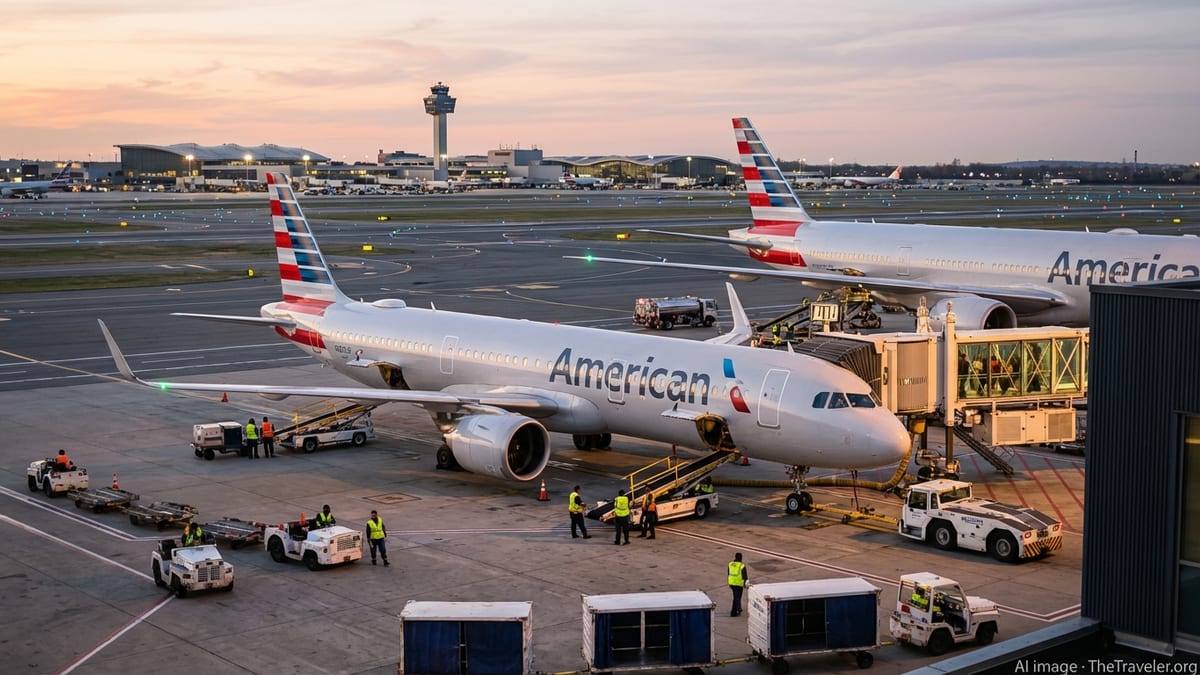
Across the Atlantic and in the United States, major carriers including American Airlines, United Airlines, JetBlue, and Lufthansa have all placed significant orders for the A321XLR as part of broader fleet renewal programs. Public order books compiled by Airbus and reported by financial media show that American is among the largest customers, planning to use the aircraft to replace aging Boeing 757s on transatlantic and high-value domestic routes from the East Coast.
United has similarly identified the A321XLR as a tool for connecting its East Coast and Midwest hubs with medium-size European cities, supplementing and, in some cases, replacing widebody services. Analysts note that the jet fits into United’s wider strategy of using a mix of narrowbody and widebody types to tailor capacity more precisely to route demand across the Atlantic.
JetBlue, which pioneered transatlantic services with the slightly shorter-range A321LR, has converted part of its Airbus order book to the XLR variant. According to company and industry disclosures, these aircraft are expected to support further growth from its New York and Boston focus cities into continental Europe, building on existing London and Paris routes while maintaining the carrier’s signature all-aisle-access business class and high-density economy cabin.
Lufthansa Group has also joined the shift, planning to deploy A321XLRs across its network from hubs such as Frankfurt and Munich. Industry coverage suggests that Lufthansa intends to use the aircraft both on thinner long-haul routes and on high-premium-demand intra-European sectors where frequency and product consistency are critical, signaling a broader European endorsement of long-range single-aisle operations.
Efficiency, Emissions and the New Economics of the North Atlantic
The A321XLR is an extended-range member of the A321neo family, advertised by Airbus as capable of flying up to roughly 4,700 nautical miles with a full passenger load. Public technical data indicates that the aircraft delivers fuel burn reductions of around 30 percent per seat compared with previous-generation single-aisle types, and substantially more when replacing older widebodies on similar missions.
This step-change in efficiency is central to the aircraft’s commercial appeal. With lower trip costs and a smaller number of seats to fill, airlines can profitably serve thinner city pairs, operate year-round on routes that once worked only in peak summer, and add extra frequencies on established markets. For carriers like Air Canada, Iberia, Aer Lingus, American, United, JetBlue, and Lufthansa, that means greater flexibility to fine-tune capacity while maintaining network breadth.
Environmental performance is another key factor. Company sustainability reports from European operators describe the A321XLR as a pillar of their emissions-reduction strategies, citing double-digit percentage cuts in fuel consumption and carbon output compared with older aircraft it replaces. While aviation remains a carbon-intensive sector, fleet renewal of this kind is presented as one of the most immediate levers available to airlines as regulators, investors, and passengers demand progress on climate commitments.
From a passenger perspective, the cabin experience on the latest A321XLRs is designed to narrow the perceived gap with widebodies. Industry materials highlight features such as mood lighting, larger overhead bins, quieter cabins, and lie-flat business-class seats on many operators. However, the narrower fuselage and typical six-abreast economy layout remain points of debate for travelers weighing comfort against the convenience of nonstop service to smaller destinations.
Implications for Travelers and Transatlantic Competition
As more A321XLRs enter service across these carriers over the next several years, travelers can expect a wider choice of nonstop transatlantic routes, particularly from secondary cities. Early route announcements by Air Canada and Iberia already point to a future in which passengers can fly directly between mid-sized hubs in North America and Europe that previously required connections through major gateways.
Industry analysts argue that this will intensify competition on the North Atlantic, historically one of aviation’s most lucrative markets. Legacy flag carriers and newer transatlantic entrants are likely to deploy the A321XLR in ways that test entrenched hub-and-spoke models, potentially diverting traffic from traditional connecting banks at megahubs in favor of more point-to-point flying.
For alliance and joint-venture partners, the aircraft offers a tool to deepen cooperation by filling in gaps in existing networks with lower-risk capacity. The presence of the A321XLR across oneworld, Star Alliance, and non-aligned operators such as JetBlue means that competitive dynamics will hinge increasingly on product differentiation, schedule breadth, and pricing rather than size of aircraft alone.
With Air Canada now fielding the type and peers across Europe and the United States ramping up deployments, the A321XLR is moving from concept to reality on the North Atlantic. Its performance in the next few years will provide an early indication of how far long-range single-aisle aircraft can reshape global long-haul travel, and which carriers are best positioned to benefit from the shift.