


More news on this day
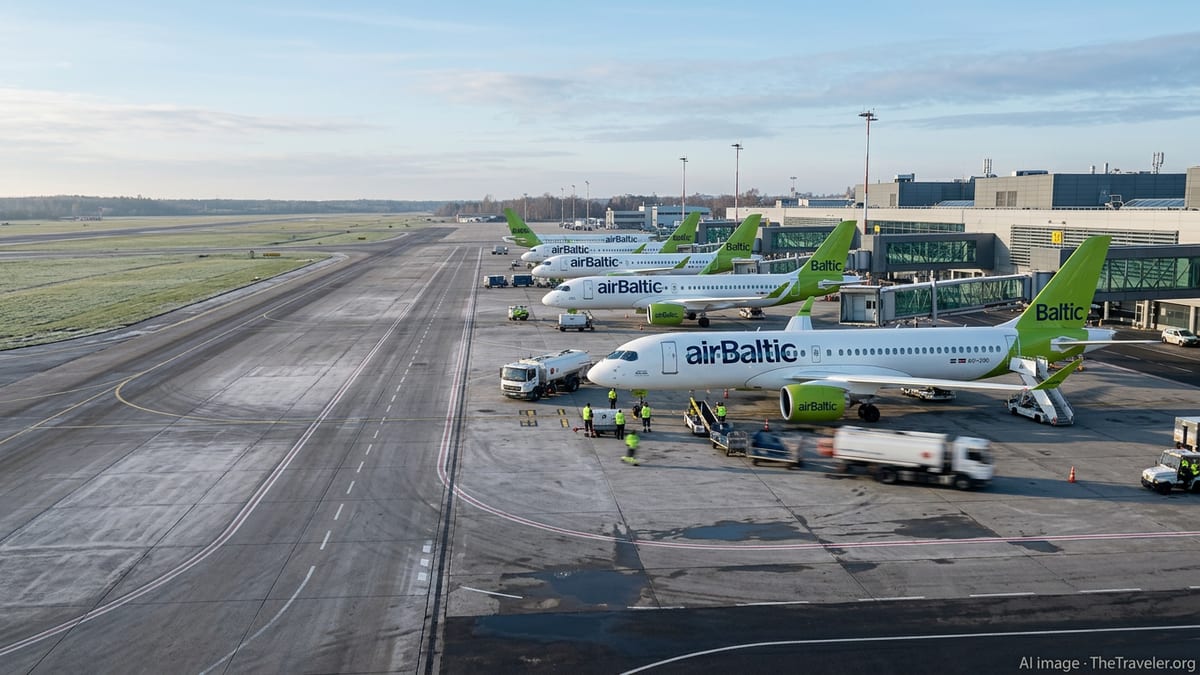
A new nonstop service between Vilnius and Geneva planned for 2027 is poised to strengthen direct links between Lithuania and Switzerland, creating fresh opportunities for leisure and business travel across Europe.
Get the latest news straight to your inbox!
A Strategic New Link Between Lithuania and Switzerland
The planned launch of airBaltic’s direct Vilnius–Geneva flights in 2027 would mark a significant expansion of nonstop connectivity between Lithuania and Switzerland. Publicly available information on the airline’s current network shows that travelers on this city pair today typically rely on connections through hubs such as Riga, Zurich or other European airports, adding time and complexity to journeys.
Industry coverage of airBaltic’s recent growth strategy highlights Lithuania as one of the carrier’s core markets, with Vilnius already serving as an important base for its Airbus A220-300 fleet. In parallel, Switzerland has been emerging as a key destination in the airline’s schedule, illustrated by new and expanded services to Zurich. A dedicated Vilnius–Geneva route would extend that footprint to western Switzerland, closer to organizations based in Geneva and the broader Lake Geneva region.
For Lithuania, the development reflects a broader effort to diversify long- and short-haul access beyond traditional hubs, giving residents and businesses more direct options within Europe. For Switzerland, the route is expected to deepen ties with the Baltics, supporting emerging trade, technology and financial services links between Geneva and the rapidly developing economies of the region.
While specific operational details for 2027 have not yet been widely disclosed, the move aligns with a pattern of steady network expansion at Vilnius Airport and a continued emphasis on point-to-point connectivity that avoids unnecessary transfers.
Transforming Leisure Travel Across Europe
Direct flights between Vilnius and Geneva are expected to reshape leisure travel patterns between the Baltics and the Alps. Today, travelers from Lithuania heading for Swiss ski resorts, hiking routes or lakeside destinations often transit via large hubs, extending total travel times and increasing the likelihood of missed connections in peak winter or summer seasons.
With nonstop service, passengers would be able to reach Geneva in a single hop before continuing by rail or road to popular resorts in the French and Swiss Alps, including destinations within a few hours of the city. This simplification of the journey is likely to make weekend and short-break travel more realistic for Lithuanian holidaymakers, particularly during peak ski season and summer hiking months.
Tourism bodies in both countries have, in recent years, focused on encouraging higher-value, experience-driven travel. Easier access to Geneva could draw more Lithuanian visitors to cultural institutions, conferences and events in the city, while also encouraging Swiss and other European travelers to explore Vilnius and regional destinations across Lithuania using the new route as a gateway.
The new connection may also support multi-country itineraries within Europe. Travelers from Western Europe connecting in Geneva could pair city visits in Vilnius with trips to other Baltic capitals, taking advantage of existing airBaltic services and regional rail networks to build more complex but time-efficient routes.
Boost for Corporate Connectivity and EU Institutions
The Vilnius–Geneva link has notable implications for corporate and institutional travel. Geneva hosts a dense cluster of international organizations, financial institutions, commodity trading companies, and non-governmental bodies, while Vilnius has been positioning itself as a regional hub for fintech, shared services centers and technology startups.
Direct air access can significantly reduce travel times for executives, project teams and policy specialists who currently connect via intermediate hubs to attend meetings or conferences. Shorter journeys often translate into cost savings for companies, more efficient use of working time and greater flexibility in scheduling outbound and return trips.
The route is also likely to be attractive for travel related to European Union and broader multilateral activity. Although Geneva is outside the EU, it regularly hosts technical and diplomatic gatherings involving officials, researchers and consultants from member states. Easier access from Vilnius may encourage more frequent participation from Baltic-based experts who previously faced longer transfer-based itineraries.
Airline schedule analysts point out that Geneva’s strong rail connections into both Switzerland and neighboring France can extend the reach of the route far beyond the city itself. Business travelers from Lithuania will be able to connect on to Lausanne, Bern, Lyon and other centers within a few hours of arrival, enhancing the practical value of the nonstop link.
Network Expansion and Competitive Dynamics
The anticipated Vilnius–Geneva flights fit into a broader pattern of network growth by airBaltic, which has been steadily adding new European destinations and increasing frequencies on established routes. Reports indicate that the carrier has recently focused on strengthening its Lithuanian operations, including additional based aircraft at Vilnius and new direct routes to major European hubs.
Market observers note that Switzerland is already linked to Vilnius through services to Zurich, operated by a mix of full-service and low-cost carriers. The introduction of Geneva as a second Swiss destination from Lithuania would diversify access for passengers and potentially encourage competitive pricing, particularly during peak holiday periods.
The airline’s single-type Airbus A220-300 fleet, often highlighted for its fuel efficiency and passenger comfort, is expected to be central to operating the new route. Public information also points to ongoing upgrades such as high-speed onboard connectivity on selected aircraft, features that appeal to both leisure travelers and corporate passengers who need to remain productive in flight.
While overall capacity decisions in 2027 will depend on demand trends, economic conditions and regulatory factors, analysts see the Vilnius–Geneva sector as consistent with airBaltic’s strategy of serving medium-haul European markets where there is a mix of tourism, diaspora and corporate traffic.
Implications for Regional Hubs and Passenger Choice
The direct Vilnius–Geneva link is likely to affect how passengers from Lithuania and neighboring countries choose to travel across Europe. At present, many journeys from the Baltics to western Switzerland and eastern France route through large connecting hubs, which can concentrate traffic but also create bottlenecks at peak times.
Nonstop service offers an alternative that bypasses these hubs altogether. This can help relieve pressure on connecting airports during busy seasons, while giving travelers a more predictable schedule and reduced risk of missed onward connections caused by delays on the first leg of their journey.
For Vilnius Airport, the addition of Geneva as a new point in its route map underlines continued progress in diversifying destinations. The airport has been gradually increasing its portfolio of Western and Southern European routes, responding to rising demand for both outbound tourism and inbound city breaks in Lithuania’s capital.
For passengers across the region, the most immediate benefit lies in choice. Travelers will be able to weigh a direct Vilnius–Geneva service alongside existing one-stop options via hubs in the Baltics, Central Europe or Scandinavia, selecting the combination of schedule, price and connectivity that best fits their plans.