


More news on this day
Canada’s major air travel corridors were hit by severe disruption as Air Canada and regional affiliate Jazz Aviation racked up hundreds of delays and dozens of flight cancellations across Toronto, Vancouver and Montreal, stranding passengers and intensifying scrutiny of the country’s already strained aviation system.
Get the latest news straight to your inbox!
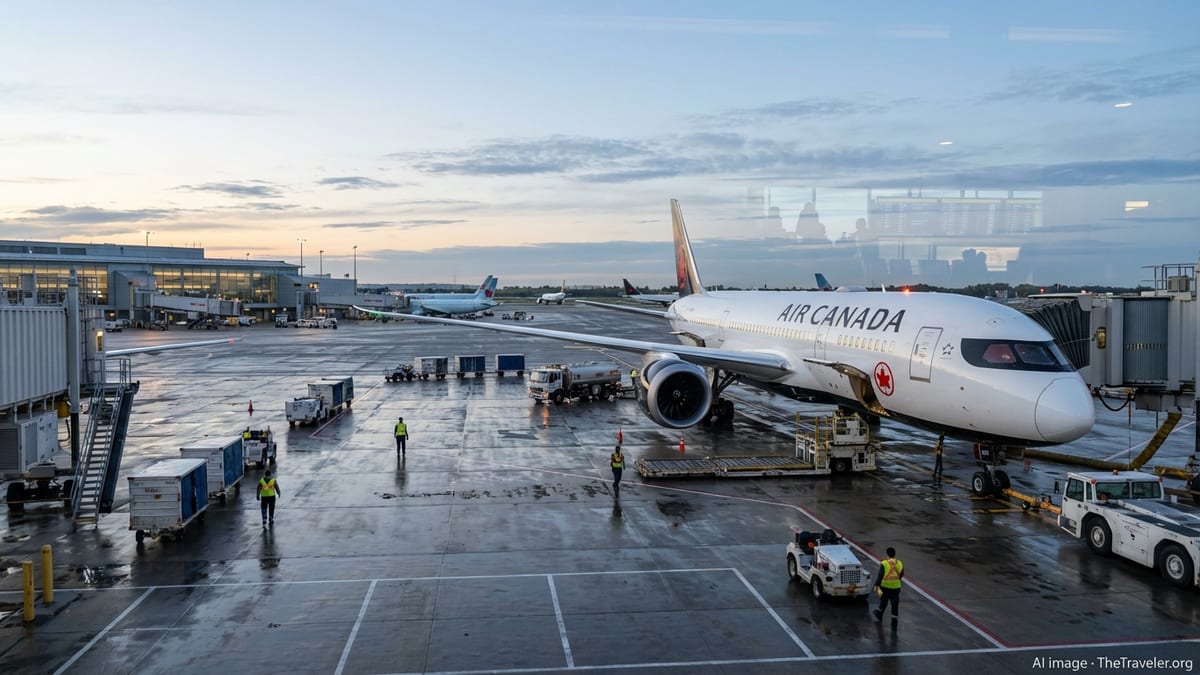
Delays and Cancellations Mount Across Key Hubs
Publicly available flight-tracking data and independent disruption tallies indicate that Air Canada and Jazz Aviation together were responsible for roughly 594 delays and 77 cancellations across Toronto Pearson, Vancouver International and Montreal Trudeau over a recent 24 hour period, turning Canada’s busiest hubs into bottlenecks for domestic and international travel. The figures underscore how operational strain at a single large carrier and its regional partner can ripple across the national network.
The disruptions affected a mix of short haul and transcontinental services, including heavily traveled routes between Toronto, Montreal and Vancouver. Reports from tracking platforms showed rolling departure delays stretching from early morning bank flights into the late evening, with some services departing hours behind schedule or being scrubbed from the board altogether.
Across the three airports, travelers reported missed connections, last minute gate changes and extended waits on taxiways as aircraft queued for takeoff slots. Travel blogs and aviation forums described scenes of congested check in areas and security queues as passengers attempted to rebook or reroute around the expanding web of delays.
While the headline disruption numbers remain provisional, they are broadly consistent with patterns seen in earlier episodes of Canadian travel turmoil, when clustered cancellations and delays at Toronto, Montreal and Vancouver quickly translated into knock on effects at smaller regional airports.
Weather, Staffing and Network Strain Drive Operational Turmoil
Available information from airline policy pages, consumer rights organizations and prior disruption analyses points to a familiar mix of causes behind the latest wave of delays and cancellations. Weather remains a major factor, particularly at Toronto Pearson and Montreal Trudeau, where low visibility, convective storms or winter conditions can rapidly constrain runway and airspace capacity.
Industry commentary has also repeatedly highlighted staffing challenges, especially among ground handlers, customer service agents and regional flight crews. Jazz Aviation, which operates many Air Canada Express routes, has previously been linked in public discussions to pilot and crew shortages that compound recovery times when flights are delayed or aircraft go out of rotation.
Operational planning choices contribute as well. High utilization of aircraft on dense shuttle routes such as Toronto to Montreal or Toronto to Vancouver leaves little slack in the schedule, so a relatively minor delay on an early sector can cascade throughout the day. Aviation data sites tracking on time performance for specific flight numbers between these cities have documented patterns of routinely late departures, reflecting how tightly airlines are scheduling aircraft and crews.
In parallel, network adjustments driven by high jet fuel prices and route rationalization are reshaping schedules. Recent decisions by Air Canada to suspend selected services that are deemed less economical, including certain cross border routes from Toronto and Montreal, illustrate how carriers are attempting to concentrate capacity, which can intensify pressure on the remaining flights when irregular operations occur.
Impact on Travelers: Missed Connections and Overnight Stays
For passengers, the statistics translate into missed family events, disrupted business plans and unexpected expenses. Social media posts and travel community forums tied to the affected period describe travelers stuck at Toronto Pearson for many hours after onward flights to smaller Canadian cities were delayed or cancelled, as well as long lines at Vancouver and Montreal service counters.
Some accounts refer to passengers forced to accept rebookings that added lengthy layovers or extra stops, including routings that detoured through another major hub when nonstop services were unavailable. Others noted that by the time they reached their final destinations they had lost an entire day, even when the original delay on paper appeared modest.
Travel advocacy sites point out that in a hub and spoke system dominated by one large carrier and its regional partners, such concentrated disruption can quickly limit alternatives. When Air Canada and Jazz flights are simultaneously affected across several hubs, options to switch to other airlines or airports may be scarce, particularly for travelers in smaller communities that rely on a single connection point.
For those already in transit, the practical challenges include finding updated information, securing meal or hotel arrangements where applicable, and navigating rebooking processes that can be overwhelmed during large scale events. Some passengers turn to third party tools that analyze flight histories and compensation rules to determine whether they may be eligible for refunds or cash payments under Canadian or international regulations.
What Passenger Rights Look Like Under Canadian Rules
The latest disruption spike has renewed attention on Canada’s Air Passenger Protection Regulations, which define minimum standards of treatment and, in some cases, compensation when flights are delayed or cancelled. Air Canada’s own customer information pages outline distinctions between events considered outside the airline’s control, such as severe weather or air traffic restrictions, and those deemed within its control and not related to safety.
Canadian consumer resources emphasize that compensation is generally linked to the cause of the disruption and the length of delay at arrival rather than departure alone. If the primary reason is weather or air traffic control constraints, travelers may be entitled to rebooking or refunds but not necessarily cash compensation. When the reason is categorized as within the carrier’s control and unrelated to safety, such as certain staffing or maintenance issues, compensation thresholds can apply if the arrival delay exceeds a set number of hours.
Travel rights organizations advise passengers to keep thorough records of their itineraries, boarding passes, delay notifications and any out of pocket costs. They also encourage travelers to submit formal claims directly to the airline first, using publicly available forms, and to escalate complaints to the Canadian Transportation Agency if they believe the airline’s response does not align with the regulations.
Legal specialists caution, however, that assessments of disruption causes can take days and may differ from what travelers initially hear at the airport. As a result, some passengers only learn later whether an event was classified as within or outside the airline’s control, influencing the outcome of any compensation request.
Broader Questions Over Resilience of Canada’s Air Network
The scale of the reported 594 delays and 77 cancellations tied to Air Canada and Jazz has fueled wider debate about the resilience of Canada’s air transport system. Analysts and aviation commentators argue that the country’s reliance on a limited number of large hubs and a dominant national carrier leaves the network vulnerable when disruptions strike at those focal points.
Recent trends in route suspensions, shifting demand patterns and rising operating costs further complicate recovery from major irregular operations. When airlines trim marginal routes and concentrate capacity into trunk markets, any breakdown in those core corridors can disproportionately affect travelers in outlying regions that depend on a single daily connection to Toronto, Vancouver or Montreal.
Policy discussions in Canada have increasingly centered on whether stronger enforcement of passenger protection rules, greater staffing and infrastructure investment at key airports, or enhanced competition could mitigate future waves of disruption. Some experts propose that more transparent real time performance metrics, published in an accessible format, would help travelers compare airlines and routes and make more informed choices.
For now, the latest travel chaos underscores that, as peak travel periods continue and weather and cost pressures persist, passengers flying with Air Canada and regional partner Jazz through Toronto, Vancouver and Montreal face a heightened risk of significant schedule upheaval. The episode adds to a growing record of operational volatility that is reshaping expectations of reliability in Canadian air travel.