


More news on this day
Emirates and Qatar Airways are pressing ahead with ambitious growth plans even as new forecasts warn that Middle East airlines could face a multibillion-dollar setback from slumping passenger demand and mounting geopolitical risks.
Get the latest news straight to your inbox!
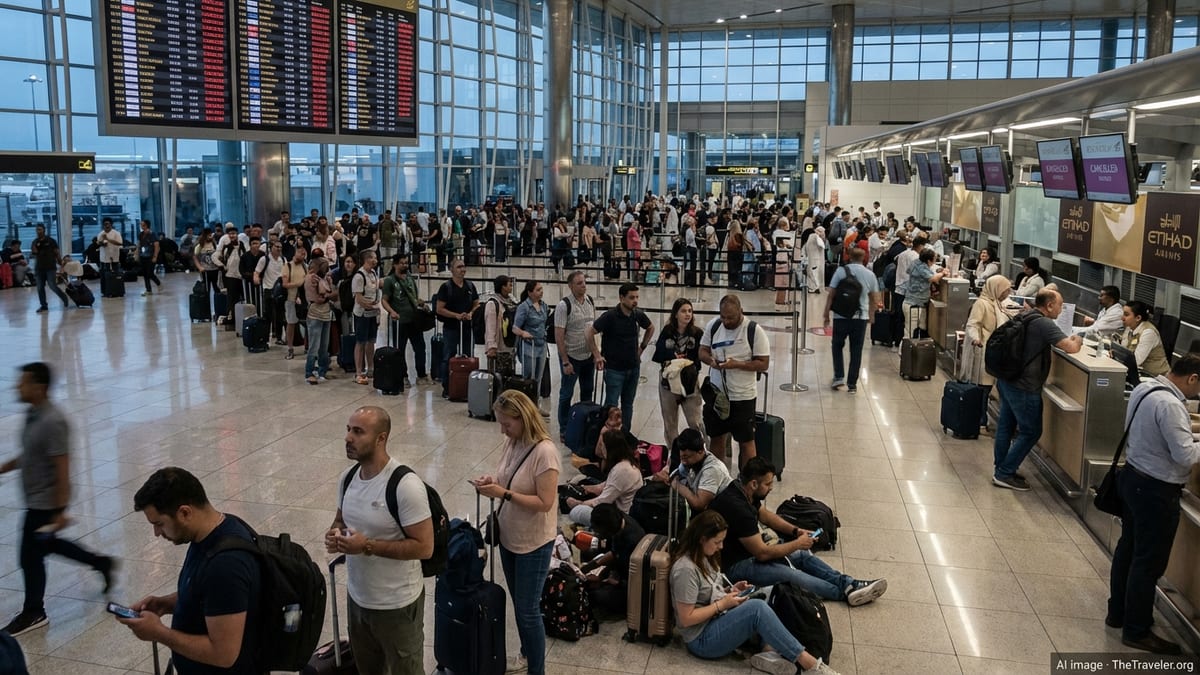
Sharp Forecast Reversal for Middle East Carriers
Fresh industry projections signal a sharp reversal of fortunes for Middle Eastern airlines after several years of rapid post-pandemic recovery. According to publicly available financial outlooks, carriers in the region are now expected to post collective losses of more than 4 billion dollars in 2026, a marked swing from the solid profitability many reported in 2023 and 2024.
Reports indicate that the deterioration is being driven by a pronounced softening in passenger demand, rising operating costs and lingering airspace disruptions linked to regional conflicts. Recent analyses suggest that overall passenger traffic for Middle East airlines could fall by double digits in the near term, while capacity cuts are expected to be more modest, compressing yields and profitability.
This shift follows a period in which the region ranked among the world’s fastest-growing aviation markets, with traffic in 2023 and early 2024 rebounding well above 2019 levels. The sudden change in outlook is raising concern that the Middle East’s hard-won recovery could stall if demand continues to weaken and costs remain elevated.
Industry economists note that the impact will not be evenly spread. Hub carriers with diversified long-haul networks and strong connecting traffic, notably Emirates and Qatar Airways, are viewed as better positioned to absorb a downturn than smaller regional operators more exposed to point-to-point demand and local economic headwinds.
Emirates and Qatar Airways Keep Adding Capacity
Against this more turbulent backdrop, Emirates and Qatar Airways are continuing to add seats and destinations, underlining their role as global network carriers that plan over longer investment horizons. Public financial disclosures show that Emirates delivered a record profit in its 2023–24 financial year and is preparing to take delivery of new Airbus A350 aircraft from 2024–25, reinforcing its widebody-dominated fleet.
The airline has been restoring and extending services across Europe, Asia, Africa and the Americas, with flight schedules now exceeding pre-pandemic levels on many trunk routes. Industry data also places Emirates among the world’s leading airlines by available seat kilometers, underscoring the scale of its commitment to long-haul growth even as volatility increases in some markets.
Qatar Airways is moving in a similar direction, consolidating its position as a major global connector from its Doha hub. Airline rankings based on capacity and traffic consistently place the carrier in the top tier internationally, and its network strategy continues to emphasize onward connections between Europe, Asia, Africa and the Americas.
Both airlines are also leaning into premium travel growth, leveraging refurbished cabins, expanded business-class products and high-frequency schedules on key intercontinental corridors. The focus on connecting traffic and premium yields is seen as central to their ability to keep expanding capacity even when local or regional point-to-point demand comes under pressure.
Demand Shock and the Risk of Overcapacity
The central risk identified by analysts is a widening gap between the capacity Gulf carriers are putting into the market and the demand outlook for 2025 and 2026. Recent forecasts highlight an expected double-digit decline in passenger demand for Middle East airlines, compared with a far smaller reduction in seat capacity. That imbalance could push load factors lower and force airlines into aggressive pricing to fill aircraft.
Some aviation consultancies warn that a combination of weaker demand and continued capacity growth could effectively “erase” several billion dollars of value from the regional industry over the next two years. The figure incorporates projected operating losses, higher financing costs on large aircraft orders and the risk of schedule cutbacks or route withdrawals if demand fails to recover.
Geopolitical uncertainty is amplifying those concerns. Multiple reports describe how rerouting around restricted or conflicted airspace is lengthening flight times, adding fuel burn and complicating network planning for Gulf carriers. While the big hubs in Dubai and Doha continue to attract transfer traffic, some point-to-point markets in the wider Middle East are seeing sharp drops in bookings and airline capacity.
In parallel, slower global economic growth and a cooling in some long-haul leisure markets are dampening ticket sales, particularly in price-sensitive economy cabins. Analysts note that if the forecast demand shock is sustained, even large network carriers with strong balance sheets could find themselves trimming capacity growth plans to protect yields.
Hub Dominance, Competition and Structural Pressures
Despite the gloomier regional outlook, Gulf hubs remain pivotal to global aviation flows. Travel data providers continue to rank the Middle East as one of the world’s fastest-growing aviation regions by capacity compared with 2019, helped by the dominance of connecting traffic through Dubai, Doha and other emerging hubs.
However, this hub-based model brings structural vulnerabilities. A high reliance on connecting passengers exposes airlines to shifts in global traffic flows, competitive responses from European and Asian carriers, and changes in visa or transit rules. If demand on key long-haul corridors weakens, Gulf carriers may have to adjust schedules across multiple regions simultaneously, complicating revenue management and fleet deployment.
At the same time, new investment programs in Saudi Arabia and elsewhere in the Gulf are setting the stage for intensified competition. Plans for expanded airports and new or rebranded national airlines are designed to capture a larger share of transfer and inbound tourism traffic. Industry commentators suggest that this could fragment market share and sharpen fare competition just as regional demand softens.
For smaller Middle Eastern airlines that lack the scale and network breadth of Emirates or Qatar Airways, these structural pressures could be particularly severe. Without the buffer of extensive connecting traffic or large premium cabins, they may find it harder to withstand prolonged periods of weaker demand and higher costs.
Strategic Responses and Outlook for Travelers
In response to the deteriorating outlook, airlines across the Middle East are reviewing fleet plans, hedging strategies and route networks. Publicly available information points to a growing emphasis on fuel-efficient widebodies, selective frequency reductions on underperforming routes and a renewed focus on high-yield corporate and premium leisure segments.
For travelers, the short-term implications may include competitive fares on many long-haul routes to and through Gulf hubs, as carriers work to keep load factors high. However, schedule adjustments could also lead to reduced frequencies or seasonal suspensions in markets where demand falls most sharply, especially secondary destinations outside major global cities.
Industry observers note that the trajectory of global trade, tourism and regional stability over the next 18 to 24 months will be critical in determining whether the Middle East aviation sector settles into a slower but sustainable growth path or faces a deeper, longer-lasting contraction. The performance of Emirates and Qatar Airways, as the region’s flagship network carriers, will be closely watched as a barometer of that broader trend.
For now, the Gulf’s aviation landscape is defined by a paradox: two of the world’s most powerful long-haul airlines are expanding aggressively from their hubs, while forecasts point to a sharp demand downturn and billions of dollars in potential regional losses. How that tension is resolved will shape not only the future of Middle Eastern aviation, but also global long-haul connectivity in the years ahead.