


More news on this day
A recent Canadian Transportation Agency decision involving a cancelled Air Canada flight is drawing renewed attention to how the airline uses aircraft swaps and safety-related exemptions to deny passengers up to C$1,000 in compensation under Canada’s Air Passenger Protection Regulations.
Get the latest news straight to your inbox!
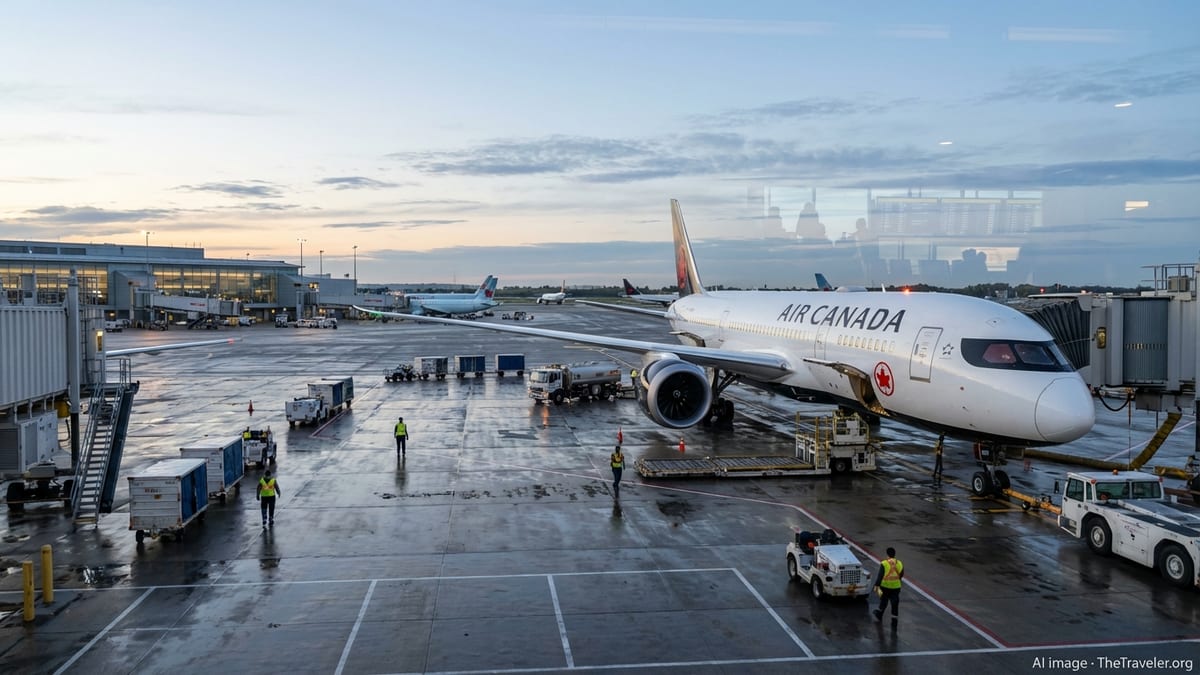
CTA Ruling Highlights Aircraft Swap Dispute
According to recent Canadian media coverage, the case centres on Ottawa-area traveller Juan Rojas, whose September 2022 Air Canada flight from Montreal to Bogota was cancelled after the carrier reported “unforeseen aircraft maintenance.” Reports indicate that Air Canada initially refused to pay the C$1,000 compensation Rojas sought, arguing the disruption was required for safety and therefore exempt from payout rules.
Documentation later reviewed by the Canadian Transportation Agency (CTA) showed that the aircraft cited in Air Canada’s maintenance explanation was not the plane originally scheduled to operate Rojas’s flight. Published accounts state that Air Canada swapped the working aircraft assigned to his route to serve another flight, then pointed to a separate aircraft’s maintenance issue to justify treating the cancellation as a safety-related event.
In its ruling, the CTA found that the cancellation stemmed from a commercial decision about fleet deployment rather than an unavoidable safety requirement. As a result, the agency ordered Air Canada to pay Rojas C$1,000, the maximum compensation available for large airlines when passengers arrive nine hours or more late due to a disruption within the carrier’s control under the Air Passenger Protection Regulations.
The case is one of several recent decisions in which regulators have examined how airlines characterize cancellations linked to maintenance, staffing or scheduling choices that may be partly financial or operational rather than purely safety driven.
How Canada’s Passenger Compensation Rules Work
Canada’s Air Passenger Protection Regulations (APPR) set out detailed obligations for airlines when flights are delayed or cancelled. Public guidance from the federal government explains that for large carriers such as Air Canada, passengers may be eligible for C$400, C$700 or C$1,000 in compensation depending on how late they arrive at their final destination when a disruption is within the airline’s control and not required for safety.
For cancellations and long delays within the carrier’s control, airlines must also offer rebooking within specific timelines or provide refunds if suitable alternative travel cannot be arranged. Official guidance notes that factors such as planned aircraft maintenance, choice of aircraft and staffing levels are typically considered within an airline’s control, even though airlines retain flexibility to organize their fleets and schedules.
Safety-related events, such as unexpected technical defects that must be addressed before a flight, are treated differently. In those circumstances, carriers are required to provide standards of care such as food, accommodation in some cases and rebooking, but they can be exempt from paying the additional monetary compensation. The APPR framework is designed to ensure carriers do not feel pressured to fly in unsafe conditions to avoid financial penalties.
The Rojas decision has intensified debate about how these boundaries are drawn, particularly when a technical issue affects one aircraft but passengers on another route end up bearing the brunt of the disruption after an internal aircraft swap.
Safety Exemptions Under Pressure After Media Investigations
Reports indicate that the Air Canada case followed a series of investigations highlighting how Canadian airlines invoke “safety-related maintenance” to turn down compensation claims. Coverage has pointed to instances in which carriers cancelled flights and cited mechanical or maintenance issues, while operational records later suggested that working aircraft were reassigned to more commercially valuable or strategically important routes.
In the Rojas case, publicly available records reviewed during the CTA proceeding showed that the plane originally scheduled to operate the Montreal to Bogota service did not experience the specific occurrence Air Canada relied on in its explanation, according to media summaries of the decision. Instead, the affected aircraft was operating a different flight, raising questions about whether the safety exemption had been stretched beyond its intended use.
Subsequent reporting has noted similar patterns involving both Air Canada and WestJet, where passengers reported being stranded for many hours or forced to rebook days later while being informed that compensation was unavailable due to alleged safety requirements. Consumer advocates cited in coverage argue that such practices can obscure the true cause of disruptions and make it harder for travellers to enforce their rights.
Air Canada’s published policies reiterate that safety is the airline’s top priority and that compensation rules vary depending on whether events are within its control, required for safety or completely outside the airline’s control such as severe weather or air traffic restrictions. The Rojas decision, however, suggests regulators are increasingly willing to examine how those categories are applied in practice when passengers challenge initial denials.
Political and Regulatory Fallout in Ottawa
The ruling and subsequent reporting have reached Parliament Hill, where federal officials have faced questions about whether current regulations allow airlines too much discretion in labelling disruptions as safety related. Parliamentary debate in recent days has focused on whether reforms are needed to close perceived loopholes that could let carriers reclassify operational decisions as safety exemptions.
Advocates who have monitored the APPR since their introduction argue in public commentary that the framework relies heavily on information provided by airlines. They note that passengers may only discover the real reason for a disruption, or gather supporting documentation, long after the travel date, often through complaints filed with the CTA or reviews of aviation occurrence databases.
The government’s own passenger information site acknowledges that travellers might not receive a full explanation immediately and may need to contact the airline or file a complaint with the CTA to obtain more detail about what happened to their flight. The Rojas case illustrates how that process can unfold over many months, with final decisions emerging well after the original trip was disrupted.
Recent remarks in published coverage indicate that Transport Canada and the CTA are under pressure to clarify how safety exemptions apply when airlines swap aircraft between routes or juggle schedules during busy travel periods. Any regulatory changes would likely require formal consultation and could take time to implement, leaving travellers in the meantime to navigate the rules as they currently stand.
What the Case Means for Future Air Canada Passengers
For travellers flying with Air Canada, the CTA’s decision underscores the importance of documenting disruptions and understanding the distinction between events within a carrier’s control and those that are genuinely safety related. Public guidance on the APPR encourages passengers to keep boarding passes, booking confirmations and written communications from the airline, as well as note any explanations given at the time of delay or cancellation.
If compensation is denied, passengers can ask Air Canada to clarify whether the disruption was considered within its control, within its control but required for safety, or outside its control altogether. Government resources specify that a change of aircraft for operational or commercial reasons typically falls within the airline’s control, which can be relevant when flights are cancelled after aircraft are reassigned between routes.
Should disagreements persist, travellers have the option to file a complaint with the CTA, though recent media reports have highlighted backlogs and lengthy processing times. The Rojas case shows that persistence can yield results, but also reveals the effort many passengers must invest when challenging an airline’s initial decision.
As Canada’s peak travel seasons approach, the Air Canada ruling is likely to resonate with passengers weighing their options and rights when booking domestic and international trips. For now, the case stands as a high-profile example of how a single aircraft swap can trigger a complex debate over safety, commercial judgment and the C$1,000 compensation many travellers believe they are owed.