


More news on this day
A luxury residential cruise promoted as a years long "endless voyage" has abruptly suspended operations in Cambodia after a sharp spike in fuel costs, leaving several hundred passengers facing an unplanned stay in Sihanoukville and uncertain journeys home.
Get the latest news straight to your inbox!
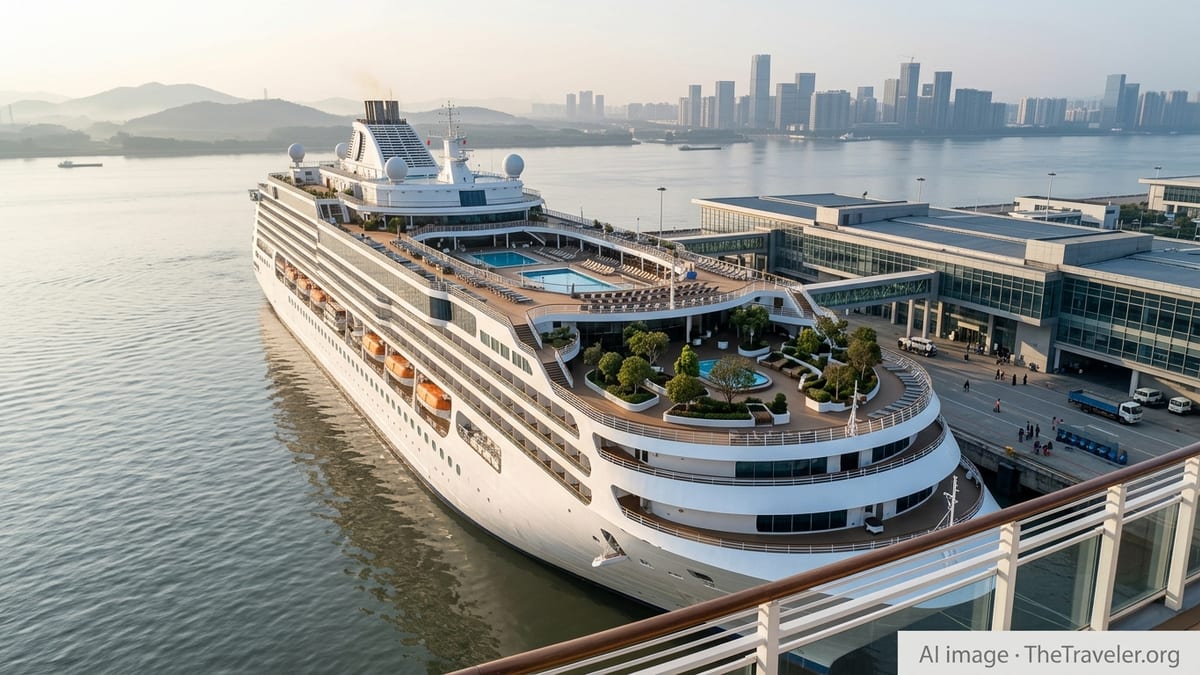
An “endless” voyage cut short in Sihanoukville
The Bahamas flagged MV Odyssey, operated by Florida based Villa Vie Residences, arrived in the Cambodian port city of Sihanoukville in late October as part of a three and a half year global itinerary that began in Belfast in October 2024. Instead of continuing on toward its next scheduled ports in Southeast Asia, the ship was placed in lay up and passengers were informed that the journey would not continue.
According to published coverage, Villa Vie Residences cited "extraordinary increases" in fuel prices in parts of Asia as the primary reason for halting the voyage. Publicly available information indicates that the operator had marketed the ship as a floating residential community, with owners and long term guests buying or leasing cabins as full time or extended stay homes while the vessel circled the globe.
Reports from news outlets describe scenes of residents given only hours to pack their belongings before disembarking in Cambodia, with several hundred passengers affected. While the ship is rated for around 650 guests, coverage from international media suggests that roughly 200 to 300 long term residents were on board when operations were suspended.
The sudden change has raised wider questions about the financial resilience of niche cruise concepts that depend heavily on stable fuel markets, particularly at a time when geopolitical tensions have pushed energy prices sharply higher across the region.
Fuel costs triple amid wider energy shock
Villa Vie’s management has publicly stated that the ship’s fuel expenses per cabin, which historically averaged about 1,800 dollars per month, had surged to an estimated 6,000 to 8,000 dollars in recent months on certain Asian legs of the itinerary. Coverage by international business and travel outlets links that jump to the knock on effects of the conflict in and around Iran and disruptions involving key oil shipping routes.
Rising marine fuel prices have been a concern across the global cruise sector, but the impact is especially acute for a relatively small operator running a continuous, non seasonal itinerary that spends significant time under way between distant ports. Unlike large mainstream cruise brands that often use fuel hedging strategies and benefit from economies of scale, residential and boutique products have less capacity to absorb sustained cost shocks without passing them directly to passengers or cutting back on operations.
In this case, publicly available statements indicate that Villa Vie sought to keep the itinerary intact while exploring options such as asking residents to contribute additional funds for fuel. Coverage in several outlets and traveler forums reports that those efforts were not sufficient to bridge the gap between operating costs and incoming revenue, leading to the decision to pause the voyage and explore restructuring, including a possible bankruptcy filing.
Analysts following the cruise and shipping sectors have noted that the current situation illustrates how quickly a niche travel model can become vulnerable when it is built around thin margins, long term promises and volatile input costs such as fuel.
Passengers face unexpected stay in Cambodia
For passengers, the immediate concern has been far less abstract. Reports from Sihanoukville describe residents wheeling suitcases down the gangway and boarding buses to hotels in the coastal city after being told to leave the vessel with all of their belongings. According to multiple media accounts, Villa Vie is arranging and paying for short term hotel accommodation and local transportation in and around Sihanoukville.
However, publicly available information also indicates that the company is not currently funding onward international travel for most guests. Many of the stranded passengers are retirees from North America and Europe who had either sold or rented out their homes ashore to finance life at sea, and are now forced to rebook one way flights from Phnom Penh or from other regional hubs at short notice.
Some travelers are choosing to extend their time in Cambodia and neighboring countries, treating the interruption as an unplanned Southeast Asia land trip while they reassess longer term plans. Others, particularly those with medical needs or family commitments, have reportedly prioritized the fastest possible route back to their home countries, even at elevated airfare prices linked to the same fuel pressures that affected the ship.
Local tour operators and hotels in Sihanoukville and Phnom Penh are seeing a sudden influx of longer stay guests with cruise luggage and complex onward itineraries. Travel advisors note that Cambodia’s current visa policies, which generally allow many nationalities to obtain visas on arrival or e visas for short visits, have helped ease at least some of the logistical strain on those unexpectedly disembarking there.
Legal, financial and insurance questions
Beyond the immediate logistics, the suspension of the voyage has prompted difficult financial and legal questions. Many residents reportedly paid substantial sums for multi year cabin leases or full purchases on the Odyssey, as well as ongoing monthly fees that covered fuel, crew, food and other operating costs. With the ship now laid up in Cambodia and the operator signaling plans to seek court protection from creditors, passengers are attempting to understand what recourse they may have.
Consumer advocates point out that protections for cruise customers vary significantly by jurisdiction and by how a product is structured. Traditional cruises sold as package holidays in some markets are often backed by insolvency protection schemes or bonding requirements. In contrast, residential cruise models that treat cabins more like real estate or long term memberships can fall into regulatory gray areas, leaving buyers more exposed to business failures.
Insurance coverage is another complicated factor. Standard travel insurance policies often provide benefits if a trip is curtailed or interrupted due to operator insolvency, but long duration residential products may exceed typical policy limits or fall outside standard definitions of a trip. Many of the Odyssey’s residents had effectively adopted the ship as a primary home, increasing the gap between what they spent and what may ultimately be recoverable.
Specialists following the case say that forthcoming filings by Villa Vie in US or other courts will clarify whether the company seeks to reorganize around a reduced operation or moves directly toward liquidation. For now, passengers are being advised, through public reporting, to retain documentation of payments, contracts and any additional costs incurred in Cambodia and during their return journeys.
Ripple effects for cruise innovation and would be residents
The abrupt halt of the Odyssey’s voyage is being closely watched across the travel industry because of its potential implications for other experimental cruise concepts. In recent years, a handful of start ups have promoted residential or very long duration sailings, pitching at remote workers, retirees and digital nomads seeking to live at sea for months or years.
Analysts note that the promise of an "endless cruise" is particularly sensitive to trust. Prospective residents are likely to examine more closely how operators manage essential costs such as fuel and how they protect client funds in the event of severe market swings. Transparency around financial reserves, hedging strategies and contingency plans may become an important differentiator for future projects marketing floating homes.
More broadly, the incident highlights how long haul, energy intensive travel products are increasingly exposed to global shocks. Rising fuel prices linked to conflicts and supply constraints have already pushed airlines and conventional cruise lines to adjust itineraries, add surcharges or scale back operations. A boutique residential ship with a continuous itinerary has far less room to maneuver.
For travelers, the lessons extend beyond this single ship. Experts recommend that anyone considering a multi month or multi year voyage scrutinize the operator’s financial disclosures, seek clear written information on refund and cancellation policies, and consider independent advice on insurance coverage. When a global fuel shock can strand a luxury community at a single port, due diligence becomes part of the journey planning process.