


More news on this day
When the residential cruise ship Villa Vie Odyssey ordered everyone off the vessel in Sihanoukville, Cambodia, on October 27, 2026, the announcement ended far more than a three-and-a-half-year itinerary. For roughly 200 people who had sold houses, retired early, or reshaped their lives for what was marketed as a “lifelong” or “endless” voyage, it marked an abrupt final day in a floating community that had already weathered months of delays, financial worries, and shifting promises.
Get the latest news straight to your inbox!
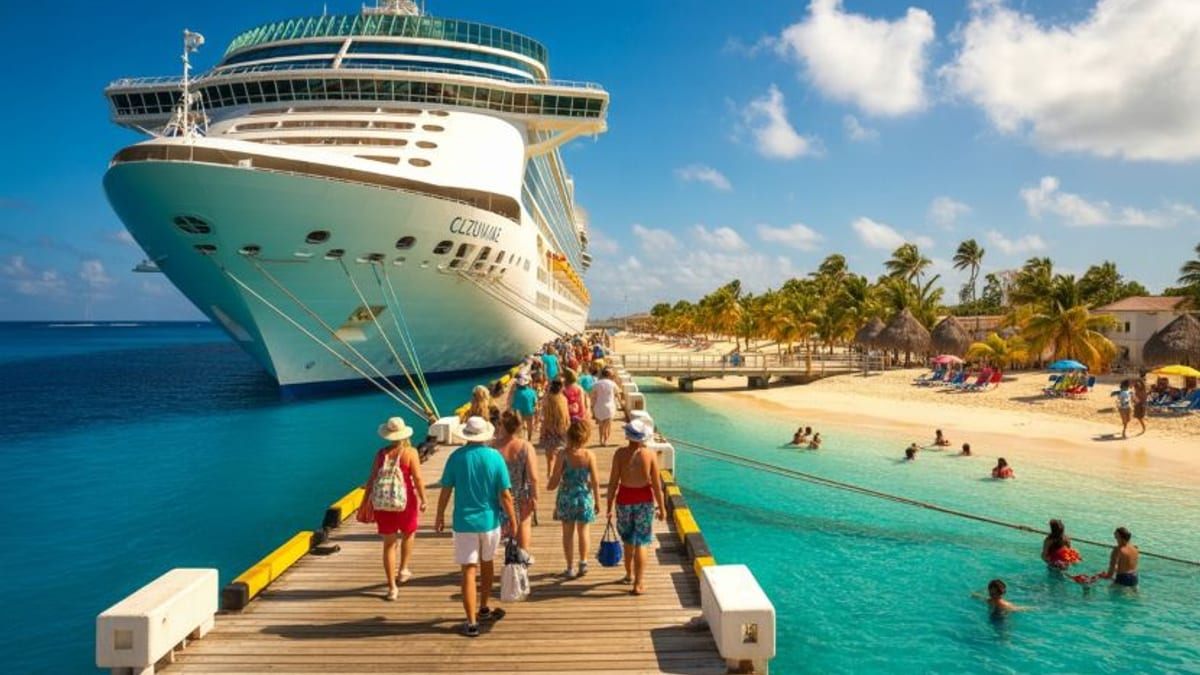
A Dream of Life at Sea That Never Quite Steadied
The Villa Vie Odyssey began as an ambitious attempt to create an “affordable” residential cruise, inviting people to buy or rent cabins for multi year stretches and treat the ship as a permanent or semi permanent home. Marketing materials and early coverage described a three and a half year global itinerary beginning in 2024, with residents able to string together segments of up to five years and enjoy extended stays in ports instead of brief cruise ship calls.
The ship itself was no newcomer to the oceans. Built in 1993 and sailing for several brands over three decades, it was acquired and refitted by Villa Vie Residences before being based in Belfast, Northern Ireland, for extensive work in 2024. Publicly available information shows that its much anticipated departure was repeatedly pushed back while crews tackled technical issues such as grey water tanks and rudder components, leaving would be residents living aboard or in local hotels for weeks longer than planned.
The Odyssey finally began its world journey from Belfast in late September 2024, after an extended layover that had already tested the patience and finances of many early adopters. Reports from that period describe a mix of elation and unease: the community of “residents” celebrated at last sailing away from Belfast, but some legal filings and passenger accounts already pointed to tensions over delays, cabin changes, and refund disputes.
Over the following two years, the ship settled into a rhythm as a niche live aboard community. Residents chronicled life on board through blogs, social media channels, and videos, painting a picture of close knit friendships, recurring onboard events, and long port calls that allowed travelers to dig more deeply into destinations than on conventional cruises. Yet those same accounts also noted frustrations over itinerary changes, onboard politics, and an aging vessel that needed ongoing work.
Fuel Costs, Financing Strains, and a Sudden Halt in Cambodia
The end came not with a mechanical failure, but with a spreadsheet. Public statements and news coverage indicate that Villa Vie Residences struggled to keep pace with operating costs, especially fuel prices in parts of Asia. Company communications cited a jump in fuel expenses from historical levels of around a few thousand dollars per cabin per month to estimates at least several times higher, a surge that made the promised business model increasingly difficult to sustain.
As the ship sailed through Asia in 2026, Villa Vie was also reported to be seeking fresh financing or partners. Earlier the company had publicized a term loan facility to support the launch; by autumn 2026, reports describe a search for additional backing while the Odyssey continued to operate. That search appears to have failed. According to multiple outlets, the company ultimately concluded it could no longer afford to buy fuel to keep the itinerary going.
The breaking point came in Sihanoukville, a port city on Cambodia’s southern coast. Coverage from international news organizations describes the Odyssey arriving there low on fuel and essentially unable to continue without a substantial cash injection. Instead of a refueling stop and onward voyage, residents were informed that operations were being suspended and the ship would be laid up while the company explored restructuring options and a planned Chapter 11 bankruptcy filing.
Although the company framed the pause as a necessary response to “unsustainable” fuel costs and broader financial headwinds, the abrupt timing meant residents had little warning that their “never ending” itinerary was about to stop. For many, the ship had functioned as a full time residence rather than a vacation. That context would shape how the final day unfolded.
Seven Hours to Pack Up a Floating Life
Accounts compiled in global media and in passengers’ own online posts describe a terse early morning announcement on October 27, 2026. Residents were informed that the Odyssey would cease sailing and that everyone had to disembark that same day. Several reports specify that the message arrived around 6 or 7 a.m., with a deadline of 2 p.m. for all residents to be off the ship.
That left roughly seven hours for people to dismantle lives they had spent months or years constructing at sea. Many residents had treated their cabins as small apartments, filling them with clothing, electronics, books, and personal mementos collected on the voyage. Some had traveling pets. Luggage limits from their old land based lives no longer applied; the cabins had become storage as well as shelter.
With little time to plan, residents reportedly scrambled to locate suitcases, sort belongings, and decide what could realistically be carried onto planes or taxis and what would have to be left behind in storage or abandoned. Some had already been ashore on excursions when the notice went out. Online discussions among cruise watchers reference cases where travelers struggled to get back to the port in time to retrieve everything before the ship effectively shut down as a home.
Passengers’ own descriptions of this final day emphasize the emotional whiplash. Onboard routines such as breakfast or morning social gatherings were replaced with frantic packing, ad hoc coordination in hallway conversations, and a stream of questions with few immediate answers. What would happen to the ship next, whether residents would see any refunds, and how long they would be staying in Cambodia were all unclear as the clock ticked toward the afternoon deadline.
From Lifelong Community to Stranded Tourists
Villa Vie marketed the Odyssey as more than a ship, and residents’ public posts over the previous two years support that portrayal. Many sold houses or gave up leases, put their possessions into storage, or structured retirements around the assumption that the vessel would function as a primary home for years. Long stretches at sea and in ports helped forge a community that some residents compared to a small town, with familiar faces in dining rooms, clubs, and on shore excursions.
The sudden order to disembark temporarily turned that town into a group of stranded travelers. According to published accounts, there were just over 200 residents on board at the time, far below the ship’s theoretical capacity of several hundred more. Many were American, but reports also mention European and other international residents, which added layers of complexity around visas, onward travel rules, and access to consular assistance in Cambodia.
Without cabins to return to at night, residents had to quickly shift into problem solving mode. Some reportedly organized group chats and informal working groups to share information on flights, hotels, and local transportation. Others focused first on securing safe, affordable accommodation in Sihanoukville, then on figuring out longer term plans, whether that meant returning to home countries, booking other cruises, or attempting to stay in Southeast Asia while financial questions were sorted out.
Several outlets have reported that the company offered to cover local hotel stays and ground transportation around Sihanoukville, but not onward flights out of Cambodia. Residents’ own writings suggest that information about these arrangements did not reach everyone at the same time. Some say they paid out of pocket for immediate lodging or tickets, then later saw company messages outlining assistance options, deepening frustration over communication gaps on the final day.
Unanswered Questions About Money, Refunds, and the Ship’s Future
Financial uncertainty has become the defining theme of what followed the Odyssey’s last day as a home. Public statements from the company’s leadership have indicated that a Chapter 11 bankruptcy filing in the United States is planned, with the goal of restructuring rather than full liquidation. For residents, that prospect raises practical questions about refunds for unused time, the fate of long term contracts, and whether those who invested substantial sums will ever recover their money.
Previous disputes over delays in Belfast and early itinerary changes already had brought legal action from at least some former customers, as court filings in the United States show. The sudden shutdown in Cambodia is likely to generate further claims. Legal experts quoted in recent coverage have noted that residential cruise contracts can be complex, blending elements of lease agreements, timeshares, and traditional cruise tickets, which may complicate residents’ efforts to seek compensation.
The ship itself remains an open question. Reports indicate that the Odyssey has been laid up in Cambodia while the company attempts to resolve its financial position. The vessel, which has already undergone significant refit work and has a long service history under multiple brands, could in theory be sold, chartered, or returned to service under another operator, but there is no clear publicly available roadmap yet for what will happen.
For the former residents, attention has shifted from the horizon to the ground beneath their feet. Many are now navigating the practical work of rebuilding land based lives that they expected to leave behind for years. Their shared online accounts suggest that even as they scatter to different countries, the relationships forged aboard the Villa Vie Odyssey may be one part of the original promise that continues, long after the lifelong cruise that did not last.