


More news on this day
An Air Canada jet arriving at Montréal Pierre Elliott Trudeau International Airport veered off a runway after landing, coming to rest on grass and triggering a temporary runway shutdown, according to published reports. All passengers and crew were safely evacuated with no injuries reported.
Get the latest news straight to your inbox!
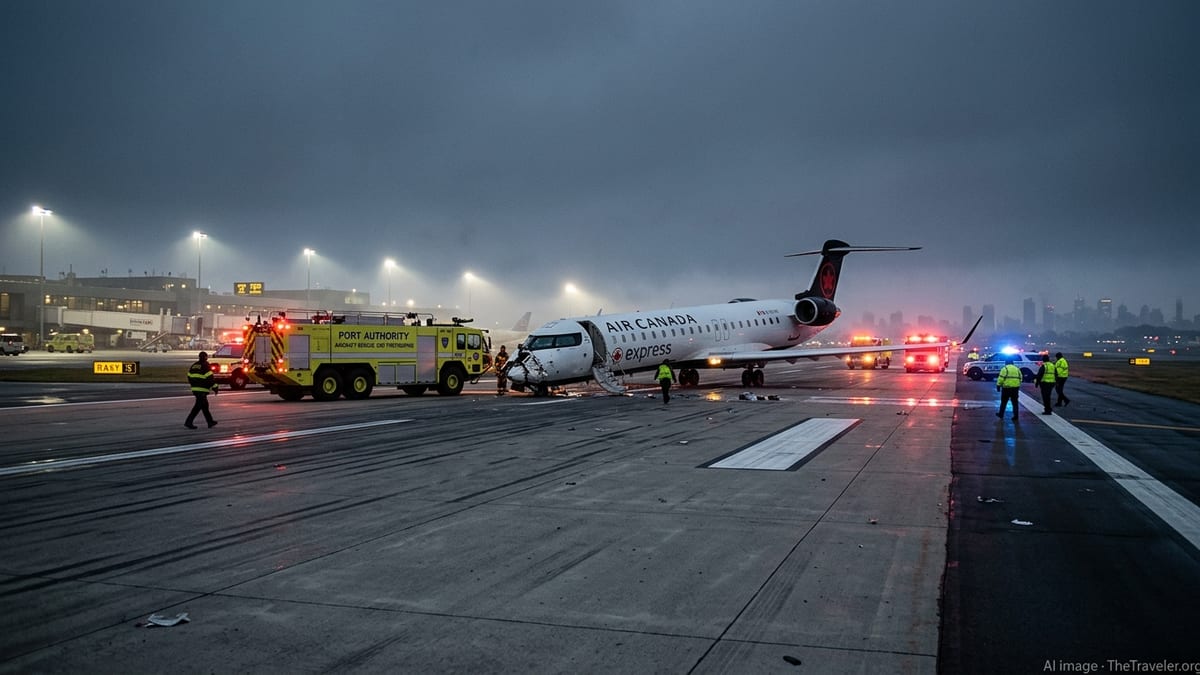
Jet leaves paved surface after landing roll
Publicly available flight and airport information indicates the incident occurred shortly after the aircraft landed and was vacating the runway at Montréal–Trudeau. The jet appears to have departed the paved surface while turning onto a high-speed taxiway, coming to a stop with its main landing gear on soft ground beside the taxiway.
Images shared on social media and described in news coverage show the aircraft stationary with its nose pointed toward the taxiway and sections of the main landing gear sunk into the grass. The position suggests the aircraft did not overrun the active runway itself but instead left the pavement during the taxi phase following a normal touchdown and initial rollout.
Reports indicate that the aircraft involved was operating a scheduled Air Canada passenger service and was carrying a full load of travelers. Weather at the time was described as rainy, with reduced friction on pavement surfaces potentially contributing to the excursion as the crew attempted to negotiate the turn from the runway.
No injuries as passengers disembark on taxiway
According to published coverage, there were no reports of injuries among passengers or crew. After the aircraft came to a stop in the grass, airport responders and airline teams oversaw an orderly disembarkation using mobile stairs and ground transport vehicles positioned at the site.
Accounts from travelers indicate that passengers remained on board for a period while ground services were arranged and safety checks were completed. Once stair units and buses were in place, travelers were moved from the aircraft to the terminal, and medical personnel stood by as a precaution, a standard measure for any runway or taxiway excursion.
The absence of injuries and the stable condition of the aircraft, with no visible signs of fire or major structural damage, allowed the response to proceed as a controlled, low‑risk evacuation rather than an emergency egress. Passengers later reported delays and missed onward connections, but no serious medical issues were linked to the event.
Runway operations disrupted at Montreal–Trudeau
The excursion led to significant but temporary disruption at Montréal–Trudeau, one of Canada’s busiest international gateways. Reports from aviation monitoring platforms and traveler accounts indicate that one of the airport’s primary runways was closed while the incident aircraft remained disabled on the grass adjacent to the taxiway.
With only a single runway available for arrivals and departures, the airport’s capacity was reduced, leading to delays for both incoming and outgoing flights. Some aircraft already en route to Montreal were placed in holding patterns or diverted to alternate airports as air traffic controllers adjusted traffic flows around the reduced runway configuration.
Travelers at the terminal reported extended waits at departure gates and a series of rolling delay announcements as the situation evolved. Once specialized equipment could be brought in to stabilize and recover the aircraft from the soft ground, airport operations began a gradual return to normal, although knock‑on delays were expected to continue through the day.
Investigators reviewing circumstances of runway excursion
Canadian aviation safety procedures call for formal documentation and review of any runway or taxiway excursion involving a commercial passenger aircraft. Public information indicates that federal transportation safety officials and the airport operator are gathering data on the aircraft’s speed, braking, steering inputs and runway surface conditions at the time of the incident.
Investigators typically analyze flight data recorders, cockpit procedures and weather information, as well as maintenance records for the aircraft and reports on recent runway and taxiway inspections. Particular attention is often paid to surface friction levels in wet conditions, signage and lighting along high-speed exits, and the way crews manage braking and steering when leaving a runway at higher ground speeds.
Runway and taxiway excursions remain relatively rare events in commercial aviation, but they are treated as important safety signals. Even when there are no injuries, such incidents can highlight vulnerabilities in airport design, aircraft handling practices, or real-time decision-making during challenging weather conditions.
Context of runway safety and wet‑weather operations
The event at Montréal–Trudeau adds to a broader pattern of global concern about runway safety, particularly during adverse weather. International data compiled by safety agencies show that veer‑offs and overruns on wet or contaminated surfaces are among the more common types of non‑fatal runway occurrences.
Airlines and airports typically respond by reviewing pilot training, standard operating procedures and the accuracy of runway condition reporting. Emphasis is often placed on conservative braking strategies in heavy rain, careful speed management when using high-speed exits, and ensuring that crews are aware of any recent changes to taxiway geometry or surface maintenance.
For travelers, the incident is a reminder of the layers of safety built into commercial aviation. While a jet leaving the paved surface can appear dramatic in photos, the lack of injuries and the controlled evacuation at Montreal underline how modern aircraft structures, coordinated emergency planning and standardized procedures work together to mitigate risk when something goes wrong on the runway.