


More news on this day
Travel between southern China and Canada’s West Coast is set to tighten further as Air Canada prepares to launch a new year-round nonstop route between Guangzhou and Vancouver in May 2027, part of what the carrier describes in public materials as the most extensive intercontinental expansion in its history.
Get the latest news straight to your inbox!
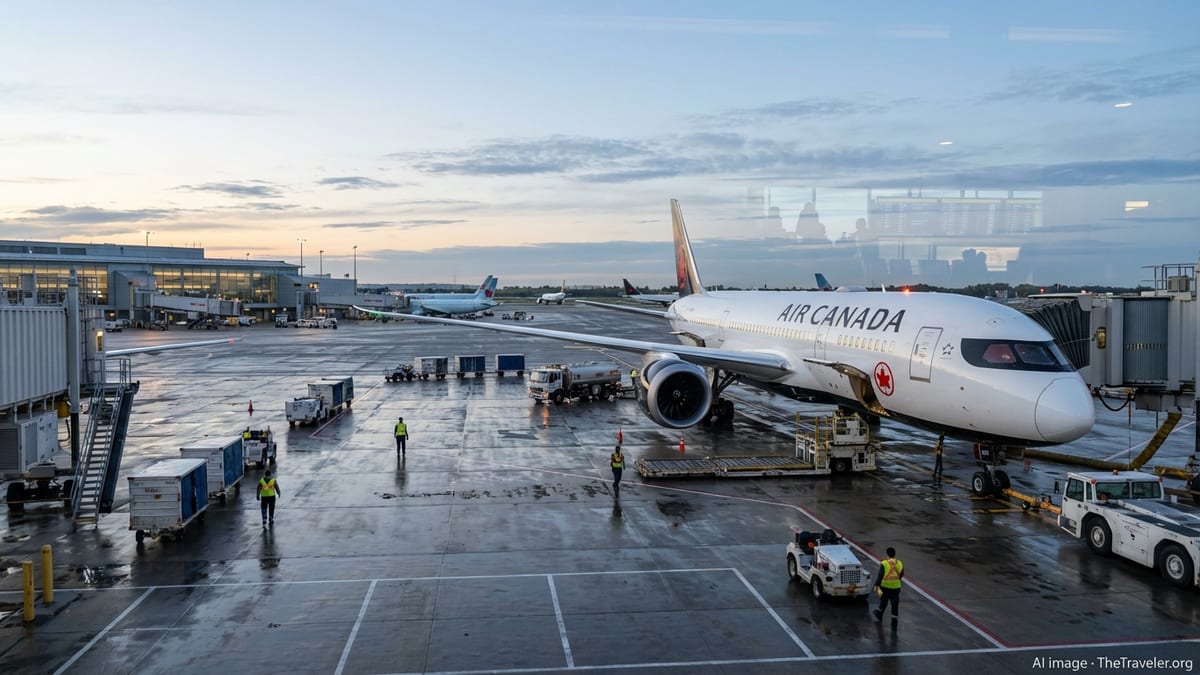
New Guangzhou–Vancouver Link Anchors 2027 Growth Plan
According to Air Canada’s latest network announcements, the airline will introduce nonstop Guangzhou–Vancouver service from May 4, 2027, operating three times weekly with Boeing 787-9 aircraft, subject to regulatory approvals. Publicly available information indicates the route will run year-round through the carrier’s trans-Pacific hub at Vancouver International Airport, offering new one-stop connections from southern China to numerous cities across North America.
The launch will give Air Canada three destinations in mainland China, alongside Beijing and Shanghai, and will expand its broader China schedule between Canada and the mainland to as many as 24 weekly frequencies in peak season. Industry summaries note that Air Canada will be the only North American airline serving Guangzhou non-stop, positioning the Canadian carrier in direct competition with Chinese operators already active on the corridor.
Scheduling details released through aviation data services show the new flights timetabled to align with long-haul banks at Vancouver, allowing same-day onward links to major Canadian and United States markets. The use of the 787-9, configured with Signature, Premium Economy and Economy cabins, signals a focus on both premium business traffic and high-volume visiting-friends-and-relatives demand between the Pearl River Delta and western Canada.
Network planners have identified Guangzhou as a key commercial, manufacturing and technology hub, and the new route is framed in published materials as part of a strategy to capture growing trade and tourism flows between the region and North America. The decision also reflects a gradual rebuilding of Canada–China capacity after several years of reduced schedules.
Vancouver’s Role as a Trans-Pacific Gateway Deepens
Vancouver is already described in Air Canada’s corporate filings as a core trans-Pacific hub, benefiting from geography that shortens flight times to Asia compared with many other North American cities. The new Guangzhou connection reinforces that role, adding another major Asian city to a portfolio that already includes destinations such as Tokyo, Seoul, Beijing and Shanghai.
Recent planning documents and annual information forms highlight Vancouver’s mix of strong local demand and connecting traffic, especially on Asia-bound itineraries from across Canada and the United States. By channeling Guangzhou passengers through Vancouver, Air Canada is expected to increase utilization of its hub banks and improve connectivity to secondary markets that would not support their own long-haul services.
Travel industry analysis suggests that the Guangzhou–Vancouver launch also strengthens Vancouver’s position relative to other West Coast gateways. While airports such as Seattle and San Francisco have invested heavily in Asia connectivity, Vancouver’s combination of a large Chinese Canadian community, established Chinese carrier presence and a home-based global network airline creates a competitive platform for long-haul links to southern China.
The route is expected to complement, rather than replace, existing services by Chinese airlines, giving travelers more schedule choice and new loyalty-program options. Aviation observers note that increased competition on trans-Pacific sectors can, over time, influence fares and cabin product offerings, particularly in premium cabins where corporate travel plays a significant role.
Part of Air Canada’s Largest Intercontinental Expansion
The Guangzhou–Vancouver service forms just one element of a broader 2027 program that Air Canada characterizes in press materials as its largest intercontinental expansion to date. The carrier has outlined plans to add five new international destinations and seven new routes across Asia, Europe and Latin America for the northern summer 2027 season, alongside frequency increases on a number of existing long-haul sectors.
Across its global network, Air Canada plans to operate more than 125 international routes from Canada by summer 2027, with up to approximately 169,000 weekly seats to more than 85 overseas destinations. This growth is positioned within the airline’s “New Frontiers” strategy, which aims to leverage its three Canadian hubs to connect major flows between Asia, Europe and the Americas while expanding the role of Canada as an international transit point.
Economic impact estimates included in the public expansion announcement project that the 2027 network growth could create more than 1,500 additional direct jobs by 2028 and increase the airline’s annual contribution to Canada’s gross domestic product by over 7 billion Canadian dollars. These figures reflect both direct airline employment and wider activity linked to tourism, trade and airport operations.
Analysts point out that such a large capacity increase depends on continued demand recovery and the timely delivery of new aircraft. Air Canada has ongoing widebody fleet plans that include additional 787s and other long-haul types, which are expected to support the 2027 schedule and potential further expansion in later years.
China–Canada Travel Demand Shows Signs of Rebound
The decision to invest in a new Guangzhou–Vancouver nonstop follows a gradual rebuilding of air links between Canada and China after pandemic-era reductions and evolving bilateral conditions. Historical data and past route maps show that Air Canada has long viewed China as a core long-haul market, at various points serving multiple Chinese cities from hubs in Vancouver, Toronto and Montreal.
In the decade before 2020, Chinese carriers also established and expanded Vancouver operations, including the launch of Guangzhou–Vancouver flights by China Southern Airlines in 2011. That service created Canada’s first nonstop connection to Guangzhou, according to historical accounts of Chinese airline growth in the region, and underscored the city’s links with the large Chinese Canadian population in Metro Vancouver.
More recent market commentary suggests that student flows, business travel tied to manufacturing and technology supply chains, and visiting-friends-and-relatives traffic are again driving demand on Canada–China sectors. As travel patterns normalize and border protocols stabilize, additional capacity from both Canadian and Chinese airlines is being reintroduced, though overall volumes remain under close watch due to geopolitical factors and economic conditions.
By entering the Guangzhou market as the only North American carrier operating nonstop, Air Canada is positioning itself to capture a larger share of high-yield and connecting traffic, particularly from travelers who prefer to stay within a single global alliance or frequent-flyer ecosystem. The Vancouver hub structure, with onward access to secondary points in Canada and the United States, is expected to be a key differentiator for the new route.
What Travelers Can Expect on the New Route
Air Canada has indicated that the Guangzhou–Vancouver flights will be operated by Boeing 787 Dreamliner aircraft, the backbone of its long-haul fleet. Public fleet data show that the airline’s 787-9s are equipped with a three-cabin layout, featuring fully flat seats in the Signature Class business cabin, a dedicated Premium Economy section, and a standard Economy cabin with personal in-flight entertainment at every seat.
The airline’s current long-haul product typically includes Wi-Fi on most 787 aircraft, power outlets, and a selection of multilingual entertainment content geared toward trans-Pacific audiences. For Guangzhou–Vancouver passengers, these amenities are expected to align the new service with Air Canada’s existing Asia routes from Vancouver and Toronto.
Connectivity at Vancouver International Airport is likely to be a key selling point. Published network information highlights coordinated arrival and departure banks that allow one-stop itineraries from Guangzhou to cities such as Calgary, Edmonton, Winnipeg and multiple US West Coast and Midwest destinations. The Guangzhou schedule is anticipated to feed both domestic Canadian and transborder routes, broadening the catchment area beyond the local Vancouver market.
Fare and schedule details closer to launch will clarify how Air Canada positions the route for different traveler segments. Industry watchers will be tracking whether introductory pricing, loyalty promotions or joint marketing with tourism bodies in British Columbia and Guangdong emerge as the airline moves from announcement to sales phase.
Air Canada: Ready for Take-off – Summer 2027 global expansion
CAPA: Air Canada announces network expansion for summer 2027
Aviation Week: Air Canada broadens Europe, China networks
TravelPulse Canada: Summer 2027 is taking off with new Air Canada routes