


More news on this day
Russia remains connected to the global air network, but flying to or over the country now involves a complex mix of sanctions, conflict-zone risk assessments and divergent airline strategies that travelers need to understand before booking.
Get the latest news straight to your inbox!
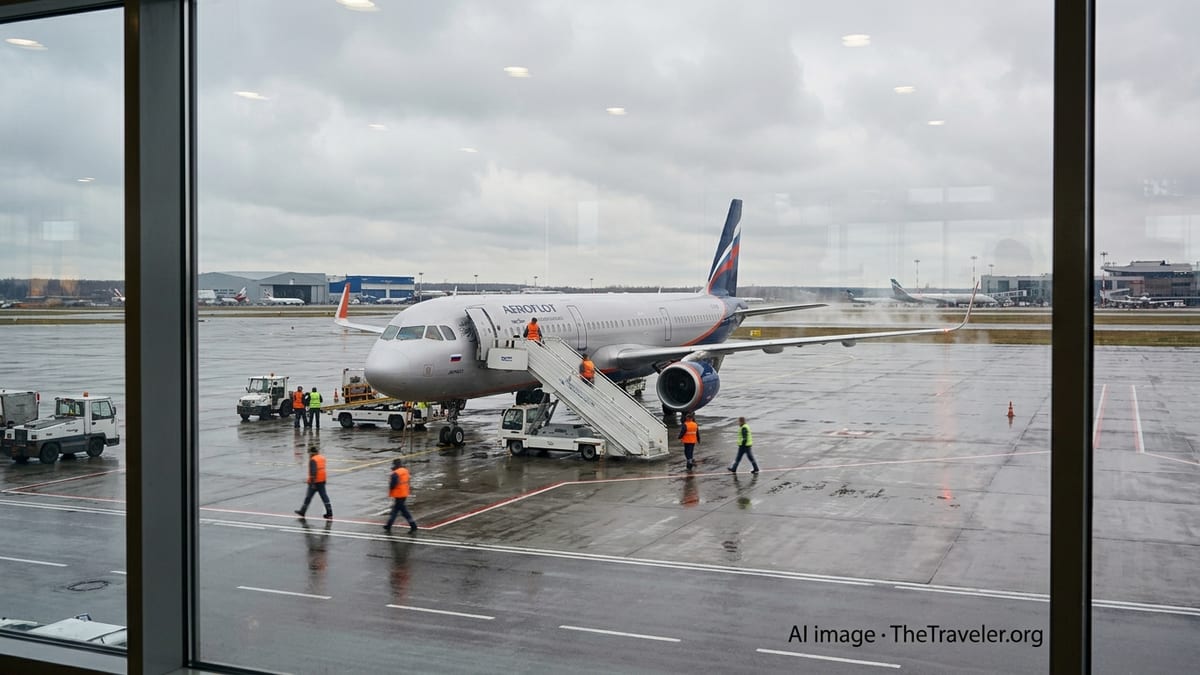
Sanctions and Airspace Closures Redraw the Flight Map
Since the start of the full-scale war in Ukraine in 2022, Russian and Western airspace have effectively split into separate systems for most passenger traffic. The United States, Canada and the European Union closed their skies to aircraft owned, operated or controlled by Russian entities, while Russia responded with reciprocal bans on many Western carriers. Publicly available regulatory notices in the United States and Europe describe blanket prohibitions on Russian flight operations in their airspace, and on Russian-operated aircraft entering or overflying EU territory.
These restrictions have forced airlines from Europe, North America and several Asia-Pacific states to avoid Russian skies entirely. Long-haul routes between Europe and East Asia are now typically routed over Central Asia, the Middle East or the North Pacific instead of taking shorter great-circle tracks across Siberia. Industry and government summaries indicate that this has added hours to some flights, increasing fuel burn and operating costs and, in some cases, making certain routes commercially unviable.
For Russia’s domestic aviation sector, sanctions have introduced separate safety questions. EU policy documents explain that a high proportion of Russia’s commercial fleet consists of aircraft originally produced in the EU, the United States or Canada, now operating under export and maintenance restrictions. Analysts have warned that limited access to original spare parts and technical support could affect long-term airworthiness, although detailed reliability data is scarce and often contested.
Conflict-Zone Warnings and Risk Guidance for Russian Airspace
Modern assessments of airspace safety over and around Russia are heavily informed by lessons from past tragedies in other regions, notably the 2014 downing of Malaysia Airlines Flight MH17 over eastern Ukraine. The Dutch Safety Board’s follow-up work on flying over conflict zones highlighted gaps in how states and airlines shared information about surface-to-air missile threats and how risk decisions were made for routes at cruising altitude above active conflicts.
In response, international and regional bodies strengthened guidance on conflict-zone operations. The International Civil Aviation Organization developed a detailed risk assessment manual for civil aircraft operations over or near conflict zones, expanding advice on threats from surface-to-air and air-to-air weapons and on how states should close or restrict airspace when necessary. The Flight Safety Foundation has urged adherence to this type of guidance, emphasizing that state authorities are expected to provide timely risk information and, where appropriate, to shut airspace when military activity poses unacceptable danger to civil traffic.
Within Europe, the EU Aviation Safety Agency maintains conflict zone information bulletins. In the context of the war in Ukraine, the agency broadened its safety guidance concerning Russian and Belarusian airspace, framing the situation as a dynamic conflict-related risk environment. These bulletins do not bind airlines in the same way as formal bans but shape many carriers’ internal risk assessments, reinforcing the cautious stance on overflights close to the active war zone and in neighboring regions.
Who Still Flies to Russia and How Travelers Reach the Country
Despite Western restrictions, Russia is still served by a network of international routes, largely via countries that have not imposed full airspace bans. Route data aggregators and timetable services list direct flights to Russian cities from hubs in Turkey, Belarus, the South Caucasus, Central Asia, the Middle East, China and parts of North Africa. Aeroflot, Rossiya and other Russian carriers remain active on many of these links, alongside foreign airlines such as Turkish Airlines, Pegasus Airlines, Belavia, Air Serbia and several Middle Eastern and Asian operators.
For travelers from the United States and much of Europe, journeys to Russia generally involve at least one connection through these intermediary hubs, because most Western carriers neither serve Russian destinations nor transit Russian airspace. Publicly available booking platforms show that popular gateways include Istanbul, Belgrade, Dubai, Yerevan, Tashkent and various Belarusian airports, although exact options depend on the traveler’s nationality, visa status and the latest sanctions regimes.
At the same time, some non-Western long-haul airlines continue to use Russian airspace for transit on routes that do not involve Russian destinations. Tracking data and specialist aviation coverage indicate that certain carriers from India, the Gulf region and parts of Asia still file flight plans across Siberia, particularly on services between Asia and North America. These airlines weigh shorter flight times and lower fuel costs against political and reputational considerations, applying their own risk assessments in light of conflict-zone guidance.
Operational Challenges, Detours and Cost Pressures
Avoiding Russian airspace has reshaped route planning for many carriers. Technical papers submitted to ICAO assemblies and industry analyses describe how unilateral restrictions on overflights have driven up flying times between segments of Asia and Europe by requiring long detours. The additional hours in the air mean higher fuel consumption, complex crew scheduling and, at times, aircraft range constraints, particularly on older or smaller widebody fleets.
These operational changes are not merely an inconvenience for airlines; they can materially alter ticket pricing and network design. On some thin routes, the combination of extended flight duration, crew costs and restricted Russian market access has led carriers to suspend services entirely or to funnel passengers through alternative hubs where economies of scale are better. Some states that continue to allow use of Russian airspace have, according to publicly accessible submissions and commentary, suggested that this gives their airlines a cost advantage compared with Western competitors.
For Russian airlines themselves, operational complexity arises from both sanctions and safety oversight issues. International commentary points to mounting challenges in maintaining Western-built fleets without full access to original parts and service, along with limits on leasing and insurance from Western firms. While Russian authorities and carriers maintain that operations are safe, external analysts note that independent verification is difficult because of reduced transparency and the absence of many Russian operators from Western oversight and audit frameworks.
What Travelers Should Know Before Booking
For individual travelers, the immediate question is not only whether flights to Russia are available, but under what conditions they operate. Publicly accessible travel advisories from Western governments generally recommend against travel to Russia or warn of heightened political and security risks, separate from aviation safety itself. Insurance policies may exclude coverage for travel to sanctioned destinations or on certain carriers, and payment processing restrictions can complicate ticket purchases on Russian airlines.
From an airspace-safety perspective, travelers have limited visibility into the detailed risk assessments made by airlines and states. However, the existence of ICAO manuals, EU conflict-zone bulletins and national prohibitions indicates that regulators and carriers are actively weighing the risks of flying over or near Russian and Ukrainian territory. Where states have imposed outright bans on their airlines using Russian airspace, travelers can infer that there is a formal policy judgment that the safety and security environment does not meet acceptable thresholds.
For those who still choose or need to fly to Russia, routing decisions may come down to comfort with specific airlines, transit countries and aircraft types. Aviation experts often encourage passengers to pay attention to the regulatory environment surrounding a carrier, such as whether it is subject to operating bans in major markets, and to review the latest official travel advisories from their home state. In a fast-changing geopolitical context, both route availability and safety assessments can evolve quickly, making up-to-date information an essential part of trip planning.
EU Aviation Safety Agency guidance on Russian airspace
ICAO conflict zone risk assessment resources
FAA prohibitions and restrictions by country