


More news on this day
China’s newest wave of high-speed rail links is not only cutting hours off cross-country journeys, it is also stitching once-remote counties, border towns and coastal enclaves into the country’s tourism map, offering faster routes to destinations long overshadowed by big-name cities.
Get the latest news straight to your inbox!
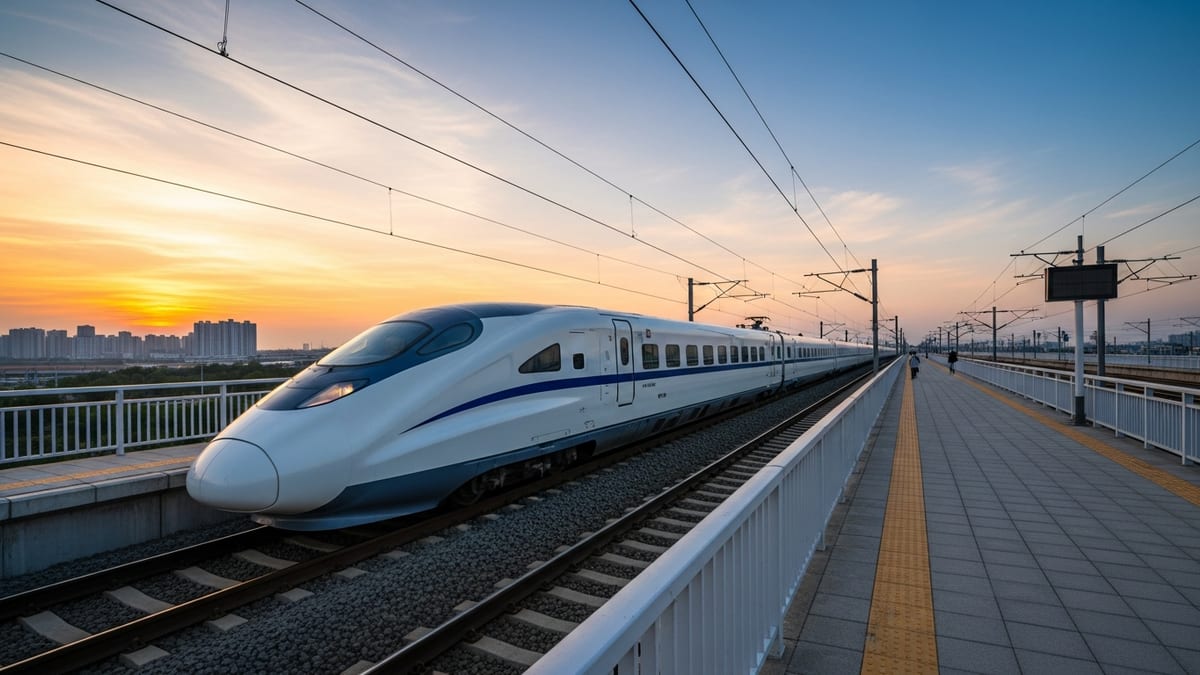
A Southern Extension Opens the Door to Coastal Heritage
A recently opened southern extension of the Hangzhou Taizhou High Speed Railway has brought the coastal city of Yuhuan into the national rail network for the first time, according to coverage from Chinese media. Publicly available information shows that the line, a continuation of the pioneering Hangzhou Taizhou route that involves private capital, is expected to ease access from major Yangtze River Delta hubs including Shanghai and Hangzhou.
Reports indicate that the broader corridor has already transformed travel to the Ancient City of Taizhou, where annual visitor numbers have more than tripled in just a few years as more out of town and overnight guests arrive by rail. With the new extension in place, nearby peninsulas, fishing villages and island dotted bays around Yuhuan are now a realistic weekend escape for urban residents who previously faced lengthy road journeys.
Tourism planners are promoting clusters of smaller coastal attractions rather than a single marquee site. Historic streets in Taizhou’s old town, seafood markets and relatively undeveloped stretches of shoreline are being packaged together as slow travel itineraries that can be reached within hours from inland metropolises, reshaping perceptions of Zhejiang as a province where high speed tracks lead directly to quiet harbors and heritage quarters.
The rail expansion also fits into regional strategies that link transport upgrades with cultural restoration projects. Investment has flowed into waterfront promenades, museum renovations and night time lighting schemes in and around Taizhou’s walled core, with local cultural tourism companies positioning the new trains as the main gateway for short breaks focused on maritime history and coastal scenery.
Guangdong’s New High-Speed Spine Connects Lesser-Known South China
Farther south, the Guangzhou Zhanjiang High Speed Railway, which opened in late 2025, has created a fast north south spine across western Guangdong. Reference material from railway summaries shows that the line cuts journey times between the provincial capital and the port city of Zhanjiang, one of the first coastal cities to open to international trade and now a subcenter in the province’s coastal economic belt.
Coverage in national outlets highlights how tourism operators along the route are repositioning smaller cities and counties as high speed accessible getaways. Zhanjiang’s peninsula beaches and island lined bays, long popular with regional visitors, are being promoted to a wider audience through dedicated high speed rail holiday packages that combine seaside stays with seafood dining, maritime festivals and winter sun escapes.
Further inland, the line passes through agricultural and aquaculture regions that rarely appeared in guidebooks. Local cultural tourism firms are assembling itineraries that combine village homestays, coastal wetland reserves and countryside cycling routes, building on the appeal of new station area hotels and integrated transport hubs. The aim is to attract visitors who view the high speed train not simply as a way to reach Zhanjiang but as a moving gateway to lesser-known corners of western Guangdong.
Observers note that the new corridor also links up with existing intercity rail and highway networks, making it easier to branch off to underexplored peninsulas and islands along the Leizhou Peninsula and nearby coastal counties. For independent travelers, this translates into more opportunities to step off at intermediate stops and explore small harbors or volcanic landscapes that were previously time consuming to reach.
Border City Pingxiang Emerges as a Cross-Border Gateway
On China’s frontier with Vietnam, a newly completed high speed passenger route between Nanning and Pingxiang is reshaping travel to a once peripheral border city. According to reports carried by state linked media, the final section of the line entered service at the end of 2025, making the full route operational and significantly accelerating journeys from the Guangxi regional capital to the border.
Public information notes that Pingxiang has long handled cross border trade but was less prominent as a leisure destination. With the arrival of high speed services, tourism bureaus and transport operators are now promoting Pingxiang as a springboard for cross border trips and as a stop in its own right. Travelers arriving on the line can connect to land ports leading toward northern Vietnam, while also exploring local mountain scenery and markets on the Chinese side.
The Nanning Pingxiang route is being presented as part of a wider push to develop rail based tourism in border regions. Published coverage points to growing interest in combining train journeys with shopping, food experiences and short excursions that highlight the cultural mix of frontier towns. For Guangxi, known for the karst landscapes of Guilin and the coastal city of Beihai, the new high speed service offers an additional narrative that centers on border culture and overland connectivity.
As more domestic travelers seek novel destinations without long airport transfers, Pingxiang’s new role on the high speed network suggests that lesser known border cities may increasingly appear on itineraries, especially for those interested in multi country routes that link China with mainland Southeast Asia.
Loop Lines and Intercity Links Reveal Urban “Hidden Gems”
Not all of China’s newest high speed infrastructure is about long distance trunk routes. In the Greater Bay Area, a Shenzhen to Shenzhen loop service introduced in 2025 has been marketed explicitly as a way to discover parks, tea mountains and lakes away from the skyscraper skylines. A photo feature on the city’s official portal describes how the loop connects downtown districts with stops that serve green spaces such as Phoenix Mountain Forest Park and the tea covered slopes of Nankun Mountain.
The campaign around the loop line emphasizes day trips and micro vacations, encouraging residents and visitors to treat suburban districts as destinations rather than commuter zones. Stations along the route provide access to beaches, forest parks and ancient markets, positioning the train as a hop on, hop off link between disparate “hidden gems” that share little beyond being reachable within a short ride from central Shenzhen.
Elsewhere in eastern China, intercity high speed lines tying Shanghai to regional cities are being paired with promotional offers that steer travelers toward underappreciated wetlands and lake districts. For example, information services in Huzhou highlight that passengers on the Shanghai Suzhou Huzhou High Speed Railway can benefit from limited time free entry to nearby scenic areas by presenting their train tickets, effectively turning the new stations into gateways for nature reserves and lesser known water towns.
These urban and peri urban initiatives demonstrate how high speed and intercity services are blurring the boundary between everyday mobility and leisure travel. By making short journeys more convenient and adding incentives at the destination, city governments and tourism offices are using the rail network to redistribute visitor flows away from a handful of famous landmarks toward a wider portfolio of smaller sites.
A Network Strategy for Spreading Tourism Beyond Big Names
Recent coverage of China’s rail rollout suggests that the growing web of high speed lines is being leveraged as a tool to diversify tourism rather than simply channel more visitors to major cities. National level summaries of 2025 openings reference new or upgraded routes across the country, including links into mountainous areas, coastal counties and ethnic minority regions, all of which are traditionally branded as scenic but have lacked rapid transport connections.
The focus on hidden travel gems aligns with broader shifts in domestic travel demand. Surveys and anecdotal evidence from social media indicate that younger travelers are increasingly searching for quieter destinations, local food cultures and landscape based experiences. In response, railway operators and local tourism agencies are packaging themed routes that highlight smaller cities along high speed corridors, positioning them as alternatives to overcrowded hotspots.
With more lines opening each year and existing services adding destinations and frequencies, the cumulative effect is a national network where remote feeling places are only a few hours from major hubs. For international visitors, especially those willing to navigate China’s rail booking systems, this evolving map offers faster access to coastal heritage quarters, border markets, forested hill towns and lakeside villages that once required complicated transfers.
As timetables are updated and promotional seasons announced, travelers watching China’s high speed developments can expect increasing numbers of low profile stops to feature in rail based itineraries. The newest links, from coastal extensions in Zhejiang to border bound services in Guangxi, underline how infrastructure decisions are reshaping the geography of leisure, putting a wider range of destinations within reach of a single ticket.
High-speed rail extension connects long-isolated city
New high-speed rail to southern border city Pingxiang