


More news on this day
Early June brought fresh turbulence for travelers at Halifax Stanfield International Airport, where publicly available tracking data shows three Air Canada and WestJet departures delayed and three others cancelled over several days of peak-season traffic.
Get the latest news straight to your inbox!
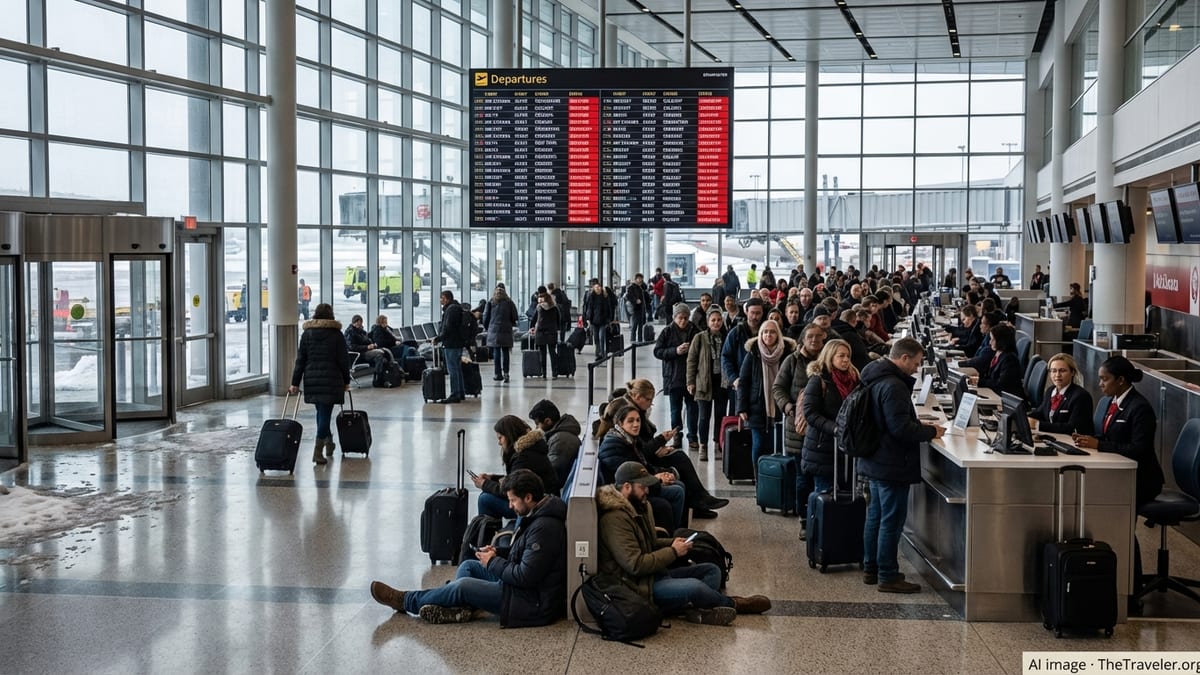
Operational Snags During Busy Early-June Travel Window
The disruptions unfolded in the first week of June 2026, a period that typically marks the start of Atlantic Canada’s summer travel rush. Halifax Stanfield, already described in recent airport disclosures as experiencing progressive passenger growth and expanded connectivity, has been ramping up schedules across domestic and international routes as demand rebounds.
Against that backdrop, flight-tracking platforms and schedule tools indicate that a small cluster of Air Canada and WestJet services at Halifax saw irregular operations. Three flights attributed to the two carriers were delayed, in some cases by more than two hours, while three others were cancelled outright, affecting connections to larger Canadian hubs and select transcontinental services.
While the total number of problem flights was modest in comparison with the airport’s daily movements, the timing during a busy departure window magnified the impact for passengers. Travelers attempting to connect onward to Toronto, Western Canada, and European gateways faced missed connections, unplanned rebookings, and, in some cases, overnight stays as they waited for alternative options.
The pattern mirrors broader strains across the Canadian network in late spring 2026, where a combination of tight aircraft utilization, maintenance constraints, and high load factors has left airlines with limited flexibility when a single flight encounters a technical or crew-related issue.
Halifax’s Role as a Strategic Link for Air Canada and WestJet
Halifax Stanfield functions as Atlantic Canada’s primary full-service airport, and recent route announcements underscore its growing role in national and transatlantic connectivity. Air Canada operates multiple daily services linking Halifax to Toronto, Montreal, and other major cities, while WestJet has positioned the airport as a key departure point for seasonal European and sun destinations.
That strategic position means even a handful of disruptions can have ripple effects across the network. A delayed evening departure from Toronto to Halifax can push back an aircraft’s availability for the next morning’s outbound, while a cancelled long-haul or cross-country leg from Halifax can strand travelers whose itineraries are built around tight connections through the airport.
Published timetables show that both carriers have increased flying into Halifax for summer 2026, including additional domestic frequencies and seasonal international routes. The resulting schedule density offers more choice for passengers but also creates operational complexity, particularly when carriers have limited spare aircraft in the region.
Industry observers note that Halifax’s weather, while generally more predictable in June than in winter, can still influence operations through fog or coastal conditions. However, reports tied to the recent disruptions point more frequently to crew availability, maintenance planning, and knock-on effects from congestion at larger hubs rather than to local weather events.
Passengers Navigate Missed Connections and Tight Rebooking Options
For individual travelers, the three delays and three cancellations translated into practical challenges that extended well beyond Halifax’s terminal. Public discussion forums and social media posts from early June describe passengers working through long lines at service desks, navigating rebookings on alternative flights, and worrying about missed cruises, work commitments, or family events.
Because Halifax’s long-haul and transcontinental options are still relatively limited compared with Toronto or Montreal, disrupted passengers often rely on a small number of later departures to salvage their itineraries. When those later flights are heavily booked, as is common in peak season, rebooking windows can stretch into the following day, particularly for those needing multiple seats together or specific cabin classes.
The situation is further complicated by the differing network strategies of the two airlines. Air Canada’s greater presence at multiple Canadian hubs can provide more one-stop alternatives out of Halifax, while WestJet’s leaner fleet and route structure may make it more challenging to reposition aircraft or crew on short notice. Recent public commentary has highlighted that when an individual WestJet aircraft goes out of service, the knock-on effect can be more pronounced.
Travelers affected by the Halifax disruptions in June reported using a mix of online tools, airline apps, and customer-service channels to track flight status and secure new itineraries. In several cases, passengers described being automatically rebooked on later same-day connections, while others indicated that only next-day departures had available seats.
Regulatory Context and Passenger Rights in Canada
The Halifax disruptions also renewed attention on passenger rights under Canada’s Air Passenger Protection Regulations. These rules outline minimum standards for communication, assistance, and, in some circumstances, compensation when flights are delayed or cancelled.
Under the framework, the cause of a delay or cancellation is central to what support passengers may receive. Events within the airline’s control, such as crew scheduling or certain types of maintenance planning, generally trigger stronger obligations than situations deemed related to weather, airport operations, or security. Publicly available analysis of recent Canadian flight disruptions suggests that carriers often attribute irregular operations to safety or operational reasons that may fall outside mandatory compensation.
Travel advocates have pointed out that, when disruptions occur in peak season, the value of non-monetary assistance like meal vouchers, hotel accommodation, and prompt rebooking can be as significant as any financial payment. For Halifax passengers dealing with early-June cancellations, reliable information on the status of replacement flights and clear guidance on rights has been a recurring theme in online discussions.
Regulatory debates around enforcement and transparency remain active, with consumer groups calling for clearer standards on how reasons for delays are categorized and communicated. The Halifax episode adds another data point to an ongoing national conversation about how Canada balances airline flexibility with traveler protection.
Strains on Canada’s Air Network Ahead of Peak Summer
Although three delays and three cancellations at a single airport over several days might appear limited in isolation, they form part of a broader pattern of intermittent strain across Canada’s air network in 2026. Earlier in the season, other major airports reported waves of disrupted flights affecting Air Canada, WestJet, and regional partners, reflecting a system still finely balanced between strong demand and tight operational margins.
Industry coverage in recent weeks has highlighted several contributing factors, including elevated jet fuel costs, ongoing staffing challenges in specialized roles, and fleets that are heavily scheduled to meet demand. With spare capacity constrained, even minor schedule perturbations can cascade, particularly on routes where carriers operate only one or two daily frequencies.
For Halifax and other regional gateways, this means localized disruptions can quickly become national issues as missed connections in Atlantic Canada ripple through to Western Canada, the United States, and Europe. Airlines have responded with incremental schedule adjustments, selective capacity reductions on some routes, and efforts to fine-tune crew and maintenance planning ahead of the busiest weeks of summer.
Travel analysts suggest that passengers flying through Halifax Stanfield in June and July may benefit from allowing extra connection time, monitoring flight status closely, and considering earlier departures when itineraries are time-sensitive. While the airport continues to expand its role as a growing hub for Atlantic Canada, the recent cluster of delays and cancellations underscores how even a small number of irregular operations can significantly shape the travel experience during peak season.