


More news on this day
China’s already stressed aviation network faced renewed disruption this week as operational problems centered on Air China at Beijing Capital International Airport led to multiple cancellations and nearly two hundred delays, rippling across major routes to South Korea, Japan, Singapore, Thailand, Germany and France.
Get the latest news straight to your inbox!
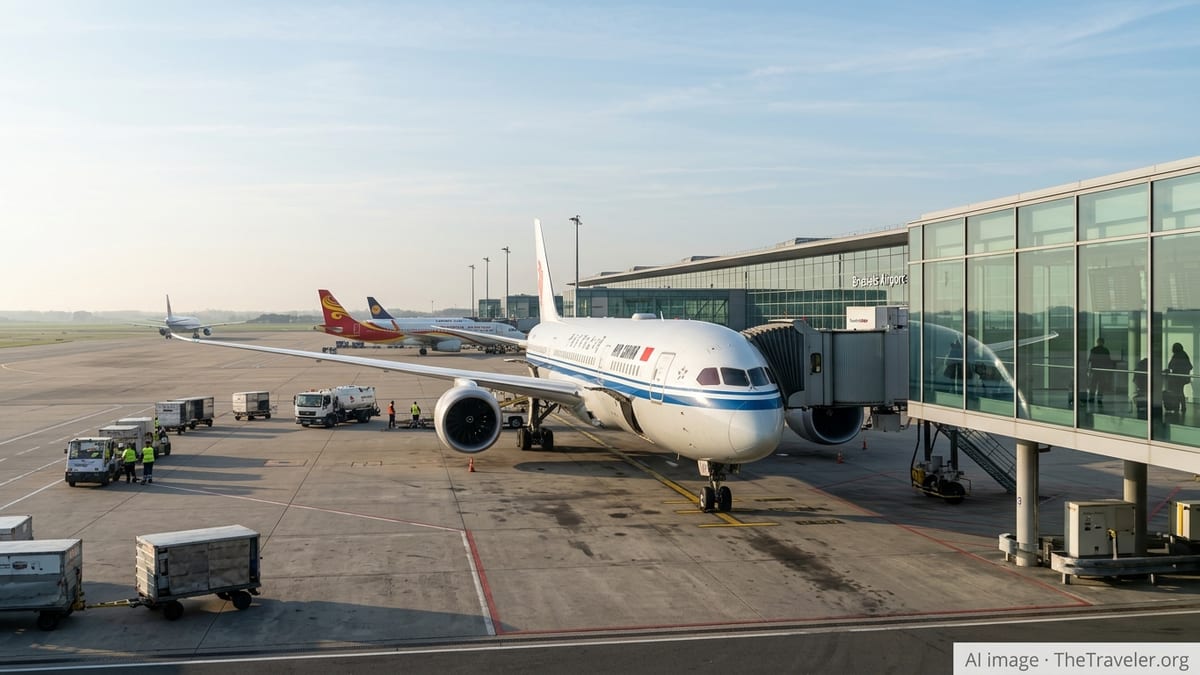
Breakdown at Beijing Capital Triggers Regional Shockwaves
Publicly available operational data and disruption trackers indicate that Beijing Capital International Airport has again emerged as a flashpoint in China’s wider aviation challenges. At the heart of the latest episode is flag carrier Air China, which has reportedly scrapped 17 flights and delayed close to 200 more in a single operating window, creating knock-on effects across both domestic and international networks.
The wave of disruption follows a broader pattern seen across China’s skies since mid June 2026, when consumer rights platforms began documenting several thousand delayed and cancelled services at major hubs in Beijing, Shanghai and Guangzhou. Within this context, Beijing Capital’s current problems represent not an isolated incident but an intensification at the country’s flagship gateway.
While exact passenger numbers affected by the latest breakdown are still being compiled, the combination of outright cancellations and rolling delays has led to missed connections, forced overnight stays and large scale rebookings for travelers using Beijing as a transfer point between Asia and Europe.
Key Asian Gateways Hit: Seoul, Tokyo, Singapore and Bangkok
The first and most visible impact has been on short and medium haul services linking Beijing Capital with major Asian hubs. Flight schedules and status boards show Air China operating dense networks to South Korea, Japan, Singapore and Thailand from Beijing, with a significant share of those flights feeding long haul departures to Europe and beyond.
On affected days, services between Beijing and Seoul Incheon, Tokyo area airports, Singapore Changi and Bangkok have seen extended departure holds as inbound aircraft and crews arrived late or were reassigned. In several cases, cancellations removed entire rotations, forcing passengers to wait for the next available departure or accept rerouting through alternate Chinese hubs.
The concentration of delays on these routes is particularly disruptive for regional business travelers and leisure passengers who rely on precise timing to meet onward flights. Missed connections in Beijing have pushed some travelers onto later departures by other carriers, while others have had to rebook entirely or adjust itineraries to avoid the most congested time bands.
Transcontinental Links to Germany and France Under Strain
The disruption has also spilled onto China’s key Europe bound corridors. Air China’s long haul flights between Beijing Capital and major European gateways such as Frankfurt, Munich and Paris Charles de Gaulle form crucial links for both point to point and connecting traffic originating in East and Southeast Asia.
Recent schedule and status information shows several westbound and eastbound European services experiencing significant delays, particularly flights between Beijing and Frankfurt and between Beijing and Paris that depend on punctual inbound feed from regional Asian sectors. When those feeder flights arrive late or are cancelled, transcontinental departures are either held for connecting passengers or leave with large numbers of no shows, complicating aircraft and crew rotations for subsequent days.
Even when European flights operate close to schedule, passengers originating in countries such as Japan, South Korea, Singapore and Thailand have been vulnerable to missed connections in Beijing, forcing last minute reaccommodation on alternative routes via other Asian or Middle Eastern hubs. Travel forums and customer reports describe complex rebookings and longer total journey times for trips that normally rely on a smooth Beijing transfer.
Underlying Pressures on China’s Aviation Network
The immediate trigger for the latest cluster of cancellations and delays has not been fully clarified in publicly available information, but the pattern aligns with the broader operational stress China’s airlines and airports have experienced through the busy summer 2026 travel season. Factors cited in industry analyses include tight aircraft utilization, lingering crew imbalances from earlier disruptions, and periodic weather and airspace constraints over eastern China.
Consumer advocacy and flight compensation platforms tracking conditions across Chinese hubs in mid June highlighted more than two thousand disrupted flights systemwide in a single day, with Air China among the most affected carriers. As airlines work through rescheduling and maintenance backlogs, even localized disturbances at a primary hub such as Beijing Capital can quickly cascade into larger network wide issues.
Beijing Capital’s role as a principal hub for Air China magnifies this vulnerability. Many aircraft operate tightly timed sequences that link domestic spokes with key Asian and European destinations. When one leg in that chain is delayed or cancelled, subsequent sectors often require retiming, equipment swaps or crew changes, resulting in the type of broad delay matrix now being observed.
Traveler Impact and Emerging Advice
For travelers passing through Beijing Capital, the latest breakdown translates into practical challenges at check in counters and transfer desks. Passenger accounts gathered on travel discussion platforms describe long queues for rebooking assistance, uncertainty over baggage handling when itineraries are restructured, and limited real time information about estimated departure times.
Travel specialists commenting in public forums are increasingly advising passengers connecting through Beijing during peak travel periods to allow longer minimum connection times than the itineraries technically require. Some recommend booking itineraries on a single ticket with one primary carrier where possible, to reduce disputes over responsibility when a missed connection occurs.
Others suggest that, for time sensitive trips between Asia and Europe, travelers consider alternative routings via more stable hubs when schedules permit. While Beijing Capital remains a critical and convenient gateway for many routes, the current pattern of Air China focused disruption has prompted a reassessment of risk for itineraries relying on tight transfers there.
As airlines and airports continue working to stabilize operations, the Beijing centered breakdown illustrates how quickly localized issues can escalate into multinational travel headaches. With cancellations and delays rippling outward to South Korea, Japan, Singapore, Thailand, Germany and France, the episode underscores the fragile balance underpinning today’s interconnected aviation networks.