


More news on this day
When Air India reshuffled a long-haul itinerary at short notice, a United States traveler thought following the carrier’s rebooking guidance would be the safest way to protect an upcoming trip. Instead, the passenger says the decision led to a cascade of new tickets, hotel costs, and lost time that added more than 2,000 dollars to the final bill.
Get the latest news straight to your inbox!
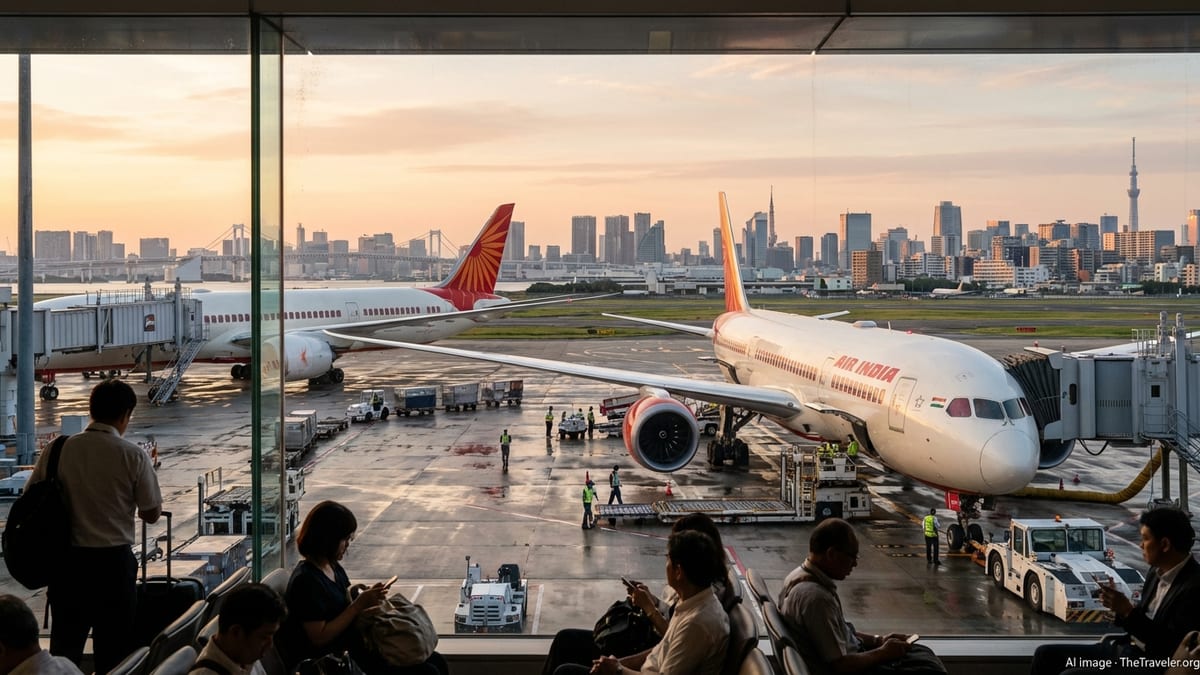
Schedule Change Sparks a High-Stakes Rebooking Decision
According to accounts shared on travel forums and consumer sites, the incident began when Air India made a significant schedule change on an international itinerary shortly before departure. The new routing involved an extended layover and arrival at a different airport from the one originally booked, disrupting onward plans and ground transport that had already been paid for.
Publicly available information on Air India’s schedule change and disruption policies indicates that passengers may be rebooked on alternative services or request a refund when departure or arrival times shift beyond set thresholds. In practice, travelers often report a patchwork of outcomes, with some being moved to later dates on Air India services and others encouraged to cancel and purchase new tickets on different airlines.
In this case, the passenger describes being advised that the most reliable option would be to accept a partial refund and then secure a new ticket on another carrier that preserved the original travel date. That guidance appeared to offer certainty at a stressful moment, but it also shifted the financial risk squarely onto the traveler.
With little time to compare options and facing the prospect of missing critical commitments, the passenger opted to follow the recommendation. Only later did the scale of the additional expense, driven by last-minute fares on alternative airlines, become fully clear.
Refund vs. Rebook: When Airline Advice Becomes Expensive
Air India’s published policies differentiate between voluntary schedule changes initiated by passengers and involuntary changes triggered by the airline. For involuntary changes, public documents indicate that travelers may be offered a full refund if timing shifts exceed a certain number of minutes, or a rebooking on a different date, sometimes with fare differences applying.
Consumer complaints suggest that the way these options are applied can leave passengers with stark choices. In several recent cases involving long-haul services, travelers report being offered rebooking days or even weeks after their original travel date, or being told to take a refund and arrange their own transport with another airline. When alternative flights are heavily booked or priced at a premium, that approach can turn a disrupted ticket into a much larger financial setback.
For the traveler at the center of this case, following Air India’s advice meant accepting a refund that covered only the original base fare. Replacement tickets on a competing carrier, purchased close to departure in a busy travel period, came in thousands of dollars higher than the amount returned. Once additional hotel nights and ground transportation changes were factored in, the traveler’s total extra cost exceeded 2,000 dollars.
Reports from other passengers indicate similar dilemmas, with some travelers saying that accepting a refund and rebooking elsewhere left them paying two or three times their original fare to get home on their intended date.
Fine Print, Passenger Rights, and a Patchwork of Protections
The experience highlights the gap between airline policy documents and the broader web of passenger protections that can apply, depending on where a trip begins, ends, or transits. Air India’s general booking and disruption policies focus primarily on its own procedures for reaccommodation and refund, including references to time thresholds for significant schedule changes and the possibility of fare differences when passengers choose different dates.
However, on routes touching jurisdictions with stronger air passenger rights regimes, such as the European Union, separate regulations may offer travelers additional options beyond an airline’s internal rules. Public guidance around EU Regulation 261, for example, notes that passengers on eligible itineraries generally have a right to choose between a refund or rerouting at the earliest opportunity under comparable transport conditions when flights are cancelled or heavily disrupted.
Consumer advocates observing recent Air India cases argue that confusion often arises when passengers are not clearly informed about the difference between what an airline prefers to offer and what travellers might be entitled to under local or regional law. Travelers who accept a refund based solely on airline guidance can, in some situations, weaken their position if they later seek reimbursement for higher rebooking costs they incurred on their own.
In the latest incident, the passenger says they were not explicitly informed about any external rights framework that might have given them leverage to insist on being rebooked by Air India itself, rather than bearing the full cost of a new itinerary.
Growing Frustration With Rebooking Experiences on Air India
The 2,000 dollar shortfall described by the traveler adds to a growing body of online complaints about schedule changes and rebooking practices involving Air India. Recent posts on aviation and consumer forums chronicle instances of last-minute cancellations, extended layovers imposed after rebookings, and downgraded cabins, with some passengers alleging that they were repeatedly referred back and forth between the airline and travel agents.
In several of those cases, travelers say they faced long call-center waits and inconsistent advice about whether they could be moved to partner airlines or were limited to Air India’s own services. Some report accepting solutions that were far from ideal in terms of timing or routing, simply because they could not obtain clarity about other options before departure.
Observers note that these complaints have emerged at a time when Air India is attempting to reposition itself in the global market, adding new aircraft and routes while overhauling its product. While that growth strategy aims to make the carrier more competitive on international corridors, consumer feedback suggests that disruption handling and communication remain pain points that can overshadow improvements elsewhere.
For travelers, the gap between marketing promises and the reality of dealing with cancellations or schedule changes is increasingly influencing airline choice, particularly on complex, long-haul itineraries.
What Travelers Can Learn Before Their Next Long-Haul Booking
Travel specialists say the Air India case underscores the importance of understanding not only airline-specific rules but also the broader legal framework that may protect passengers when flights are cancelled or significantly altered. Before accepting a refund or voluntarily rebooking at an airline’s suggestion, travelers are urged to check whether regional regulations, such as those in the European Union or other jurisdictions, could give them a right to re-routing at the airline’s expense.
It can also be critical to document every communication, from schedule change notifications to any verbal guidance provided about refunds and rebooking. Should a dispute later arise over additional expenses, written records of what was offered and what was recommended may support complaints brought to consumer bodies or aviation regulators.
Financially, the incident illustrates how a disrupted ticket can quickly turn into a much larger expense when replacement flights are purchased close to departure. Comparing options, including waiting for the airline to propose alternative routings, may help some passengers avoid absorbing last-minute fares on their own, though that strategy will not always be practical for those with fixed commitments.
For the traveler who followed Air India’s advice only to see costs spiral beyond 2,000 dollars, the experience has become a cautionary tale shared widely online. For others preparing to book long-haul journeys, it serves as a reminder that the safest choice in a disruption is not always the one that appears simplest in the moment.