


More news on this day
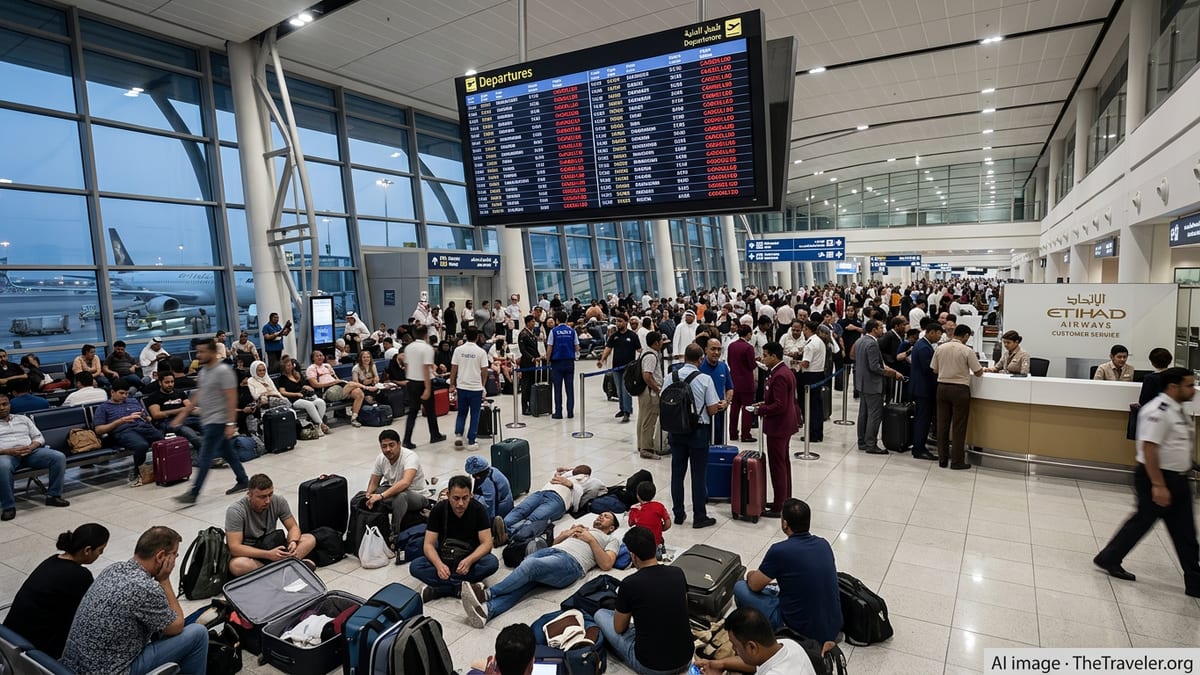
Several Gulf carriers, including Emirates, Air Arabia and flydubai, have canceled some flights amid renewed traveler scrutiny after the United States updated its Saudi Arabia travel advisory this week, a reminder that shifting regional risk assessments can translate quickly into operational changes for passengers.
Get the latest news straight to your inbox!
What the US advisory update actually changed
The US State Department’s current Saudi Arabia Travel Advisory is at Level 3, “Reconsider travel,” with the latest issuance dated September 15, 2026. Publicly available advisory text cites risks that include terrorism, armed conflict concerns, and the possibility of drone and missile targeting of American interests, along with cautions about exit bans and local laws, including restrictions tied to social media activity.
The advisory history indicates the Level 3 rating itself did not change in the September 15 update, but the summary language was revised to reflect additional travel restrictions for US government employees. For travelers, that distinction matters: an “updated” advisory can prompt reconsideration by companies and individual passengers even when the headline level remains the same.
The advisory also notes that commercial flights remain operational from Saudi Arabia, while acknowledging that service has been significantly disrupted at times. That framing leaves room for continued flying overall, even as airlines adjust specific routes, timings, or stations based on their own risk assessments and operational constraints.
Which airlines are canceling flights, and what travelers may see
Emirates, Air Arabia and flydubai each publish traveler-facing operational or travel-update pages that typically direct passengers to confirm flight status before heading to the airport and to watch for notifications tied to delays, schedule changes, or cancellations. Those kinds of notices are especially relevant when disruptions are localized to particular airports or time windows rather than a system-wide shutdown.
For flydubai, its operational updates hub emphasizes monitoring conditions and checking flight status regularly, while also posting route-specific guidance when terminals, airports, or schedules change. In recent months, flydubai has also issued operational notes affecting Saudi routes such as Riyadh terminal information, reflecting how even “normal” operations can include frequent adjustments.
Independent flight-tracking displays on September 16, 2026 showed at least one flydubai departure from Abha (AHB) to Dubai (DXB) marked as canceled, illustrating how disruptions may surface first as individual flight cancellations rather than a broad route suspension. Travelers on affected flights can also experience knock-on impacts, including missed onward connections through Dubai or Sharjah.
Saudi routes are busy, so cancellations can ripple quickly
Saudi Arabia is a major market for UAE-based airlines, connecting business travel, visiting friends and relatives traffic, and religious travel flows. Air Arabia’s own travel-alert page lists numerous Saudi points in its disruption guidance, including Abha, Dammam, Jeddah, Madinah and Riyadh, underscoring how broad the carrier’s Saudi network footprint can be even when the cancellations are selective.
At the same time, Saudi aviation activity continues on other fronts. On September 15, 2026, Air Arabia’s press office announced that a consortium led by Air Arabia had received an Air Operator Certificate and is set to begin domestic operations from Dammam’s King Fahd International Airport on September 20, 2026, with routes to Riyadh, Jeddah and Madinah. The juxtaposition highlights a key travel reality: expansion and disruption can coexist, depending on the route, airport, and current risk outlook.
For passengers, this mixed picture can be confusing. A route might still be for sale, while specific flights are canceled or retimed. Airlines may also consolidate services, swap aircraft, or move departures to different times of day to minimize exposure to operational constraints.
What travelers should do now: flight status, rebooking, and documentation
Passengers with imminent travel plans are best served by checking their flight status directly with the operating carrier as close to departure as practical, particularly on the day of travel. Emirates and Air Arabia both maintain flight-status tools, and flydubai advises customers to review flight status and operational updates before leaving for the airport.
For those who discover their flight is canceled, the practical next step is to review the carrier’s rebooking and refund options tied to the specific disruption. Air Arabia’s travel-alert guidance indicates that customers with previously canceled flights may be able to rebook if they have not already used a change or refund option, and that travelers whose flights remain canceled are typically notified and routed into the airline’s rebooking or refund processes.
Travelers should also keep key documents organized in case insurance claims become necessary. The US advisory itself encourages travelers to check with their travel insurance provider about evacuation assistance, medical coverage, and trip cancellation coverage. In practice, that often means saving airline cancellation notices, new itineraries, and receipts for any additional costs that are explicitly eligible under a policy’s terms.
Why advisories can influence airlines even without a ban
US travel advisories are not flight bans, and they do not automatically halt service. Still, advisory updates can reshape traveler demand, corporate travel rules, and the risk calculations that airlines, insurers, and airport operators continuously make. A change in wording, or the addition of employee restrictions for US government personnel, can be interpreted as a signal of heightened risk even if the overall advisory level remains unchanged.
Airline decisions can also be influenced by factors that sit alongside advisories, including airspace risk bulletins, insurance requirements for operating into certain regions, and the operational complexity of serving airports closer to higher-risk areas. The result is often a patchwork: some Saudi routes remain fully operational, while others see temporary cancellations or reduced frequencies.
For travelers, the immediate takeaway is to treat “advisory updated” as a prompt to verify, not to panic. Flight schedules can change quickly, and the most reliable near-term picture will come from the operating airline’s real-time flight status and the latest operational notices tied to the specific route and date.