


More news on this day
Travel between India and Canada is tightening in 2026 as Air India trims nonstop services on its Toronto and Vancouver routes, citing mounting operating pressures and a need to rebalance its long haul network.
Get the latest news straight to your inbox!
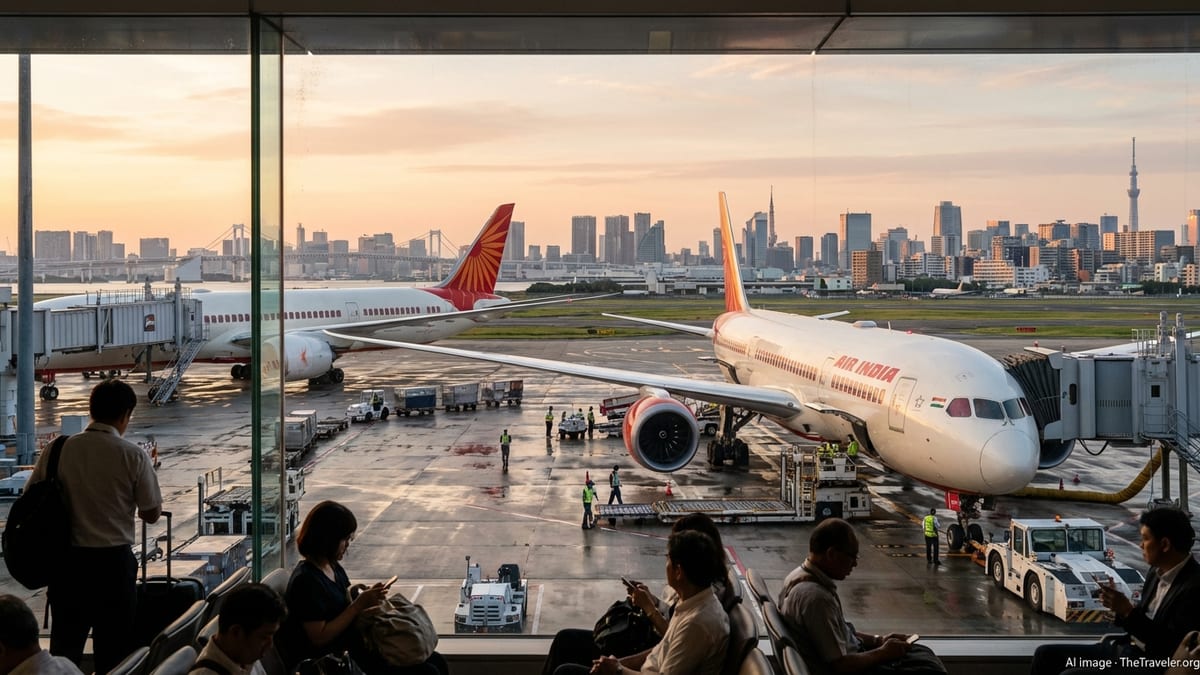
What Is Changing on Air India’s Canada Routes
Publicly available schedule data and recent industry reports indicate that Air India has begun reducing capacity on its two Canadian gateways, Toronto and Vancouver, through at least mid 2026. The cuts primarily affect nonstop services linking Delhi with Toronto Pearson and Vancouver International, which have been among the busiest corridors for travel between the two countries.
Specialist timetable analysis published in late April shows that during May 2026, Air India’s Delhi–Toronto operation falls from ten weekly rotations to seven. The adjustment removes three weekly frequencies from what had been a dense schedule structured around peak demand days, including westbound flights that previously routed via Vienna on certain dates. ([aeroroutes.com](https://www.aeroroutes.com/eng/260421-aimay26ca?utm_source=openai))
Reports from Canadian travel trade outlets and financial media also note a parallel reduction on the Delhi–Vancouver route, where service is being scaled back from a daily pattern to five flights per week. Industry coverage describes the overall pullback as trimming roughly one third of Air India’s Canada capacity compared with earlier in the year. ([junonews.com](https://www.junonews.com/p/air-india-scales-back-round-trip?utm_source=openai))
According to these reports, the schedule changes are planned to extend through at least July 2026, though the exact pattern of cuts varies by month and remains subject to further adjustment as market conditions evolve. Travellers booking later in the year are being urged by agents and online platforms to recheck schedules frequently as airlines continue to recalibrate their long haul operations. ([junonews.com](https://www.junonews.com/p/air-india-scales-back-round-trip?utm_source=openai))
Why Air India Is Pulling Back: Costs, Airspace and Fleet
Coverage in Canadian and international media links Air India’s Canada reductions to a combination of rising jet fuel prices, longer routings around restricted airspace in the Middle East and operational constraints in the airline’s widebody fleet. An internal message to staff, described in financial news reporting and verified against multiple outlets, outlines a series of cuts to long haul services for April, May, June and July 2026 as the carrier seeks to contain higher operating costs. ([airindia.com](https://www.airindia.com/content/air-india/in/en/newsroom/press-release/Air-India-network-updates.html?utm_source=openai))
Analysts note that diversions around conflict zones add flight time on India–North America sectors, driving up fuel burn and crew expenses just as global fuel benchmarks have surged again in early 2026. For routes such as Delhi–Toronto and Delhi–Vancouver, which already rank among Air India’s longest, even modest increases in block time can significantly erode margins, particularly on days with softer demand in the shoulder season. ([junonews.com](https://www.junonews.com/p/air-india-scales-back-round-trip?utm_source=openai))
The airline is also in the midst of a multi year fleet renewal and cabin retrofit program, temporarily limiting the number of widebody aircraft available at any one time. Air India has been progressively refitting its older Boeing 787s and introducing new long haul aircraft, while simultaneously expanding capacity on selected European and US routes through additional flights and upgraded cabins. Publicly available press materials suggest that, in this context, some Canadian frequencies are being traded off in favor of markets where yields are higher or aircraft time can be deployed more efficiently. ([airindia.com](https://www.airindia.com/in/en/newsroom/press-release/Air-India-upgrades-product-and-customer-experience-on-more-international-routes-this-summer.html?utm_source=openai))
Network updates issued in 2025 already flagged temporary reductions on the Delhi–Vancouver route, cutting it from a daily operation to five weekly flights even before the latest cost pressures intensified. The fresh round of cuts in 2026 appears to deepen a trend of cautious capacity management on Canada services rather than representing an abrupt strategic withdrawal from the market. ([airindia.com](https://www.airindia.com/content/air-india/in/en/newsroom/press-release/Air-India-network-updates.html?utm_source=openai))
How the Reductions Affect Fares and Availability
One of the most immediate consequences for travelers is tighter seat availability and higher prices on remaining nonstop options between India and Canada. Data highlighted in recent financial coverage show that average round trip economy fares on Canada–Delhi itineraries, across airlines, rose by nearly a quarter year over year by late April 2026, after having tracked below 2025 levels earlier in the year. Online travel search platforms attribute much of that jump to reduced capacity from Air India on key city pairs. ([ca.finance.yahoo.com](https://ca.finance.yahoo.com/news/air-india-slashes-flights-canada-152922635.html?utm_source=openai))
With three weekly Delhi–Toronto rotations removed and Delhi–Vancouver trimmed to five per week, peak travel dates now sell out further in advance, especially around school holidays, weddings and festival periods. While Air Canada continues to offer daily Toronto–Delhi service, it has not restored its own nonstop Vancouver–Delhi flights that were suspended during the pandemic, limiting nonstop options from Western Canada. ([paxnews.com](https://www.paxnews.com/news/airline/air-india-scales-back-flights-canada-jet-fuel-prices-rise?utm_source=openai))
Travel agents in both countries have noted that passengers who previously favored nonstop flights are increasingly being routed via European or Gulf hubs on partner or competing carriers. Journey times can lengthen by several hours, and while some connecting fares remain competitive, the loss of nonstop capacity has reduced the availability of lower promotional fares in economy cabins on certain dates. ([airindia.com](https://www.airindia.com/content/air-india/in/en/newsroom/press-release/Air-India-network-updates.html?utm_source=openai))
Public discussion on social platforms in Canada and within the Indian diaspora reflects concern that the combination of fewer flights and higher fares could make family visits and emergency travel more difficult, particularly for price sensitive travelers. At the same time, some commentators point to strained airline finances and volatile fuel costs as limiting the scope for carriers to maintain marginal routes without adjustments. ([reddit.com](https://www.reddit.com/r/canada/comments/1t7gp2z/air_india_cuts_flights_to_canada_as_jet_fuel/?utm_source=openai))
Alternatives for Travelers: Connections and Partnerships
Despite the cuts, travelers are not without options in 2026. Air India has been expanding its partnerships in North America, reinstating a codeshare agreement with Air Canada and launching an interline arrangement with WestJet. According to published coverage, these agreements allow passengers to combine Air India’s India–Canada flights with domestic connections across Canada on a single itinerary, broadening access to secondary cities even as nonstop trunk capacity tightens. ([airindia.com](https://www.airindia.com/in/en/newsroom/press-release/Air-India-reinstates-codeshare-agreement-with-Air-Canada.html?utm_source=openai))
For those departing from or arriving in cities beyond Toronto and Vancouver, such as Calgary, Edmonton or Winnipeg, the partnerships can help preserve through ticketing, baggage transfers and coordinated schedules, even when an itinerary involves multiple airlines. Travelers may, however, need to accept longer total travel times or additional connections, especially when nonstops on the Delhi–Vancouver sector are unavailable on preferred dates. ([princeoftravel.com](https://princeoftravel.com/insights/air-india-westjet-interline-partnership/?utm_source=openai))
Beyond alliance and interline options, a wide range of one stop itineraries remains available via European, Gulf and US hubs. Large global carriers continue to serve both India and major Canadian gateways, and some are increasing capacity in 2026 on transatlantic and transpacific routes. Travel experts quoted in trade coverage suggest that flexible travelers who are willing to connect and adjust travel days may still find competitive fares, particularly outside major holiday peaks. ([airindia.com](https://www.airindia.com/in/en/newsroom/press-release/Air-India-upgrades-product-and-customer-experience-on-more-international-routes-this-summer.html?utm_source=openai))
Prospective passengers are being advised in public guidance from airlines and booking platforms to monitor schedule changes closely, sign up for flight alerts and consider purchasing tickets well in advance for peak seasons. With long haul networks in flux, rebooking options can be more constrained when last minute cancellations or retimings occur, especially on routes where there are now fewer daily alternatives. ([airindia.com](https://www.airindia.com/content/air-india/in/en/newsroom/press-release/Air-India-network-updates.html?utm_source=openai))
What to Watch for the Rest of 2026
Looking ahead, the outlook for India–Canada connectivity in late 2026 will depend heavily on fuel prices, geopolitical developments affecting airspace and the pace of Air India’s fleet modernization. Industry analysts point out that if fuel costs stabilize and alternative routings shorten, some of the economic pressure prompting the current cuts could ease, potentially allowing airlines to restore frequencies on profitable long haul routes. ([ca.finance.yahoo.com](https://ca.finance.yahoo.com/news/air-india-slashes-flights-canada-152922635.html?utm_source=openai))
At the same time, Air India’s public communications emphasize a broader strategy of optimizing its network by shifting capacity between regions in response to demand and profitability. The carrier is adding flights and upgraded aircraft on several European and US routes during the Northern Summer 2026 season, which suggests that long haul growth is continuing even as specific markets, including Canada, see short term pullbacks. ([airindia.com](https://www.airindia.com/in/en/newsroom/press-release/Air-India-upgrades-product-and-customer-experience-on-more-international-routes-this-summer.html?utm_source=openai))
Travelers with plans later in 2026 should watch for updates to Air India’s winter schedule, typically filed in the second half of the year. Any sustained improvement in operating conditions or aircraft availability could translate into a partial rebuilding of Canada capacity, particularly on the high demand Toronto–Delhi corridor. Conversely, a prolonged fuel price spike or further airspace disruptions could lead to an extension of the current reduced pattern or additional fine tuning of frequencies. ([airindia.com](https://www.airindia.com/content/air-india/in/en/newsroom/press-release/Air-India-network-updates.html?utm_source=openai))
For now, the main takeaway for travelers is that nonstop options between India and Canada remain available but are less plentiful than they were earlier in the year. Planning ahead, staying flexible on dates and routes, and making use of partner networks will be key strategies for navigating the evolving landscape of India–Canada air travel in 2026.