


More news on this day
Berlin is poised to become an even bigger hub for low-carbon travel in northern Europe, as Germany’s Deutsche Bahn teams up with Danish and Norwegian rail operators on a new long-distance route that will carry passengers from the German capital to Copenhagen, Gothenburg and Oslo on a single, direct train.
Get the latest news straight to your inbox!
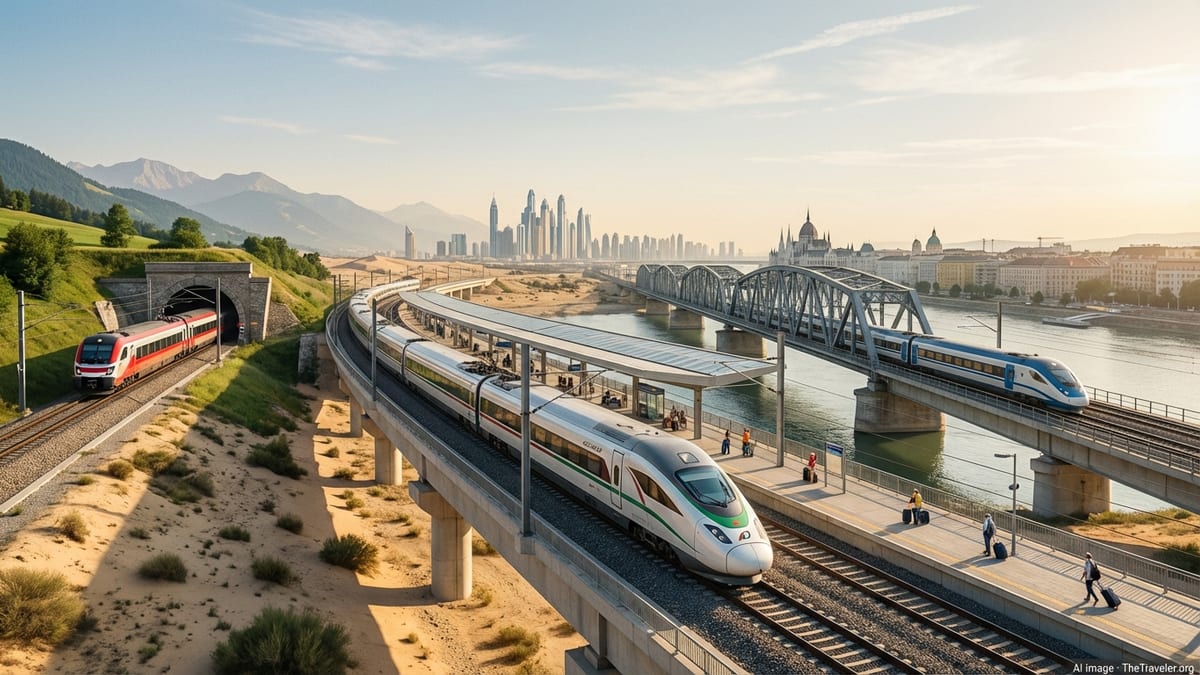
A new spine for northern European rail travel
According to recent statements from the partners involved, the new Berlin–Hamburg–Copenhagen–Gothenburg–Oslo service is scheduled to launch in summer 2028 as one of Europe’s longest continuous daytime rail connections. Publicly available information from Deutsche Bahn, DSB in Denmark and Norway’s Vy indicates that the train will cover more than 1,400 kilometres, linking five major cities and several regional hubs along the way.
The direct service will for the first time in over two decades restore a regular passenger rail link between Norway and Denmark, while also tying into Germany’s dense long-distance network at Berlin and Hamburg. Travel planners note that this alignment is designed to make cross-border journeys smoother, allowing passengers from central and southern Europe to reach Scandinavia with a single, timed connection in Berlin.
Timetables have not yet been finalised, but early operational outlines describe a daily service in each direction, departing in the morning and arriving in the evening. Journey time between Berlin and Oslo is expected to be competitive with existing options that require multiple changes, while Copenhagen will sit roughly midway along the route, giving the Danish capital a prominent role in the corridor.
Rail industry watchers point out that the launch fits into a broader shift as European governments and operators attempt to move passengers from short-haul flights onto electrified rail. By filling in what has long been a missing link between Germany, Denmark and Norway, the new route is seen as a symbolic and practical boost to long-distance train travel across the continent.
Comfort-focused trains designed for long days on the rails
The trainsets earmarked for the Berlin–Oslo corridor are being billed as a step up in comfort compared to older rolling stock traditionally used on long daytime routes. Publicly available technical descriptions highlight wide reclining seats, at-seat power and Wi-Fi, generous luggage space and accessible facilities designed to handle the demands of an 11 to 13 hour end-to-end journey.
Operators have indicated that the train will offer several classes of service, including quieter sections for business travellers and family-friendly areas closer to designated play spaces and baby-changing rooms. On-board bistro or restaurant cars are expected to provide hot meals, snacks and regional specialties, reflecting a broader move in northern Europe to treat long-distance rail as a travel experience rather than simply a form of transport.
Industry analysis of recent comfort-focused fleets such as Deutsche Bahn’s ICE updates and the Czech-designed ComfortJet trains suggests that interior layouts increasingly prioritise personal space and digital connectivity. The Berlin–Oslo service is expected to adopt similar design cues, with enlarged windows, improved suspension and sound insulation to make the long daytime run more relaxing.
Accessibility is another area where the new corridor is seeking to set higher standards. Information published by the operators points to level boarding where infrastructure allows, accessible toilets and reserved spaces for wheelchair users, along with real-time passenger information systems available in multiple languages along the route.
Speed upgrades and smoother cross-border operations
The new service comes at a time when major sections of the rail infrastructure between Germany, Denmark and Sweden are being upgraded, which is central to the project’s promise of shorter journey times. Work on the high-capacity Berlin–Hamburg corridor and the Fehmarnbelt fixed link between Denmark and Germany is expected to increase line speeds and remove bottlenecks that have long constrained international services.
On the Danish and Swedish segments, the route will build on existing high-speed and intercity lines between Copenhagen, Malmö and Gothenburg, taking advantage of completed electrification and signalling projects. By threading a single direct train through this network, operators aim to cut down on layovers and minimise delays linked to train changes at busy transfer stations.
Cross-border coordination has historically been a major challenge for European long-distance rail, with differing technical standards and timetabling priorities between national networks. Recent policy efforts from the European Union to promote international rail corridors appear to have played a role in smoothing the way for the Berlin–Oslo project, encouraging joint planning and shared ticketing systems among the participating companies.
While exact average speeds have not been disclosed, rail analysts expect the Berlin–Copenhagen leg to benefit from line improvements that already aim for travel times of around seven hours on daytime services. North of Copenhagen, the route will largely follow existing intercity and regional corridors, but with priority given to the through train to help maintain a competitive overall timetable.
Scenic coastal and Nordic landscapes along the route
Beyond the practical benefits, the new Berlin–Oslo service is being framed as a showcase journey for some of northern Europe’s most distinctive landscapes. From the flat, windmill-dotted countryside of northern Germany to the islands and coastline of Denmark and the forests and waterways of western Sweden and southern Norway, the line traces a route that many travellers currently experience only from the air.
As the train leaves Berlin and pushes north across Brandenburg and Schleswig-Holstein, the scenery shifts from urban sprawl to agricultural plains, small towns and wide skies. After Hamburg, travellers heading towards Denmark will cross low-lying marshlands and coastal inlets that have long been a hallmark of rail journeys to Scandinavia.
Between Copenhagen and Gothenburg, the line will traverse the Öresund region, passing close to the strait that separates Denmark and Sweden and continuing past a mix of coastal communities, forests and lakes. North of Gothenburg, the landscape becomes increasingly rugged and rocky, with occasional sea views and long stretches of pine forest that offer a distinctly Nordic atmosphere as the train approaches Oslo.
Tourism bodies in Germany, Denmark, Sweden and Norway have recently placed heightened emphasis on rail-based itineraries, promoting themed journeys that highlight regional food, culture and outdoor activities accessible from key stations. The Berlin–Oslo link is widely expected to feature prominently in future campaigns aimed at visitors seeking slower, more immersive ways to explore northern Europe.
Part of a wider renaissance in long-distance European rail
The planned Berlin–Oslo corridor joins a growing list of revived and newly announced long-distance services that are reshaping how travellers think about crossing Europe by train. In recent years, sleeper operators such as European Sleeper, ÖBB’s Nightjet and Sweden’s SJ EuroNight have expanded or restructured their networks, adding night routes that link Berlin, Copenhagen and other cities across central and northern Europe.
Parallel to these developments, daytime intercity projects like the forthcoming Prague–Berlin–Copenhagen ComfortJet route, scheduled for 2026, are filling other key gaps in the network. Together, these services are gradually creating a web of north–south and east–west connections that make it increasingly realistic to plan complex, multi-country European trips predominantly by rail.
Demand figures published by major operators show that international rail passenger numbers have climbed steadily since 2019, buoyed by a combination of climate awareness, high airfares on some routes and renewed investment in long-distance rolling stock. Analysts note that this growth has encouraged both state-owned railways and private startups to propose ambitious new services that, just a decade ago, would have appeared commercially risky.
By tying Berlin directly to Copenhagen and Oslo on a single, high-comfort train, the new corridor encapsulates many of these trends. It promises greater convenience for travellers, a lower-carbon alternative to regional flying and, for those willing to spend a day on the rails, some of the most varied and memorable scenery northern Europe has to offer.