

More news on this day
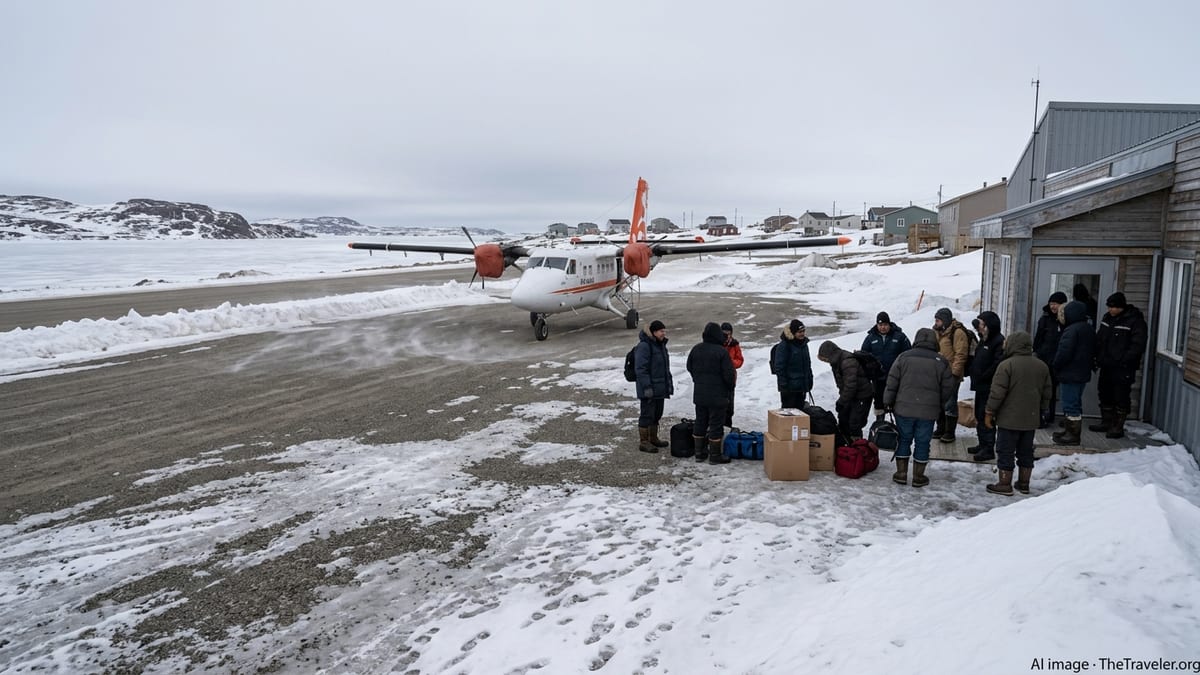
Clusters of recent Air Inuit cancellations across Nunavik are rippling through one of Canada’s most remote regions, stranding travelers, complicating medical journeys and highlighting how a handful of missed flights can choke off vital northern connections.
Get the latest news straight to your inbox!
Wave of Scrapped Flights Hits Multiple Nunavik Hubs
Published coverage and publicly available flight status data indicate that a series of cancellations on Air Inuit routes through key Nunavik airports has disrupted travel patterns since late May. Reports from Salluit, Kangirsuk and Kuujjuaq describe multiple flights that did not operate as scheduled within short periods of time, creating a cascade of missed onward connections for passengers who rely on tightly timed regional links.
Information compiled from airline timetable downloads and independent trackers points to at least four cancellations affecting Salluit alone over a brief window in late May, interrupting services that connect smaller communities such as Ivujivik, Kangiqsujuaq and Kuujjuarapik. Additional reports focused on Kangirsuk describe grounded aircraft that left travelers bound for Quaqtaq and Kuujjuaq unexpectedly stuck, in some cases for more than a day.
Kuujjuaq, one of Air Inuit’s principal bases in Nunavik, has also seen a spike in disruption. Recent analyses of flight operations through the airport highlight four cancellations and several significant delays on Air Inuit services within a single week, affecting both jet and turboprop flights. The interruptions at this regional hub have had knock on effects across the network, complicating connections to smaller villages scattered along the Ungava Coast and Hudson Bay.
The cumulative pattern has fueled growing concern among Nunavik travelers and organizations monitoring northern mobility. While the total number of affected flights is small compared with southern Canadian hubs, the impact in a region where air travel is often the only year round option is disproportionately severe.
Weather, Tight Schedules and Limited Aircraft Expose Fragile System
Publicly available advisories from Air Inuit and operational data suggest that the recent chaos cannot be pinned on a single cause. A travel advisory issued in March flagged weather related cancellations across parts of the network, underscoring how fast changing Arctic conditions can ground aircraft with little notice even in shoulder seasons. Late winter and early summer storms, low visibility and icing risks continue to influence flight reliability in Nunavik as temperatures swing and sea ice patterns shift.
Analyses of the disruption at Kuujjuaq point to a confluence of factors beyond weather alone. Observers tracking schedules note that tight turnarounds between flights, long multi leg routes and a finite fleet create limited room to recover when one early departure is delayed or canceled. A single grounded aircraft can rapidly trigger a chain reaction, forcing route juggling or outright cancellations on subsequent sectors linking smaller communities.
Air Inuit’s role as a lifeline carrier adds another layer of complexity. The airline serves around 20 destinations, most of them remote, with a mixed fleet of jets and turboprops that must cover passenger transport, cargo, and in some cases charter and essential services. When disruptions hit Kuujjuaq or Salluit, there are few alternative operators with spare capacity to absorb passengers, and rebooking options are constrained by aircraft availability, crew duty limits and runway characteristics at small northern airstrips.
Climate variability may be amplifying these vulnerabilities. Commentators examining recent Arctic weather trends point to more frequent episodes of fog, freezing rain and shoulder season storms in northern latitudes. In a region where gravel runways, minimal navigation aids and long distances are common, even modest shifts in conditions can translate into more days when safe flying is not possible, tightening the margin for schedule recovery.
Human Impact: Medical Travel, Work Rotations and Community Life
Behind the statistics, the latest cancellations have immediate human consequences. Publicly accessible reporting from Nunavik highlights how disrupted Air Inuit flights can jeopardize medical appointments in southern Quebec, delay work rotations at mines and other industrial sites, and hinder students and families trying to move between communities for school terms or important events.
Kuujjuaq’s recent spate of cancellations and delays illustrates this dependence. As a central hub feeding smaller villages and acting as a gateway to Montreal and Quebec City, the airport handles many itineraries that involve same day connections. When a feeder flight arrives late or not at all, travelers heading for medical care may be forced to reschedule scarce specialist appointments, while those returning from treatment can be left in temporary limbo far from home.
Similarly, disruptions at Salluit and Kangirsuk reverberate along the coast. Missed links to Ivujivik, Quaqtaq or other small communities can postpone deliveries of perishables, mail and essential supplies, particularly when cancellations occur on routes that do not operate daily. Residents traveling for funerals, regional meetings or cultural gatherings may find that a single lost flight alters plans that have been in place for weeks.
These episodes contribute to broader debates in Nunavik about the resilience of critical infrastructure and services. The Kativik Regional Government and local organizations have long stressed that dependable air access is central to community well being, economic participation and the exercise of mobility rights across the region’s network of northern villages.
Calls for Better Communication and Long Term Solutions
The latest wave of Air Inuit cancellations has renewed attention on how airlines, governments and regional bodies can mitigate the shock of irregular operations in remote areas. Commentaries drawing on recent disruptions suggest that more robust communication tools, clearer contingency planning and expanded cooperation between carriers and local authorities could help travelers make informed choices and reduce uncertainty.
Travel analysts focusing on northern Canada point to several practical steps that could ease future episodes, from improving real time status updates tailored to communities with limited internet access to formalizing minimum service expectations on certain lifeline routes. Publicly available policy documents also highlight ongoing discussions about long term investments in runways, navigation aids and terminal facilities at Nunavik airports, which may help reduce weather related closures and widen the range of aircraft that can serve smaller communities.
Air Inuit, owned by the Inuit of Nunavik through the Makivik Corporation, already operates under a dual commercial and social mandate that distinguishes it from many southern carriers. Observers note that this structure may support dialogue around reliability targets, schedule planning and fare policies that balances financial constraints with the essential nature of air service in Nunavik.
For now, however, travelers across the region are being urged by tourism information outlets and local commentators to build extra flexibility into their plans. The recent spate of cancellations at Salluit, Kangirsuk and Kuujjuaq suggests that even during periods of relatively stable weather, Nunavik’s air network remains highly sensitive to operational shocks, leaving communities vulnerable whenever the region’s main carrier is forced to ground its planes.