

More news on this day
Fresh geopolitical turmoil in the Middle East is rippling through Flight Centre Travel Group’s leisure business, weighing on earnings expectations and keeping pressure on the ASX-listed travel retailer’s share price despite solid trading in its corporate division.
Get the latest news straight to your inbox!
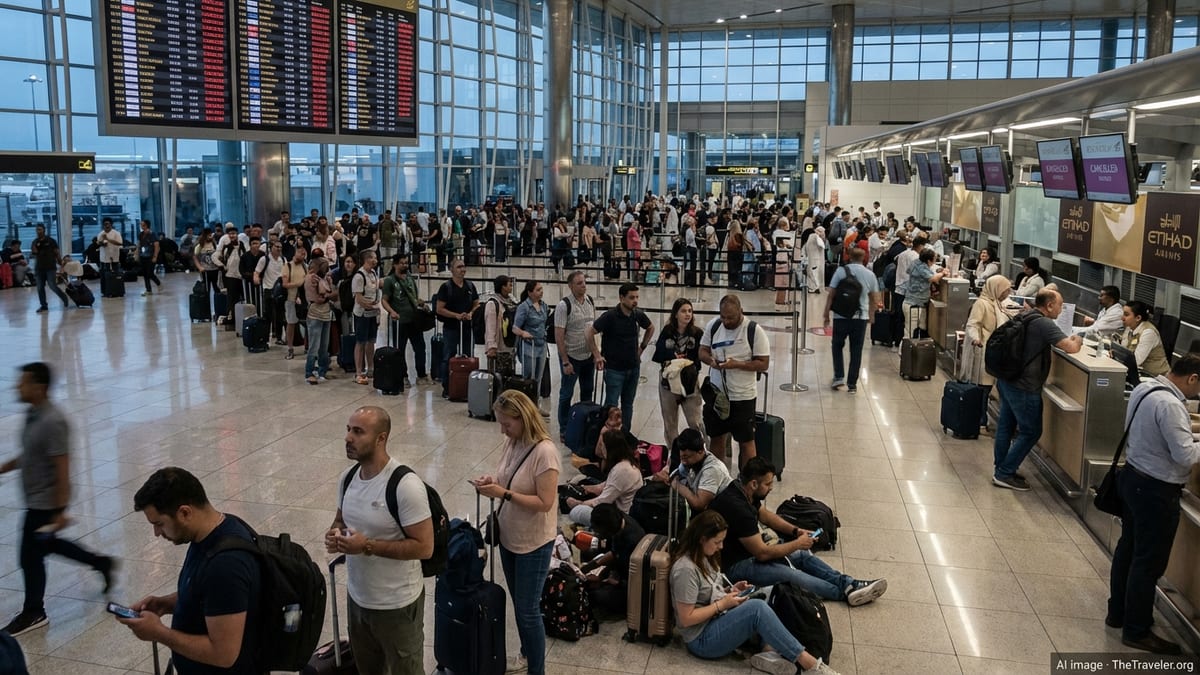
Leisure profit hit as conflict reshapes travel patterns
Recent trading updates from Flight Centre Travel Group indicate that renewed conflict and airspace disruption in the Middle East have delivered a clear blow to leisure profitability. Company disclosures for April point to an estimated profit impact of about A$10 million in that month alone, with higher refunds, cancellations and itinerary changes affecting popular long‑haul routes that typically transit the region.
According to published coverage of the group’s latest conference presentations and ASX filings, the disruption has hit during a key booking window for northern hemisphere summer holidays. Long‑haul leisure customers have shown greater caution toward itineraries involving the Gulf and nearby hubs, while higher fuel costs and insurance premiums have reduced the economics of some fares, limiting promotional activity that usually stimulates volumes.
Industry reports on airline networks show that many carriers are still avoiding or limiting overflights of parts of the Middle East after recent strikes and escalating tensions, which has extended flight times and raised operating costs on some Europe–Asia corridors. That backdrop has fed into a softer demand environment for discretionary leisure travel, particularly for price‑sensitive segments that form an important part of Flight Centre’s traditional retail customer base.
Flight Centre’s own commentary in recent months has characterised the leisure environment as challenging, with weaker demand into certain regions and more last‑minute booking behavior. The latest Middle East flare‑up has intensified those trends, amplifying volatility just as the company was working to rebuild momentum after a difficult 2025 financial year for leisure.
Corporate arm provides a partial buffer
In contrast to leisure, Flight Centre’s corporate businesses continue to deliver record transaction volumes, helping to cushion the overall group impact. Publicly available information from recent half‑year results shows underlying profit before tax improving compared with the prior corresponding period, supported by strong growth in the FCM and Corporate Traveller brands and rising market share in key markets such as North America and Europe.
Analyst commentary following the company’s latest briefings highlights that corporate travel recovery has exceeded pre‑pandemic levels on several metrics, even though overall business travel globally remains below 2019 activity. Technology investments in booking platforms and duty‑of‑care tools have strengthened customer retention and enabled Flight Centre to secure larger multinational accounts, partly offsetting margin pressure from leisure.
However, while the corporate segment is structurally more resilient, it is not fully insulated from the Middle East conflict. Longer routings, higher fuel surcharges and shifting corporate travel policies around risk can affect trip frequency and average spend, particularly for clients with exposure to energy, infrastructure and defence supply chains in the region. Travel management companies typically pass through many of these costs, but lower ticket volumes or tighter client budgets can still dilute fee income.
For equity investors, the divergence between corporate strength and leisure softness underlines Flight Centre’s transformation in recent years from a predominantly retail travel agency to a more balanced group. The extent to which corporate earnings can offset leisure volatility will remain a key focus as markets assess the stock’s risk‑reward profile in a volatile geopolitical environment.
Guidance risks and valuation questions on ASX:FLT
The renewed disruption arrives after a period in which Flight Centre had already trimmed and then struggled to meet prior earnings guidance. In the 2025 financial year the company missed downgraded profit targets, with preliminary updates and the subsequent annual report both pointing to softer leisure demand into the United States, region‑specific issues in Asia and escalating Middle East tensions as major headwinds.
More recent investor presentations suggest that management remains cautious about the outlook for leisure margins, even as total transaction value for the group trends at or near record levels. Geopolitical uncertainty, uneven consumer confidence and elevated airfares are all cited as variables that could constrain upside in the current financial year, especially if hostilities in the Middle East persist or broaden.
Market commentary on ASX:FLT in early 2026 reflects this tension between robust activity indicators and compressed profitability. Some research notes describe the stock as having attractive long‑term leverage to global travel growth, but argue that valuation needs to reflect the cyclical and event‑driven risks now facing the leisure division, including conflict‑related route closures and oil‑price sensitivity.
The result has been a choppy share price pattern, with travel‑sector sell‑offs around Middle East headlines followed by relief rallies when diplomatic signals improve or fuel prices ease. For investors, positioning in Flight Centre increasingly hinges on views about the duration of the current disruption, the pace of any ceasefire or de‑escalation, and whether pent‑up leisure demand will return quickly once routes normalise.
Middle East conflict reshapes global leisure flows
Beyond the direct impact on Flight Centre, the latest Middle East unrest is reshaping global leisure flows in ways that affect intermediaries across the sector. Factboxes published by international newswires show that a number of airlines have paused or reduced services to Tel Aviv, Dubai, Doha and other regional hubs, while rerouting long‑haul flights to avoid certain airspaces. These moves have added complexity to multi‑stop itineraries and cut capacity on historically important connecting corridors.
Analysts following the broader travel and aviation sector note that demand has not collapsed, but is being redirected. Travellers are increasingly favouring itineraries that avoid perceived risk zones, opting for alternative gateways in Europe and Asia or prioritising closer‑to‑home destinations. For a retailer like Flight Centre with a global footprint, that creates both challenges and opportunities as consultants work to re‑protect existing bookings and steer new demand to different routes and destinations.
Higher jet fuel prices linked to the conflict have also played a role, contributing to elevated airfares that can suppress discretionary spending. Although oil has retreated from its sharpest spikes at various points this year, volatility remains a concern for airlines and travel agents alike. Any sustained rise in input costs tends to filter through to end‑customers, potentially discouraging some mid‑market leisure travel where Flight Centre has historically been strong.
At the same time, recent industry commentary indicates that geopolitical shocks can prompt some consumers to return to brick‑and‑mortar agencies or human consultants, particularly when they are worried about cancellations or rapid schedule changes. Reports in the trade press describe a rise in customers walking back into Flight Centre stores after years of booking online, looking for help navigating fast‑moving travel advisories and rebooking options.
Strategic responses and what investors are watching next
Flight Centre’s recent capital markets communications emphasise several strategic responses to the current turbulence. The group continues to push deeper into higher‑margin segments such as premium and luxury leisure, expand its portfolio of in‑house tour products and cruise offerings, and invest in omnichannel capabilities that blend online booking with in‑store advice and servicing.
Management has also highlighted ongoing cost discipline and network optimisation, including store footprint adjustments and efforts to drive more volume through scalable digital platforms. These measures aim to preserve flexibility so the business can withstand periods of lower leisure demand while protecting investment in core growth areas, particularly corporate travel technology and data capabilities.
Investors are closely watching upcoming trading updates for signs that the April profit impact from Middle East disruption was a short, sharp shock rather than the start of a prolonged earnings drag. Key indicators will include the pace of booking recovery on affected routes, the share of customers choosing alternative destinations, and any further commentary on refund volumes or margin pressure.
For now, Flight Centre’s investment case sits at the intersection of powerful long‑term travel demand drivers and acute near‑term geopolitical risk. How quickly the Middle East backdrop stabilises, and how effectively the company continues to pivot its mix toward more resilient segments, will help determine whether the recent share price weakness in ASX:FLT proves a buying opportunity or a warning signal.