


More news on this day
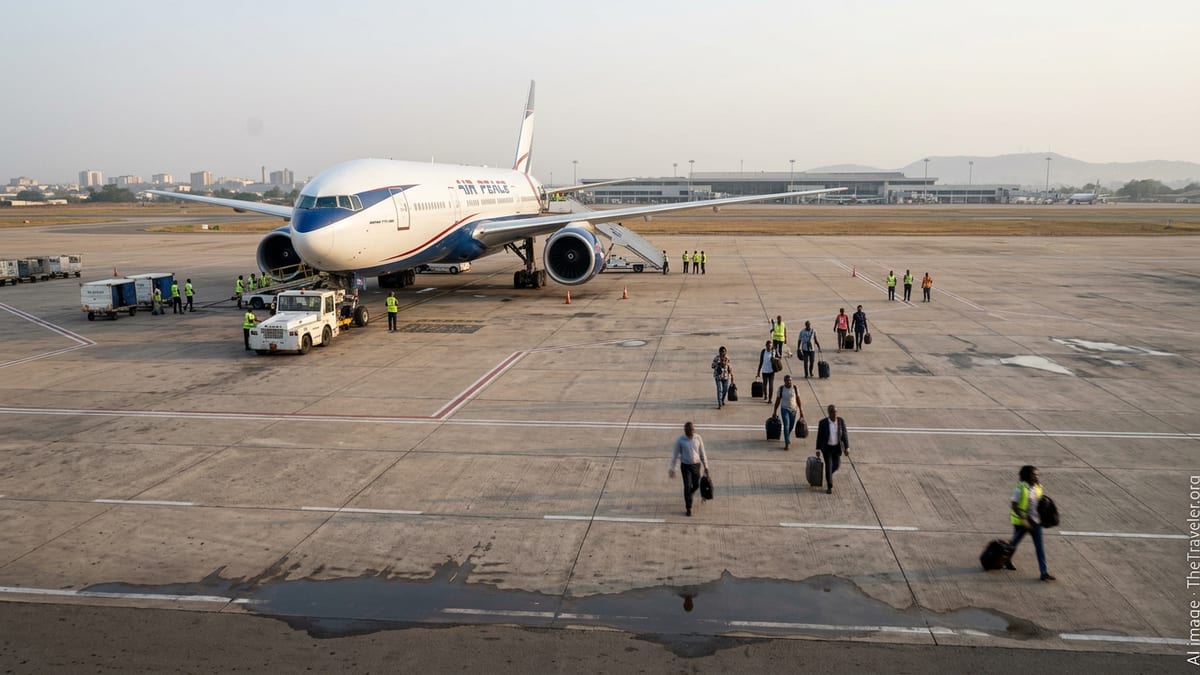
Air Peace has challenged Nigeria’s aviation regulator over an August disruption scorecard that placed the carrier among the worst performers for delays, arguing the figures are being interpreted without key operational context and insisting only a small share of disruptions was caused internally.
Get the latest news straight to your inbox!
What the NCAA’s August scorecard reported
Published coverage indicates the Nigeria Civil Aviation Authority released a “Summary of Domestic Airline Flight Disruption Operations” for August 2026, describing systemwide on-time performance across 15 domestic carriers. The snapshot put the scale of disruption into hard numbers: 7,961 domestic flights operated during the month, with 4,765 delayed and 36 cancelled.
Multiple reports also indicate Air Peace operated 1,864 domestic flights in August and recorded 1,330 delays, which equates to roughly a 71% delay rate. That volume-based ranking matters in a market where one high-frequency operator can account for a large share of total movements and therefore appears prominently in delay totals even when several carriers are struggling.
The same published coverage has placed United Nigeria Airlines near the top of the disruption table as well, reinforcing that delays were not limited to one airline and that late departures in Nigeria’s domestic network remain a broad reliability issue.
Air Peace’s pushback and the “15% internal” claim
Air Peace’s response has centered on a claim that the NCAA’s data is being read as a simple measure of airline competence, while the airline believes it obscures the underlying causes of delay events. The carrier’s position, according to published coverage, is that a large majority of its disruptions were driven by factors outside the airline’s direct control.
In that framing, the airline has rejected what it describes as “data flaws” and has highlighted a figure that only 15% of disruptions were internally caused, implying that most delays were linked to constraints such as airport and airspace limitations, weather impacts, or knock-on effects from disruptions earlier in the day.
For travelers, the dispute is not merely semantic. If most delays are truly external, the reliability fixes tend to lie in airport capacity, ground handling performance, air traffic flow management, and coordinated slot discipline. If delays are largely internal, solutions more often involve scheduling realism, aircraft availability, turnaround times, crew positioning, and maintenance planning.
Why delay data can be contested in airline operations
Delay scorecards typically compress complex events into a single label, but real-world disruptions often have multiple triggers. A flight can depart late because an earlier inbound arrived late due to weather at another station, because a gate was unavailable, because fueling equipment was delayed, or because a last-minute aircraft swap was needed after a technical issue.
That is why airlines frequently argue about attribution. In operational practice, carriers distinguish between controllable and non-controllable delay causes, and the same delay event can be categorized differently depending on the reporting framework used. When a regulator publishes a disruption tally aimed at consumer transparency, airlines may focus on whether the dataset captures causality or only end results such as delayed departures.
The August figures have nonetheless intensified scrutiny because they show disruption at a scale that affects trip planning across Nigeria’s busiest domestic routes, where high load factors and limited spare aircraft can turn small schedule slips into day-long cascades.
Passenger rights obligations still apply during disruptions
Separate from the debate over root causes, publicly available rules indicate that Nigeria’s passenger protection regime sets obligations for airlines during delays and cancellations, even when a disruption is linked to external factors. Under Part 19 of the Nigeria Civil Aviation Regulations, airlines are expected to provide timely information and defined forms of care once a delay threshold is crossed.
Published regulatory material and related coverage describe a requirement to provide the reason for a delay within 30 minutes of scheduled departure time when a delay is reasonably expected. They also describe entitlements such as refreshments and communication support after extended delays, alongside reimbursement or rerouting provisions in certain circumstances.
For travelers caught in repeated delays, these obligations can be as important as on-time statistics. Consumer-facing enforcement has also become more visible in Nigeria in recent months through regulator communications and reporting on sanctions tied to consumer protection breaches.
What it means for travelers booking Nigeria domestic flights now
The NCAA’s August summary, and Air Peace’s rejection of its interpretation, arrives at a time when domestic passengers are already navigating tight connection windows, airport access constraints, and limited alternative lift when flights slip behind schedule. In practice, a single late departure can trigger missed meetings, lost hotel nights, and rebooking costs, especially on routes with fewer daily frequencies.
Given the scale of August delays reported across the system, travelers may want to build more buffer into same-day plans, avoid extremely tight self-connections, and keep documentation of disruption communications, receipts, and rebooking outcomes. Those records can matter if a passenger later seeks assistance under Nigeria’s consumer protection framework.
The ongoing disagreement also signals that more detailed, cause-based reporting could become a new battleground in Nigeria’s aviation sector. Whether the next scorecards include stronger attribution or remain outcome-focused, the immediate takeaway from August is that reliability remains a key variable in domestic travel planning, and that airlines and regulators are under rising pressure to show measurable improvement.