


More news on this day
As the US-Iran war keeps pressure on Gulf air routes and key shipping lanes, the most immediate impacts for UAE residents on September 15, 2026 are travel disruption risks, higher transport costs, and fast-changing guidance for journeys across the region.
Get the latest news straight to your inbox!
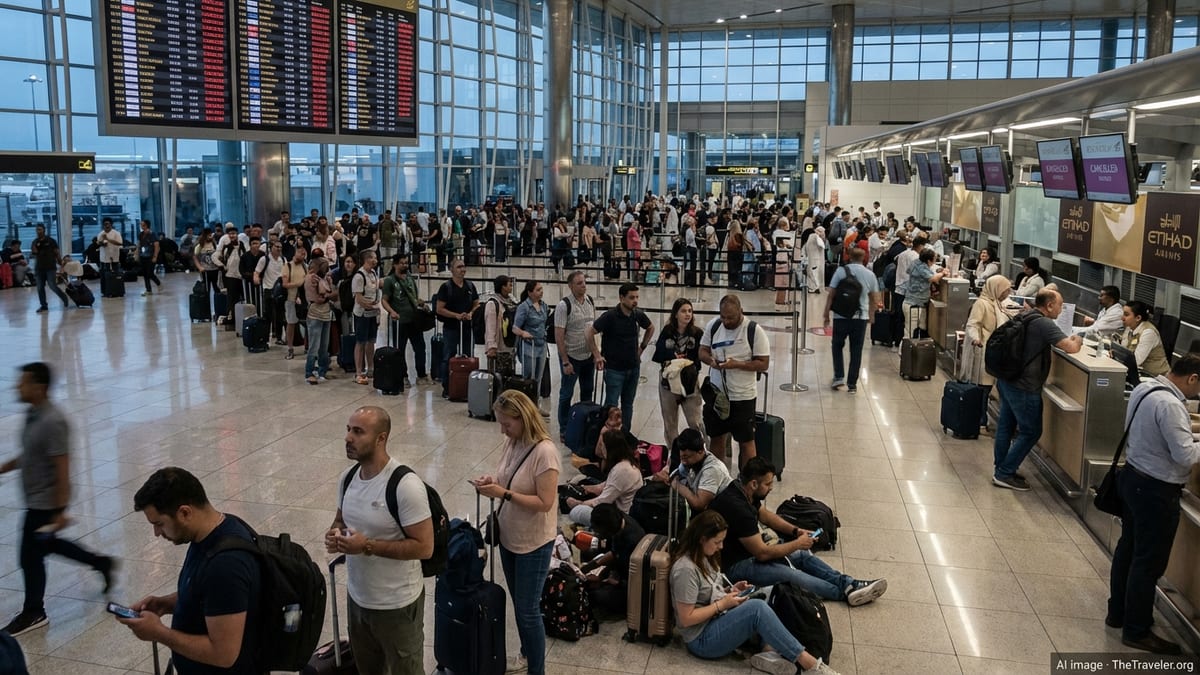
1) UAE airports are operating, but cancellations and delays can change within hours
Published airline and airport information indicates Dubai International (DXB) and Abu Dhabi’s Zayed International Airport (AUH) remain open and handling flights, but schedules have been unusually fluid as carriers adjust routings around higher-risk airspace. That can add flight time, disrupt aircraft rotations, and create knock-on delays across the day.
Coverage of Tuesday’s disruptions pointed to a mixed picture: some services continued as planned while others were delayed or cancelled, including reported cancellations on certain regional routes and delays on some long-haul departures from Abu Dhabi. Because not every disruption is necessarily conflict-related, the practical takeaway is still the same: rely on live flight status for your exact flight number, not a confirmation email from earlier in the day.
For travelers connecting through another Gulf hub, the risk is compounded: even if your UAE departure operates, onward connections can be retimed at short notice. If you are flying today, published advice across multiple outlets has emphasized checking your airline’s app and the airport’s live departures before leaving home, and again a few hours later.
2) Strait of Hormuz shipping risks remain a key watchpoint for prices and deliveries
The Strait of Hormuz is one of the world’s most important energy and trade corridors and sits just off the UAE coast, making it a central concern for residents even when daily life inside the Emirates appears normal. Recent reporting has described a slow and partial recovery in traffic after periods of sharp disruption, with war-risk concerns continuing to weigh on tanker movements and commercial scheduling.
When shipping slows or detours, costs can rise beyond oil and gas. War-risk insurance premiums, freight rates, and delivery timelines for containerized goods can all be affected, with impacts that may show up in business costs and some retail prices over time rather than overnight.
For households waiting on time-sensitive imports or international deliveries, the most realistic step is to expect longer delivery windows and to watch for carrier notices about rerouting, rescheduling, or temporary service limits on certain lanes.
3) Fuel in the UAE is already set for September, but global volatility still matters
The UAE’s retail fuel prices for September 2026 were set under the country’s monthly pricing mechanism, with the official rates taking effect from September 1, 2026. The approved prices are Super 98 at AED 3.80 per litre, Special 95 at AED 3.69, E-Plus 91 at AED 3.61, and diesel at AED 4.30 per litre.
That matters during a conflict-driven volatility cycle because residents often look for immediate changes at the pump when crude prices spike. In the UAE, the more relevant date is the next monthly price setting rather than intra-day swings, even though sustained higher oil, refined-product, shipping, and insurance costs can feed into future fuel decisions.
For drivers, delivery-dependent households, and small businesses, the most practical planning step is to budget using the September rates already in force, while watching for signs that logistics and energy disruptions persist into the next pricing cycle.
4) International travel guidance is tightening for some destinations, including Iran
As regional security conditions remain unpredictable, official travel updates can change quickly. Publicly available UAE government travel information for Iran shows a restriction for UAE citizens, reflecting elevated risk conditions tied to the broader conflict environment.
For UAE residents who are not UAE citizens, the practical issue is less about a single blanket rule and more about a patchwork of airline policies, transit constraints, visa processing disruptions, and insurance exclusions that can arise during wartime conditions. Even when a route is technically available, practical barriers can include last-minute flight cancellations, reroutes that lengthen travel time, and stricter documentation checks by carriers.
If you have urgent travel involving Iran or nearby transit points, check the latest advisory information from your passport-issuing country as well as carrier policies before purchasing tickets. If you are already abroad, keep an eye on updates that affect re-entry routings through the Gulf.
5) Regional security dynamics can affect routing, insurance, and trip costs beyond the UAE
Beyond immediate flight and shipping disruptions, the war is also reshaping regional security coordination and risk assessments that influence commercial decisions, from airline route planning to marine insurance pricing. Separate coverage this week described a closed-door meeting of military chiefs involving the US, Israel, and several Arab countries, including the UAE, underscoring the wider regional security focus around Iran.
In the US, published coverage has also highlighted how sustained operations are stressing certain munitions inventories and resupply pipelines, a detail that signals the conflict may continue to generate periodic escalations and market jolts rather than fading quickly. For travelers and residents, that means planning should assume continued volatility, not a straight-line return to normal schedules.
For UAE residents booking trips, the practical implications include higher premiums for certain travel insurance coverages, more conservative connection times, and a greater likelihood that airlines will change routings to avoid specific airspaces. When possible, favor itineraries with fewer connections, flexible change terms, and enough buffer time to absorb reroutes and delays.