


More news on this day
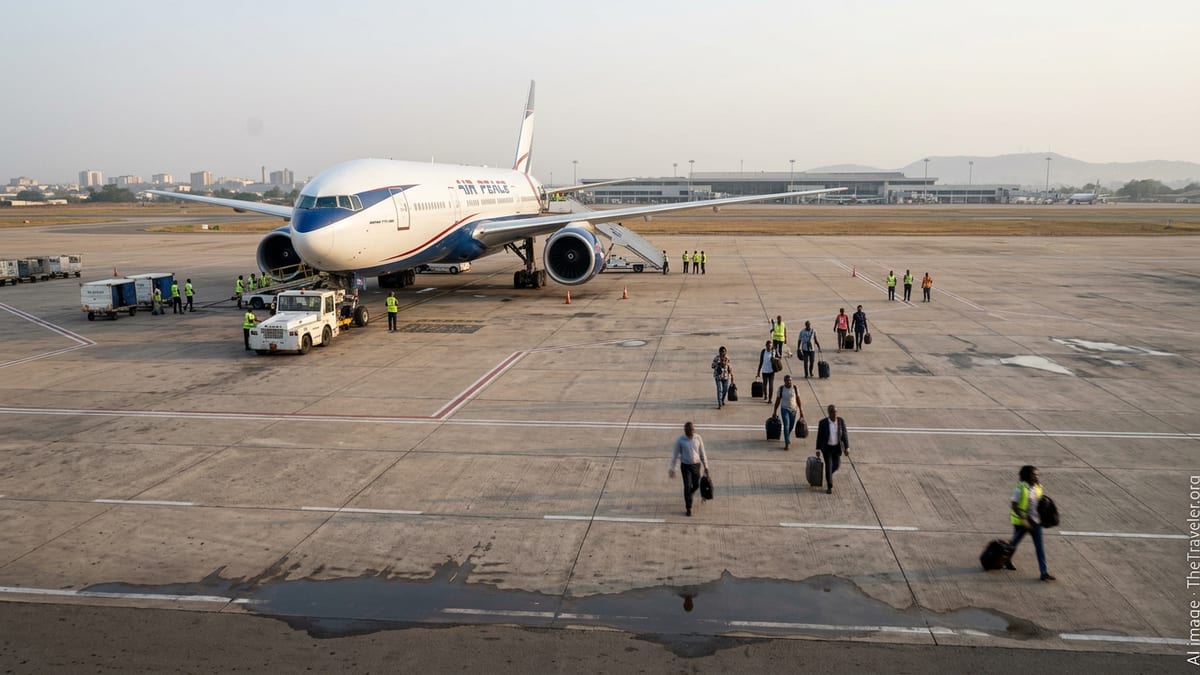
Nigeria’s biggest domestic carrier, Air Peace, has pushed back against a widely circulated flight-disruption scorecard attributed to the Nigeria Civil Aviation Authority (NCAA), describing the August 2026 delay figures as “inaccurate” and warning that the summary is being read as a direct measure of airline-caused disruptions.
Get the latest news straight to your inbox!
What the NCAA scorecard says about August 2026 flying
Published coverage indicates the NCAA released an operational “Summary of Domestic Airline Flight Disruption Operations” for August 2026 that tallies flights operated, delayed, and cancelled across Nigeria’s domestic carriers. The table has drawn attention because it presents delays at a scale that affects routine trip planning for passengers moving between major city pairs.
In the widely reported figures, the NCAA summary lists 7,961 domestic flights operated in August 2026, with 4,765 delayed and 36 cancelled across the market. By raw volume, Air Peace is shown with 1,330 delays out of 1,864 recorded flights, alongside several cancellations. The same dataset places other airlines high on disruption totals, including United Nigeria and newer operators such as Enugu Air, reinforcing that delays were not confined to one airline.
While the data has been shared online as a ranking of “worst” performers, multiple reports note that the NCAA table functions as an operational snapshot and does not provide route-by-route causes for delays or a formal breakdown between airline-controlled issues and external factors such as weather or airport constraints.
Air Peace’s “inaccurate” claim and the core dispute
Air Peace’s response centers on the accuracy and interpretation of the regulator’s numbers. According to published coverage of the airline’s position, Air Peace argues that the NCAA’s table understates its total flight volume for the month, which in turn inflates the delay rate when readers calculate delays as a share of operations.
One widely repeated point in coverage is Air Peace’s claim that it operated 2,564 flights in August 2026, compared with the 1,864 services recorded in the NCAA summary. The airline’s position, as reported, is that discrepancies of that magnitude change how passengers should interpret delay ratios and overall performance.
Air Peace has also argued in reported statements that the scorecard’s format makes it easy for travelers to assume all delays are airline-caused, even though the summary does not assign responsibility for each disruption. The airline’s comments have been framed as both a data challenge and a caution about how performance tables are shared on social media.
Why the dispute matters for travelers booking domestic Nigeria routes
For travelers, the immediate implication is less about the arithmetic of one airline’s monthly totals and more about the reliability environment the scorecard reflects. Reports based on the NCAA’s August summary suggest delays affected a majority of recorded domestic flights, meaning schedule buffers may be necessary for time-sensitive travel, including business connections, medical appointments, and same-day return trips.
Because the NCAA table is aggregated, it does not show which airports, time bands, or routes contribute most to delay clustering. That limitation can make it harder for passengers to use the data to make granular decisions, such as choosing earlier departures on historically congested corridors or avoiding tight turnarounds during peak periods.
Still, the publication of a monthly disruption snapshot can influence consumer choices and airline reputations, particularly in markets where price competition and limited frequencies can push passengers toward a small set of carriers on trunk routes.
Passenger protection rules in the background
The dispute has also landed amid renewed attention on Nigeria’s consumer-protection framework for air travel. Published coverage in Nigerian outlets has highlighted provisions under the Nigeria Civil Aviation Regulations (Nig.CARs) 2023, Part 19, which set expectations for how airlines communicate and assist passengers during disruptions.
One requirement frequently cited in recent reporting is that when an airline reasonably expects a domestic flight to be delayed, passengers should be provided the reason for the delay within 30 minutes after the scheduled departure time. Other referenced provisions describe assistance obligations as delays extend, including communications and refreshments after defined thresholds.
Separate NCAA consumer-protection communications also outline complaint channels and reference standards tied to baggage delay and refund handling. For travelers, these rules matter because they shape what documentation to request during irregular operations, and what timelines and escalation options exist if service recovery fails.
What to watch next: data transparency and enforcement pressure
With multiple airlines publicly disputing the NCAA’s August figures in published coverage, the next phase may hinge on whether the regulator releases more detailed methodology, clarifies how flights are counted, or publishes route-level breakdowns that distinguish between controllable and uncontrollable disruption drivers.
At the same time, the broader picture painted by August’s totals suggests a systemwide punctuality challenge. Even if individual carriers contest their exact denominators, the overall volume of reported delays indicates that infrastructure constraints, operational resilience, and compliance with passenger-notification requirements remain central issues for Nigeria’s domestic travel market going into late 2026.
For passengers, the near-term practical takeaway is that monthly performance snapshots can be a starting point, not a full explanation. Until cause-attribution and methodology are clearer, travelers may need to combine published punctuality data with conservative planning, especially for itineraries with hard deadlines.