


More news on this day
American Airlines is moving to increase capacity on routes into countries covered by U.S. State Department Level 3 “Reconsider Travel” advisories, underscoring how major carriers continue to chase demand even as governments warn of elevated security and safety risks.
Get the latest news straight to your inbox!
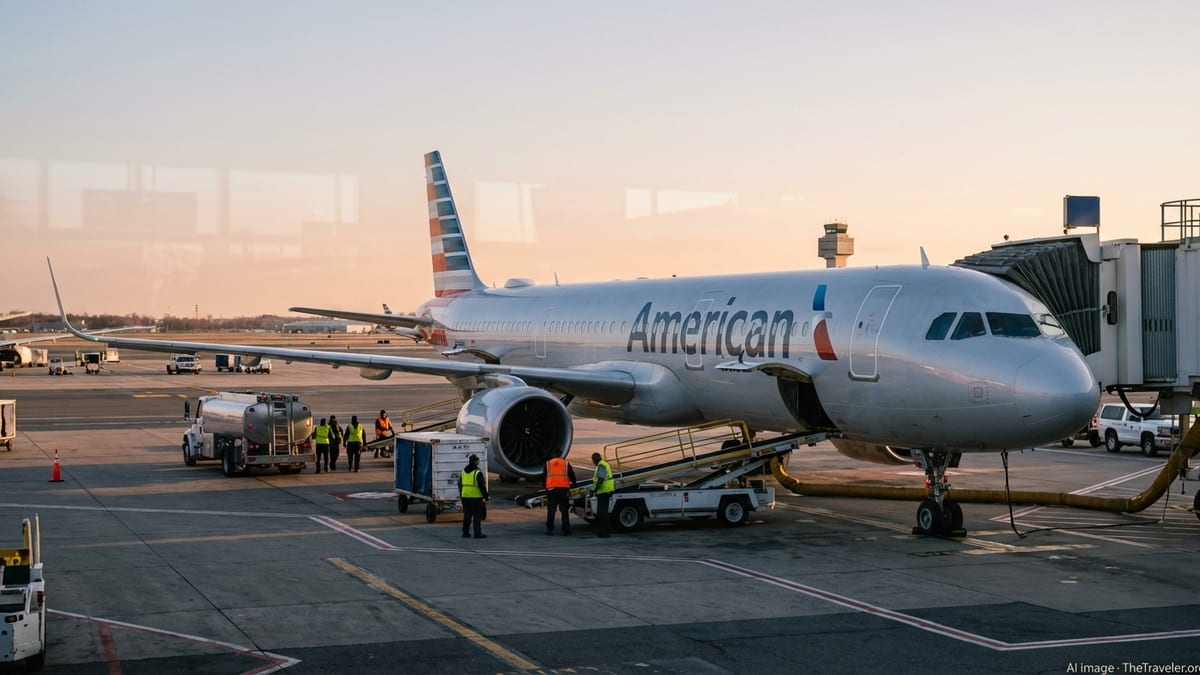
New Capacity Into a Level 3 Market
Recent industry coverage indicates that American Airlines has expanded its footprint in Venezuela, a market that currently carries a Level 3 travel advisory from the U.S. Department of State. Publicly available reports describe the airline restoring and building out service on corridors between the United States and Caracas after several years in which U.S. carriers avoided the country entirely.
According to reporting compiled by Yahoo Travel and other outlets, American resumed flying to Venezuela earlier in 2026 and has since put additional seats into the market as schedules for the upcoming northern winter season were finalized. Tickets for new frequencies reportedly went on sale in October, signaling the carrier’s intention to re-establish itself in a country many U.S. travelers still associate with severe political and economic disruption.
The State Department’s current guidance for Venezuela labels the country Level 3: Reconsider Travel. Government advisories cite high levels of crime, kidnapping, civil unrest, and limited access to basic services, along with constrained capacity for the U.S. government to assist citizens in an emergency. While the advisory has not changed level in response to American’s schedule decisions, the juxtaposition highlights how commercial aviation and official risk assessments can diverge.
American Airlines has not issued detailed public commentary tying its Venezuela strategy to the advisory system. However, the move aligns with a broader industry pattern in which carriers re-enter higher-risk markets once they perceive operational conditions to be more manageable, even if government travel warnings remain elevated.
How Level 3 Advisories Work
The U.S. State Department uses a four-step scale to describe risk conditions abroad, with Level 3 indicating destinations where travelers are urged to reconsider nonessential travel. Official explanations of the system describe Level 3 countries as places where serious risks to safety and security are present and where conditions may change quickly.
Government guidance explains that Level 3 advisories can reflect a range of risk factors, including crime, terrorism, civil unrest, health concerns, and limited consular access. Advisory summaries and risk codes published for each country often reference specific problems such as kidnapping hotspots, active conflict zones, or weak medical infrastructure. Separate from the overall country rating, the State Department may also highlight higher-risk regions inside an otherwise lower-rated country.
Available information from State Department and U.S. government portals emphasizes that the advisory system is meant to inform individual decisions rather than to impose legal bans. Travelers are not prohibited from visiting Level 3 destinations, but they are encouraged to register travel plans, maintain high levels of awareness, and prepare for the possibility of disrupted services. Advisory levels are reviewed at least every six months for Level 3 and Level 4 destinations, and may be updated more frequently when conditions shift.
For airlines, Level 3 status does not automatically restrict operations. Carriers weigh government advisories alongside airspace notices, insurance requirements, crew security protocols, and commercial demand before deciding whether to launch or expand service.
Commercial Logic vs. Security Concerns
American’s decision to add seats into a prominent Level 3 market reflects the tension between commercial opportunity and perceived risk. After years of reduced connectivity, pent-up demand from diaspora communities, business travelers, and local passengers can support higher fares and yields on limited-capacity routes. Airlines that move in early may be able to lock in lucrative corporate contracts and strengthen brand recognition before competitors return.
Industry analyses of similar situations show that carriers routinely re-enter higher-risk destinations once they judge that airports, air traffic control, and on-the-ground partners can support safe operations. Route planners study data on airport security, infrastructure reliability, and overflight restrictions in addition to macro indicators such as inflation or political protests.
At the same time, travel-risk consultants frequently point out that airline decisions do not necessarily mirror the risk tolerance of individual travelers. Commercial aircraft generally rely on guarded airport environments and hardened security procedures that differ from conditions faced by visitors moving around cities on their own. A destination can be operationally workable for a crew flying in for a single overnight while remaining challenging for tourists unfamiliar with local dynamics.
The gap between commercial and personal risk assessments is particularly visible in countries where crime, corruption, or abrupt policy shifts are common. Travelers who see new or expanded flights from a large U.S. carrier may interpret that as a sign that a destination has normalized, even when underlying advisory levels and on-the-ground reports still point to heightened caution.
Implications for U.S. Travelers
For U.S. travelers, the expansion of American’s flying into Level 3 destinations presents both more options and more decisions. Additional capacity typically translates into a wider choice of departure cities, more convenient schedules, and sometimes more competitive pricing on long-thin routes that previously had limited service. Passengers who have family or business ties in affected countries may find it easier to plan trips without relying on multi-stop itineraries through third-country hubs.
On the other hand, government advisories stress that serious risks remain in Level 3 markets, including Venezuela. Publicly available guidance encourages travelers considering these destinations to read full advisory texts rather than relying solely on the label, since many notices break down risks by region, time of day, or activity type. Health care access, the reliability of local law enforcement, and the potential for sudden border closures or flight disruptions are all recurring themes in advisory language.
Risk-management specialists generally recommend that visitors weigh factors such as their familiarity with the country, fluency in local languages, and the availability of trusted contacts on the ground before booking trips. Flexible ticket options, travel insurance that explicitly covers security-related disruptions, and contingency plans for alternative routing can also be important in countries where political or economic conditions may shift quickly.
For corporate travel programs, American’s additional capacity may reopen routes that were previously off-limits under internal policies. Many multinational companies tie destination approvals to external advisory levels, meaning Level 3 countries often require senior sign-off or additional security measures before employees can travel. Expanded nonstop options from a major U.S. carrier may prompt some organizations to revisit their risk thresholds, even if formal government guidance has not eased.
What the Expansion Signals for Airline Strategy
American Airlines’ deeper push into a Level 3 advisory zone comes amid a broader recalibration of long-haul networks. Disruptions linked to regional conflicts, aircraft delivery delays, and shifting tourism patterns have led carriers to reshuffle capacity away from some traditional business centers and toward secondary or previously underserved markets. In that context, higher-yield routes into politically fragile countries can appear attractive, despite the added complexity.
Analysts following airline schedule data note that network planners are increasingly comfortable with differentiated risk approaches. A carrier may maintain a presence in one higher-risk market while suspending or delaying a return to another, depending on aircraft availability, competitive dynamics, and the extent of operational support on the ground. That creates a patchwork in which some Level 3 destinations regain robust links to the United States while others remain cut off.
For travelers and policymakers, American’s capacity build-up serves as a visible reminder that the resumption of flights into a country does not automatically signal an all-clear for tourism or business visits. The divergence between airline strategy and advisory language is likely to remain a feature of international travel as carriers seek growth in an environment where many lower-risk markets are already highly competitive.
With travel demand continuing to recover and geopolitical shocks still reshaping where and how people fly, decisions by major airlines to add capacity into Level 3 destinations will be watched closely by risk analysts, insurers, and travelers looking to balance convenience with caution.