


More news on this day
Canadian leisure airline Air Transat is deploying an artificial intelligence powered disruption recovery platform across its operations center, in a move that aims to shorten recovery times from delays, cancellations, and schedule changes while improving coordination between teams.
Get the latest news straight to your inbox!
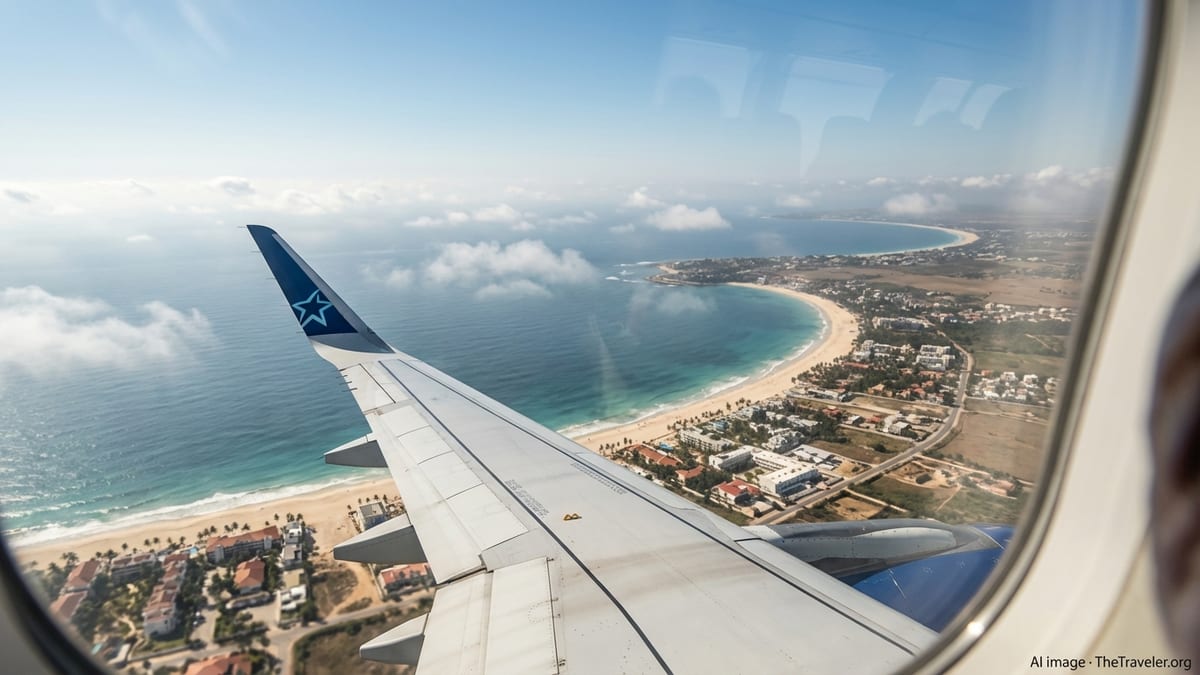
Montreal built AI platform targets irregular operations
Publicly available information shows that Air Transat has begun rolling out X360, an AI enabled decision support system developed by Montreal based startup stratosX, within its operations control center. The platform is designed to help airlines manage irregular operations, commonly referred to as IROPS, by providing a single operational picture and suggesting recovery options across aircraft, crew, and passengers in near real time.
According to recent industry coverage, X360 ingests operational data from multiple sources and presents disruption scenarios on a unified interface so that control center teams can see knock on effects more clearly. For an airline like Air Transat, which concentrates on long haul leisure routes where disruptions can ripple across several days of flying, this type of integrated view is expected to be particularly important.
Reports indicate that Air Transat is the launch airline customer for the platform, positioning the carrier at the forefront of AI assisted disruption recovery among Canadian airlines. The move aligns with references in Transat A.T.’s recent financial disclosures to the integration of artificial intelligence solutions as part of its broader operational transformation strategy.
From manual recovery to algorithmic decision support
Airline disruption recovery has traditionally relied on teams of specialists manually juggling aircraft rotations, crew schedules, and passenger rebooking options under tight time pressure. Academic research on airline operations control notes that this process can become extremely complex during large scale events, as decisions in one area often create unintended consequences in another, prolonging recovery and driving up costs.
The new AI powered approach being adopted by Air Transat aims to augment this process rather than replace it. X360 uses machine learning models and optimization techniques to identify where disruptions are emerging, forecast their downstream impact, and surface recovery scenarios ranked by operational and customer impact. Operations staff can then evaluate, adjust, and approve the recommended plans instead of building them from scratch.
Studies on AI enhanced disruption management suggest that such systems can reduce recovery time and costs by evaluating far more scenarios than humans could reasonably consider in the same time window. Industry analysis of AI disruption tools in airline operations has cited potential reductions in disruption related costs of up to around one third when advanced decision support is fully integrated into operations control workflows.
What the rollout could mean for passengers
For travelers, the most visible changes from Air Transat’s AI rollout are likely to appear during irregular operations such as weather events, technical issues, or air traffic control constraints. With AI assisted planning in the background, recovery strategies such as aircraft swaps, crew reassignments, and rebooked itineraries can be assembled more quickly and applied more consistently.
Public information on Air Transat’s customer service policies already highlights a dedicated section on disruptions and recourses, outlining when passengers may be eligible for rerouting, reimbursement of expenses, or compensation under Canadian and international regulations. Faster operational recovery could support those commitments by reducing the number of passengers who experience extreme delays or multi day itinerary changes.
Recent traveler reports have underscored how disruptive irregular operations can be on long haul routes, particularly when knock on effects extend recovery over 24 to 48 hours. By focusing its AI investment on the operations center, Air Transat appears to be targeting the point in the journey where better decision making can most directly shorten those timelines and improve the odds that passengers reach their destination closer to their original schedule.
Part of a wider industry shift toward AI in operations
Air Transat’s move comes as airlines worldwide experiment with AI driven tools to improve resilience in the face of increasingly frequent operational shocks. Research published over the past few years describes how machine learning models and digital twin style simulations can help airlines anticipate cascading delays, test recovery options virtually, and coordinate decisions across aircraft, crew, and passengers more effectively.
Technology providers to the aviation sector have also been investing in AI focused disruption platforms, reflecting growing demand from airlines seeking to cut the financial and reputational costs of irregular operations. Some industry announcements describe AI optimization engines that have already been deployed at scale, reporting measurable reductions in disruption related expenditures and faster return to normal operations after major events.
Within this broader context, Air Transat’s partnership with a local Montreal AI specialist highlights how mid sized carriers are looking beyond traditional scheduling tools to maintain competitiveness. By pairing a leaner fleet with more sophisticated disruption recovery capabilities, the airline is betting that operational resilience can become a differentiator in the competitive transatlantic and sun destination leisure markets.
Next steps as deployment ramps up
Details published so far indicate that X360 is being integrated directly into Air Transat’s operations center, where teams oversee flight movements, crew assignments, and passenger reaccommodation across the network. As the rollout advances, the effectiveness of the platform will depend on how well it connects with existing systems and processes, as well as how comfortably staff can interpret and act on AI generated recommendations.
Industry experience with similar tools suggests that early phases often focus on improving situational awareness and standardizing responses to common disruption scenarios. Over time, as confidence in the models grows and data quality improves, airlines tend to expand use cases into more complex optimization, such as multi day recovery planning and proactive adjustments based on predicted weather or congestion patterns.
For now, Air Transat’s adoption of an AI powered disruption recovery platform signals an intention to modernize the behind the scenes machinery that determines how quickly its network recovers when things go wrong. Travelers may not see the algorithms at work, but the tangible measure of success will be fewer missed connections, shorter delays, and more predictable recovery when irregular operations inevitably occur.
StratosX X360 deployment at Air Transat
Coverage of Air Transat’s AI disruption recovery partnership