


More news on this day
A new kind of long‑range narrowbody jet is starting to appear on short European hops to and from the UK, as airlines such as Iberia and Aer Lingus bed in their Airbus A321XLR fleets on regional routes while ramping up transatlantic services.
Get the latest news straight to your inbox!
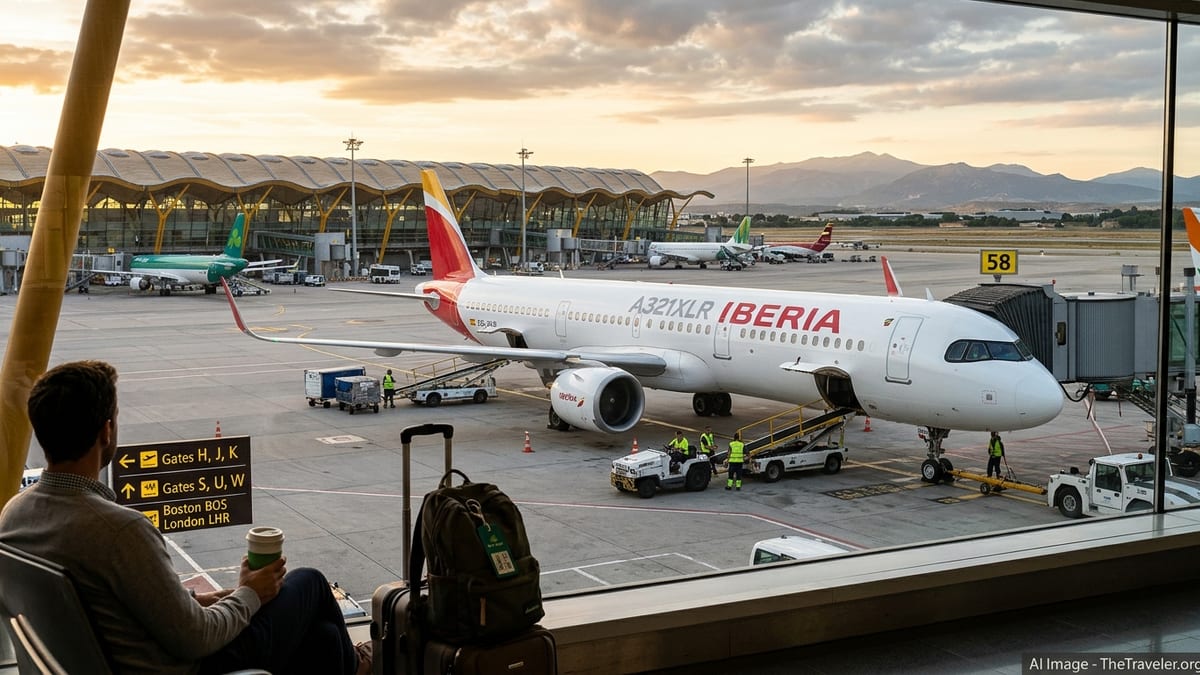
A long-range jet certified for Europe, used on short hops
The Airbus A321XLR secured its initial type certificate from the European Union Aviation Safety Agency on 19 July 2024, covering aircraft powered by CFM LEAP-1A engines and clearing the way for commercial operations in Europe. Further certification steps for other engine variants are scheduled into 2025, but the CFM-powered model has been in regular airline service since late 2024.
Airbus delivered the first commercial A321XLR to Iberia on 30 October 2024 from its Hamburg facility, making the Spanish flag carrier the global launch operator. Iberia confirmed that the aircraft would first be used on a series of regional flights within Europe before operating its inaugural long-haul service from Madrid to Boston later in November 2024.
That pattern has set the tone for the type’s early commercial life. Rather than going straight onto new “long, thin” transatlantic routes, the A321XLR has typically begun on short-haul familiarisation sectors inside Europe, giving airlines time to train crews and fine-tune operations before assigning the jet to longer missions.
Iberia: European rotations before Boston and Washington
Iberia placed its first A321XLR into revenue service on intra-European routes from Madrid in early November 2024, including services to Paris Charles de Gaulle and Stockholm Arlanda. Industry schedule analysis shows that Iberia also rostered the aircraft on selected Madrid–London Heathrow rotations during the initial weeks, using busy European city pairs as a testbed before transatlantic flying.
The first long-haul passenger flight followed on 14 November 2024, when the A321XLR entered regular Madrid–Boston service with a scheduled block time of just under nine hours. Iberia has since expanded A321XLR deployment to additional North American destinations, including Washington Dulles from April 2025, while continuing to mix the type into its European network when schedules and aircraft availability allow.
For travellers, that has created an unusual experience: a narrowbody aircraft equipped with a long-haul style cabin showing up on flights that might last only a couple of hours. Iberia’s A321XLRs, for example, have lie-flat business class seats and individual seatback entertainment, so some passengers on short European sectors are now seeing a transatlantic-standard product on routes where an older A321 or A320 might previously have operated.
Aer Lingus and others use the XLR as a fleet bridge
Iberia is no longer alone. Airbus data and airline disclosures indicate that by mid 2025 seven A321XLRs were in long-range service across Iberia, Aer Lingus and Wizz Air, with further deliveries since then. Aer Lingus in particular has highlighted the A321XLR as a way to grow its North Atlantic network from Dublin on routes that are too small for widebodies but demand more range and comfort than older narrowbodies can easily provide.
Aer Lingus took initial A321XLR deliveries in late 2024 and began introducing the type into service on transatlantic flights from Dublin, supported by short‑haul European flying for training and utilisation. Public comments from the airline and independent tracking of schedules show the aircraft appearing on a mix of US and Canadian routes from Dublin, while also turning up on shorter sectors inside Europe when required.
Other early operators in Europe and the Middle East have adopted similar approaches, framing the A321XLR as a bridge between their short‑haul and long‑haul fleets. In practice this means the aircraft may alternate between long sectors and regional legs in a single day, depending on each carrier’s network design and seasonal demand.
What UK and Ireland travellers are seeing today
As of late November 2026, no UK-based airline is operating the A321XLR in regular service, although several have orders or options and have discussed the type as a potential tool for future transatlantic and leisure growth. For now, the aircraft’s presence in UK skies comes via foreign carriers that touch UK airports, notably Iberia and Aer Lingus.
Based on current winter schedules, Iberia continues to deploy the A321XLR on selected Madrid–London Heathrow rotations on specific days, usually interspersed with A320-family aircraft. Aer Lingus has also rostered A321XLR equipment on some Dublin–London Heathrow services and, on a more seasonal basis, on other high‑demand UK routes when the aircraft are not required on North Atlantic sectors. These assignments are highly dynamic and may shift between seasons, so travellers interested in flying on the type should check the aircraft code shown during booking and again close to departure.
For UK and Ireland passengers who do encounter the A321XLR on a short European hop, the main effect is an upgraded onboard environment. Long‑haul configured cabins typically bring lie‑flat or reclining business class seats, seatback entertainment and power at every seat, alongside modern lighting and cabin finishes. In economy, however, the experience will depend on each airline’s chosen layout, with some carriers opting for relatively dense seating that may feel similar in space to other newer single-aisle jets despite the aircraft’s long‑range label.
What to watch next
The A321XLR’s presence on UK short‑haul routes is likely to remain opportunistic rather than guaranteed. Airlines are primarily acquiring the type to stretch their networks on longer sectors, but training, operational flexibility and aircraft rotation patterns mean that UK and regional European passengers will continue to see it on shorter flights as fleets grow.
Over the next two years, more deliveries are due to European and transatlantic carriers that already serve UK airports. As each airline takes additional aircraft, schedule filings suggest they will keep using a mix of long‑haul and shorter‑haul rotations, especially around base hubs such as Madrid and Dublin. Prospective passengers who want to try the aircraft, or who prefer to avoid long‑range narrowbodies on certain itineraries, should pay close attention to equipment listings in booking engines and be aware that last‑minute swaps to or from the A321XLR remain common.
Regulatory developments could also broaden how the aircraft is used. Additional engine variant approvals and incremental cabin refinements are expected from manufacturers and regulators through 2025, potentially giving airlines more flexibility in how they configure and deploy the type. For UK travellers, the result is a growing chance of experiencing long‑haul hardware on short‑haul journeys, even before any UK airline formally brings the A321XLR into its own fleet.