


More news on this day
Italy is drawing attention to tighter border controls affecting overland trips to Poland, but it has not issued a special warning against visiting the country, and current official guidance continues to class Poland as a generally safe destination for Italian tourists.
Get the latest news straight to your inbox!
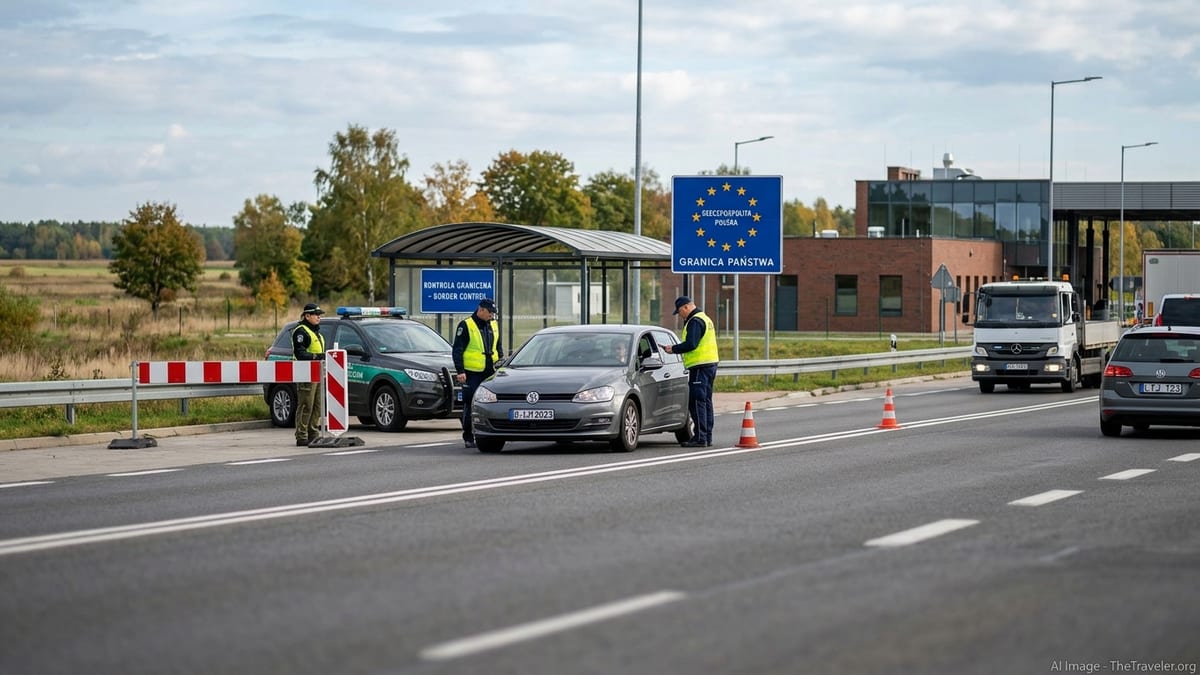
EU notification: Poland’s temporary internal border checks
Poland has formally notified the European Commission that it is temporarily reintroducing Schengen internal border checks at its land frontiers with Germany and Lithuania until 30 March 2027, citing continued threats to public order and internal security linked to irregular migration and migrant smuggling. The notification appears in the Commission’s list of temporary internal border controls and specifies that controls are being carried out at designated road and rail crossing points, where travellers can again be asked to present identification and submit to inspection when entering or leaving Poland within the Schengen Area.
These controls are framed as a time limited response under the Schengen Borders Code rather than a wholesale reinstatement of permanent borders. According to EU rules, such measures are permitted where a member state identifies a serious threat to public order or internal security and must be periodically reviewed and either allowed to lapse or re notified if conditions are judged to warrant an extension.
For travellers, the practical effect is that land journeys between Poland and neighbouring Schengen states such as Germany and Lithuania may involve more frequent checks, police or border guard patrols and occasional queues, particularly at busier crossing points and peak holiday periods. Airline style systematic screening is not in place at every crossing, but travellers should be prepared for spot checks and allow extra time.
How Italy’s ViaggiareSicuri currently classifies trips to Poland
Italy’s official country sheet for Poland on the ViaggiareSicuri portal, published by the Ministry of Foreign Affairs and International Cooperation, continues to describe Poland as a destination where Italians can travel by adopting normal prudence and attention. The advisory does not contain a country specific warning against tourism to Poland and does not classify the country as subject to an exceptional security threat for Italian visitors.
The most recent detailed update to the Poland PDF sheet highlighted temporary closures and restrictions at certain crossing points on the border between Poland and Belarus, reflecting earlier phases of the migration crisis and specific Polish security measures in that frontier area. Those measures were presented as time bound and geographically limited, and the Italian note directed travellers to avoid affected crossing points or monitor local announcements if their itineraries involved transiting via Belarus.
Outside that border context, ViaggiareSicuri’s focus for Poland remains largely practical. The sheet concentrates on standard entry requirements for EU and Schengen travel, the need for a valid passport or identity card, health and insurance considerations and routine advice regarding petty crime in large cities. It does not introduce new restrictions targeted at Italian tourists, nor does it state that the current EU level internal border checks make Poland broadly unsafe.
What Italian travellers may encounter on the ground
Italian citizens entering or exiting Poland overland from Germany or Lithuania may now encounter police or border guard checkpoints that were previously rare or absent on these internal Schengen routes. Officers can request to see a passport or national identity card, ask a few questions about travel plans and occasionally inspect luggage or vehicles, which can translate into short delays compared with pre control travel.
Near the external frontier with Belarus and, to a lesser extent, close to sensitive sections of the borders with Germany and Lithuania, visitors may notice a heightened security presence that can include patrols, surveillance equipment and, in some areas, visible military personnel. These deployments are primarily aimed at managing irregular migration and maintaining border integrity rather than at tourists themselves, but travellers should follow any posted instructions, avoid restricted zones and keep a respectful distance from border infrastructure such as fences and monitoring equipment.
Within Polish cities that attract international tourism, including Warsaw, Kraków, Gdańsk and Wrocław, the main non security risks highlighted by both Italian and other European advisories relate to routine urban crime. Authorities flag pickpocketing on public transport and around main squares, card skimming at poorly supervised ATMs and occasional currency exchange overcharging at small bureaux as the most common problems affecting visitors. Evidence for any Poland specific “tourist scam wave” is limited; most warnings mirror generic advice issued across Central European city destinations.
Practical planning and what to check before departure
Because temporary internal border controls are reviewed and sometimes extended or modified, Italian travellers planning to visit Poland by land over the coming months should verify the latest information shortly before departure. The EU list of temporary internal border controls shows the notified periods and affected frontiers, while the Italian ViaggiareSicuri Poland page summarises how these measures may impact Italian citizens and records any new developments regarding the Belarus border or other local security changes.
When preparing trips, travellers should carry a valid passport or identity card even for intra Schengen journeys, allow additional time for potential queues at crossings with Germany and Lithuania and ensure that travel insurance and health cover are in place for the entire stay. Those planning itineraries near the Belarus frontier or considering cross border excursions should pay particular attention to official updates, as restrictions there have in the past changed at relatively short notice and may be more sensitive than on Poland’s western and northern borders.
Given that both the EU notifications and Italian country sheets are periodically updated, anyone booking for dates around or after 30 March 2027 should recheck whether Poland has allowed its internal border checks to expire, adjusted them or notified a further extension under the Schengen Borders Code. This will help travellers anticipate any procedural changes at land borders and confirm that Italy’s overall assessment of security conditions in Poland remains broadly stable at the time of travel.