


More news on this day
A public dispute involving an American Airlines flight attendant who criticized her union’s political activism despite mandatory dues requirements is reverberating across the aviation sectors of the United States, Canada, and the United Kingdom, adding fresh strain to already complex labor relations.
Get the latest news straight to your inbox!
American Airlines Dispute Puts Spotlight on Union Power
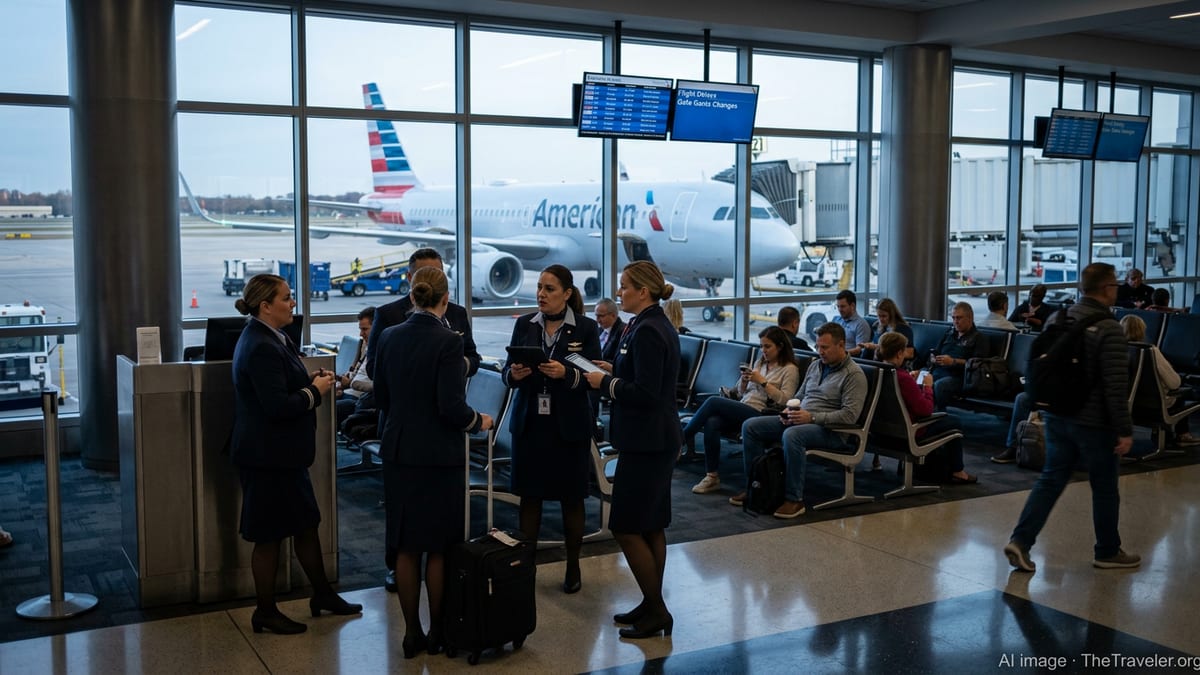
Reports from aviation-focused outlets indicate that an American Airlines flight attendant recently voiced frustration over the Association of Professional Flight Attendants’ use of political messaging and advocacy while membership and dues remain compulsory under the carrier’s union-security arrangements. The dispute, surfacing in mid-May 2026, has intensified debate among airline workers about how far unions should go when engaging in political or social issues that extend beyond core bargaining over pay, scheduling, and safety.
Publicly available union documents state that mandatory dues at American Airlines support the union’s representational work, while separate, voluntary contributions fund its political action committee. Even so, critics argue that the union’s public-facing political posture, from social media posts to public campaigns, is inseparable in practice from the compulsory financial support the organization receives from rank-and-file members, including those who may not share its views.
The controversy follows earlier coverage that some American Airlines flight attendants have faced employment consequences after falling significantly behind on union dues, underscoring the binding nature of the union shop under the Railway Labor Act in the United States. Labor analysts note that the American Airlines case is becoming a high-profile example of tensions between collective bargaining structures and individual workers’ political and ideological preferences.
Legal advocacy organizations that oppose compulsory unionism have already been targeting flight attendants at the carrier with notices outlining what they describe as workers’ limited rights to challenge dues collection and union discipline. These developments suggest that the dispute may continue to evolve in the courts and before federal labor regulators, with potential ramifications for how airline unions enforce membership and dues obligations.
Legal Backdrop: Janus, Railway Labor Act, and Private-Sector Loopholes
The American Airlines dispute is unfolding against a broader North American legal backdrop that has become more skeptical of compulsory financial support for unions in the public sector, while leaving many private-sector arrangements intact. In 2018, the United States Supreme Court’s Janus v. AFSCME decision held that public-sector employees cannot be compelled to pay so-called agency fees to unions if they do not consent, on the grounds that such payments amount to coerced political speech.
However, aviation workers in the United States are predominantly private-sector employees covered by the Railway Labor Act rather than the public-sector regimes that Janus addressed. Legal commentary notes that Janus did not invalidate union-security clauses in private airline or railroad contracts, meaning flight attendants at carriers such as American Airlines can still face requirements to join the union or pay dues as a condition of employment, depending on the applicable state laws and collective agreements.
At the same time, right-to-work statutes in many U.S. states restrict or prohibit mandatory union membership and dues, creating a patchwork of rules that can vary by domicile or base location. Aviation lawyers indicate that this fragmentation complicates efforts by workers who object to union political activity, because their options may depend on where they are based and how their carrier and union structure payroll deductions and membership rules.
Observers say that the American Airlines controversy could become another test of how far courts are willing to extend free-speech and free-association arguments into the private-sector transportation arena. Even if legal precedents remain largely unchanged, intensified scrutiny may prompt unions and carriers to revisit how they communicate the distinction between compulsory dues for representation and voluntary contributions for political action.
Canada’s Aviation Labor Landscape Faces Its Own Pressures
North of the border, the aviation sector has been grappling with its own union-related tensions, though the legal and political environment differs from that of the United States. Canadian labor law generally allows for union-security clauses that require employees in unionized workplaces to pay dues, and so-called Rand formula arrangements have long permitted unions to collect dues from all workers in a bargaining unit regardless of membership status.
Recent labor disputes in Canadian aviation, including a high-profile strike by Air Canada flight attendants in 2025, have drawn renewed attention to union strategies and the extent to which they engage in broader political advocacy. Coverage of those disputes highlighted demands for wage parity with other carriers, concerns about scheduling, and questions over whether aggressive bargaining tactics and public campaigns align with the diverse political views of members who must fund union operations.
Some Canadian policy commentators have pointed out that mandatory-dues structures can blur the line between collective bargaining and political campaigning, particularly when unions speak out on national policy, environmental issues, or social causes that go beyond industry-specific negotiations. In aviation, where workers interact daily with global travelers and are exposed to wide-ranging viewpoints, that tension can be especially pronounced.
Despite these debates, Canadian union leaders in the aviation sector continue to emphasize that collective strength has delivered significant gains in safety, rest rules, and job security. For flight attendants and other front-line aviation workers, the question often becomes how to balance support for those tangible benefits with discomfort over political messages they do not fully endorse.
United Kingdom Carriers Navigate Politicized Labor Debates
In the United Kingdom, where large carriers such as British Airways, easyJet, and others operate under a different regulatory and political framework, aviation unions also play a prominent and often highly visible role. Trade unions representing cabin crew and other aviation staff, including large organizations within the Trades Union Congress, have launched campaigns in recent years that intersect with broader political themes such as public ownership, climate policy, and post-Brexit labor standards.
UK employment law does not mirror the U.S. right-to-work structure, and unions have long been integrated into collective bargaining and political discourse. Flight attendant unions in Britain frequently coordinate industrial action and public demonstrations, which can attract attention from political parties and advocacy groups seeking to amplify their own agendas.
Observers note that this dynamic can place individual airline employees in a complicated position: they may rely on union representation for negotiations over pay, rosters, and safety, while feeling uneasy about being associated with explicit political stances on national policy or international issues. The interplay between aviation labor disputes and national political debates has become more pronounced as the sector adjusts to post-pandemic recovery, new environmental regulations, and shifting passenger demand.
The American Airlines dispute, while rooted in U.S. law and labor relations, is being watched in the UK as part of a broader conversation about how union political activism resonates with workers in highly regulated, globally connected industries such as aviation. Analysts say that unions’ success in maintaining member support will likely depend on how they handle internal dissent and whether they can demonstrate concrete workplace gains that justify the financial and reputational commitments they ask of members.
Industry-Wide Implications for Labor Relations and Passenger Experience
The rising tensions around union political activism and mandatory dues in the United States, Canada, and the United Kingdom come at a delicate moment for the global aviation industry. Airlines are managing volatile demand, elevated operating costs, and heightened expectations from both passengers and regulators on issues such as safety, punctuality, and environmental performance.
Labor stability remains a critical factor in delivering reliable service. Strikes, slowdowns, and contentious contract talks can quickly lead to delays, cancellations, and reputational damage. Analysts suggest that disputes rooted in political disagreements, like the one now visible at American Airlines, risk adding a new layer of complexity that may not be easily resolved through conventional wage and benefits negotiations.
For flight attendants and other front-line staff, the debate cuts to fundamental questions about workplace democracy and representation. Many value the protections that unions provide but want more say over how their compulsory dues are used and how visibly their unions engage in broader political campaigns. Others argue that strong political advocacy is essential to shaping the regulatory and economic environment that determines job quality in aviation.
As carriers across North America and Europe prepare for peak travel seasons, industry observers will be watching closely to see whether internal union dissent spreads, how legal challenges evolve, and whether airline management teams seek to renegotiate union-security provisions in future contracts. The outcome could influence not only the daily working lives of tens of thousands of aviation employees, but also the overall reliability and competitiveness of air travel in the United States, Canada, and the United Kingdom.