


More news on this day
Global airlines are racing to redefine the airport lounge as a high-touch, highly personalized pre-flight sanctuary, with American Airlines joining Delta, Lufthansa, Qatar Airways, Emirates and others in a fresh wave of investment aimed at business and leisure travelers willing to pay for comfort and service on the ground.
Get the latest news straight to your inbox!
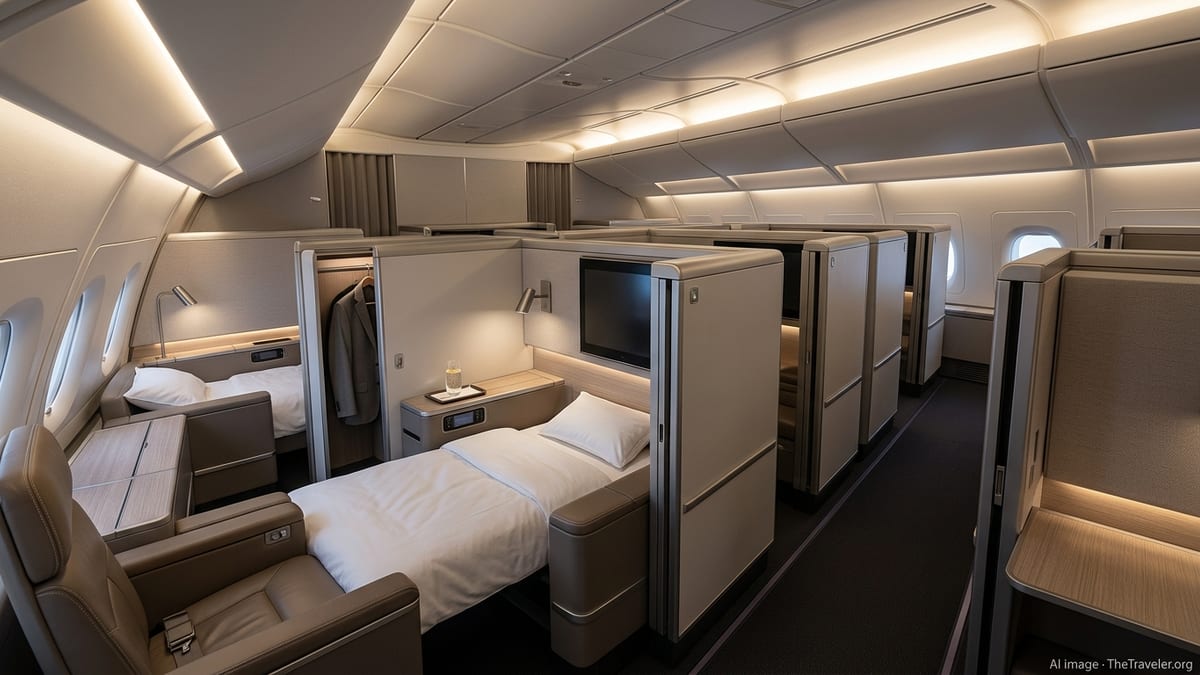
American Steps Up Its Premium Ground Game
American Airlines is expanding its footprint of premium lounges as part of a broader push to upgrade the experience for high-value customers. Public information shows new and refurbished spaces being prioritized at key hub airports, with the carrier positioning its Flagship-branded lounges as destinations in their own right, offering elevated dining, curated cocktails and quieter zones for work or rest.
Recent announcements highlight a strategy focused on both scale and exclusivity. At New York John F. Kennedy International Airport, American has partnered with British Airways on a trio of co-branded premium lounges, segmented by cabin and status to provide tailored environments for different types of travelers. Access rules tied to AAdvantage tiers and long-haul premium cabins underscore how lounge experiences are being used to reinforce loyalty and monetization.
At the same time, the airline is upgrading its network of Admirals Club locations and aligning food, design and technology across lounges and inflight cabins. New amenity kits, enhanced menus and wider deployment of high-speed Wi-Fi signal that American is treating the journey as a continuous premium experience rather than a series of disconnected touchpoints.
Industry observers note that this investment comes as competition in North American airports intensifies, with rival carriers and independent operators launching larger and more luxurious spaces. For American, doubling down on lounges is becoming central to attracting corporate accounts and affluent leisure travelers who see the ground experience as a differentiator when schedules and fares are comparable.
Delta, Lufthansa and the New Flagship Lounge Arms Race
Delta Air Lines has been one of the clearest examples of how aggressively full-service carriers are reshaping their lounge strategies. In the United States, Delta has rolled out a new tier of Delta One-branded lounges at major gateways, designed with restaurant-style dining, bar programs and private zones for customers in long-haul business-class cabins. Reports describe these spaces as an extension of the premium onboard product, with service and design closer to boutique hotels than traditional airline clubs.
The airline has simultaneously continued to grow the Delta Sky Club network with larger footprints and more varied seating, adding features such as dedicated quiet areas, soundproof phone booths and immersive digital art walls in some locations. Network updates show openings and expansions in hubs including New York, Los Angeles, Boston, Charlotte and Salt Lake City, reflecting a strategy of anchoring Delta’s brand around a consistently upscale ground experience.
In Europe, Lufthansa is investing billions of euros in its Allegris program, a group-wide product initiative that spans seats and services on long-haul aircraft as well as lounges. Company presentations describe Allegris as the largest service overhaul in the group’s history, with an emphasis on providing a “premium travel chain” that runs from check-in through boarding. While new long-haul cabins have drawn much of the attention, the carrier is also refreshing lounges in key German and European hubs to align with the upgraded inflight offering.
These investments reflect a broader industry view that premium customers are increasingly evaluating the entire journey, not just the hours in the air. As a result, airlines are using lounges and dedicated check-in areas as visible proof points of brand quality, especially on routes where multiple network carriers compete for the same corporate and high-yield leisure segments.
Qatar Airways, Emirates and the Gulf Model of Hospitality
In the Middle East, Qatar Airways and Emirates continue to set the pace on high-end lounge experiences that blur the boundaries between airport and luxury resort. At Doha’s Hamad International Airport, Qatar Airways operates expansive Al Mourjan lounges for business-class passengers, with zones for à la carte dining, quiet rooms, spa-style showers and family spaces. More recent additions, such as a garden-themed lounge in the airport’s latest terminal expansion, underline how design and wellness are being used as competitive tools.
Emirates has taken a similar approach in Dubai, with multiple tiered lounges that mirror its inflight cabins, including separate spaces for first and business class customers. These lounges emphasize made-to-order dining, barista coffee, shower suites and, in some cases, direct boarding from the lounge. The carrier’s public materials promote the ability for passengers to move seamlessly from chauffeur-driven transfers to dedicated check-in, security fast tracks and lounges before boarding widebody aircraft fitted with spacious premium cabins.
Analysts note that these Gulf carriers were early to the concept of treating lounges as brand-defining flagships, shaping expectations for premium air travel globally. As more travelers transit their hubs on connecting itineraries, the ground experience becomes a critical part of the value proposition, especially for long-haul journeys where customers may spend several hours in transit between flights.
The influence of this model is increasingly visible in Europe, North America and Asia, where more airlines are introducing multi-level lounge offerings that distinguish between business, elite frequent flyers and ultra-high-spend customers. The focus is not only on higher-end interiors, but also on staff training, bespoke services and the integration of wellness and fine dining into the pre-flight routine.
Personalisation, Dining and Design as Competitive Differentiators
The new wave of premium lounge investment is characterized by a strong emphasis on personalization and hospitality. Carriers are rolling out digital tools for advance dining reservations, tailored recommendations and push notifications when showers or quiet rooms become available. Some have introduced dedicated concierge-style teams within flagship lounges to assist with rebooking, special requests and last-minute changes, helping premium travelers feel more in control when disruptions occur.
Food and beverage have become central to the pitch. Rather than relying solely on buffet counters, more lounges now feature chef-led menus, live cooking stations and curated wine or cocktail programs that reflect local flavors. In some flagship spaces, airlines are collaborating with well-known restaurants or chefs to design seasonal menus, bringing an additional layer of brand recognition and perceived value.
Design language is also shifting, with airlines drawing on residential and boutique hotel aesthetics instead of traditional corporate layouts. Warm lighting, natural materials, flexible seating clusters and quiet zones are replacing dense rows of armchairs. Power access, wireless charging and privacy dividers are now expected as standard, supporting both productivity and relaxation for business and leisure travelers.
These elements collectively help airlines justify higher fares and upsell opportunities, including paid upgrades, premium credit card products and bundled packages that include lounge access. For customers, the promise is a calmer, more productive airport experience that begins to offset the stresses of today’s crowded terminals and tight connections.
Managing Demand While Elevating the Experience
One of the challenges accompanying this investment trend is managing demand and preserving a sense of exclusivity. As premium travel rebounds and co-branded credit cards proliferate, lounge crowding has become a recurring point of frustration, particularly in North American hubs. In response, airlines such as Delta and American have tightened access rules, adjusted guest policies and introduced spending or status thresholds for unlimited entry.
Program updates indicate that carriers are experimenting with a mix of capacity management tools, from reservation systems and waitlists to dynamic access for peak times. New larger-format lounges and the introduction of ultra-premium tiers are intended to relieve pressure on existing clubs while steering the highest-spend customers into more secluded environments.
At the same time, airlines are using data from loyalty programs and booking systems to better understand how and when customers use lounges. This information is helping to shape opening hours, staffing levels, food offerings and the mix of spaces within each lounge, with an eye toward tailoring the product to the needs of key corporate accounts and frequent travelers.
For business and leisure passengers alike, the result is a rapidly evolving landscape in which the airport lounge is no longer an optional extra but a central pillar of the premium air travel proposition. With American, Delta, Lufthansa, Qatar Airways, Emirates and others now deeply committed to these investments, the competitive bar for what qualifies as a luxury ground experience continues to rise.