


More news on this day
British travellers are being urged to steer clear of Afghanistan and Russia after updated UK government guidance highlighted an elevated risk of attacks and severely limited consular support in both destinations.
Get the latest news straight to your inbox!
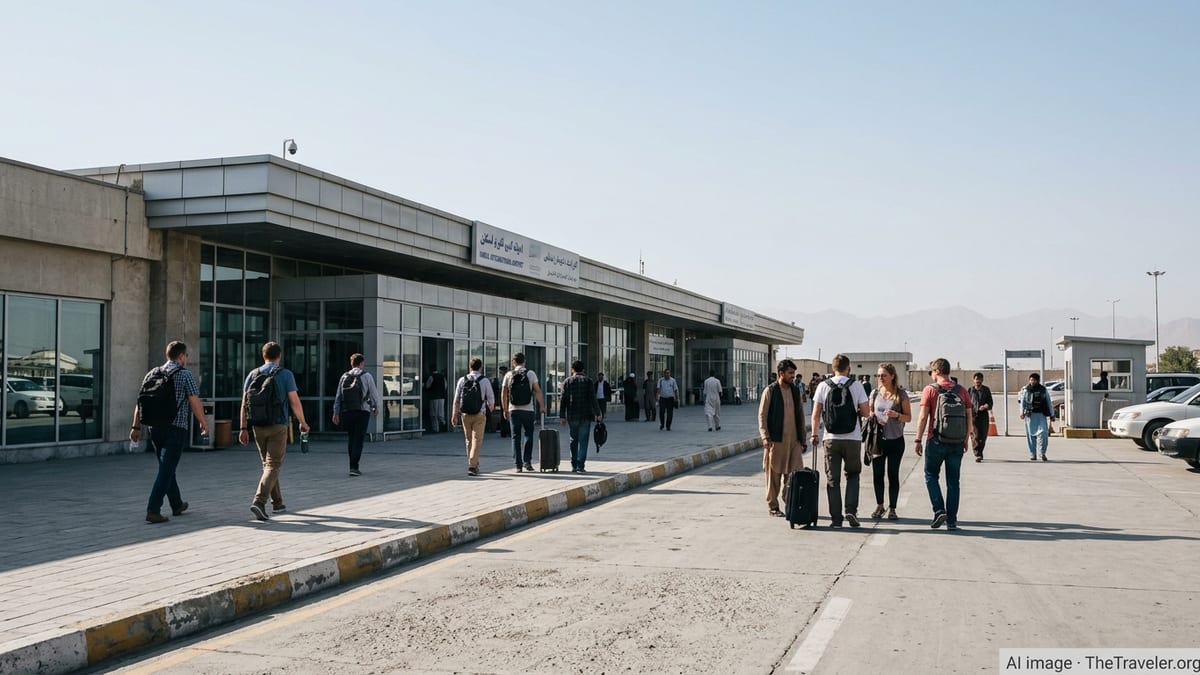
Fresh UK guidance singles out two high‑risk destinations
According to recently updated Foreign, Commonwealth and Development Office (FCDO) travel advice, Afghanistan and Russia are now classed among the highest‑risk destinations for British nationals, with explicit warnings against all travel because of security threats including terrorism, civil unrest and arbitrary detention.
Publicly available information shows that the FCDO advises against all travel to Afghanistan, citing a high threat of terrorist attack and ongoing instability. The guidance notes that groups hostile to Western interests retain both intent and capability to target public places, including locations frequented by foreign nationals.
In a separate advisory, the UK government also now advises against all travel to Russia. The notice points to a volatile security environment, the impact of Russia’s war in Ukraine, and the possibility of foreigners being detained or questioned on broad national security grounds. The FCDO states that travel insurance may be invalid if British tourists ignore the warning.
The latest changes place both Afghanistan and Russia in the most severe category of UK travel advice, a tier reserved for destinations where the perceived risk to British nationals is considered unacceptably high and where assistance on the ground may be extremely limited.
Afghanistan: persistent terror threat and fragile security
In its Afghanistan advisory, the FCDO highlights a sustained risk of terrorist attacks across the country, including in Kabul and other major cities. Recent updates describe a security landscape in which militant groups remain active, and where attacks can occur with little or no warning in crowded public areas, government facilities and transport hubs.
Reports indicate that extremists continue to view Westerners, aid organisations and international agencies as potential targets. The guidance stresses that there is a strong desire among some groups to attack locations where foreign nationals gather, including hotels, restaurants, religious sites and event venues.
Beyond terrorism, the UK government notes that the authorities in Afghanistan may detain or restrict the movement of foreign nationals, including individuals with previous experience in the country. Border crossings can close at short notice, internal routes may be blocked and access to basic services is unreliable in many regions.
The official advice underlines that the UK has no routine consular presence on the ground, meaning British nationals who choose to remain or travel there despite the warning could find it extremely difficult to obtain evacuation, legal support or medical assistance in a crisis.
Russia: rising concern over detentions and regional tensions
The FCDO’s Russia guidance emphasises a different but equally serious set of risks. While large‑scale terrorist incidents are not highlighted to the same degree as in Afghanistan, the notice cites a hostile political climate, ongoing conflict‑related tensions and the possibility of sudden changes in local law enforcement practices affecting foreigners.
Publicly available documents describe an increased risk of British nationals being detained in Russia, including those suspected of engaging in activities that the authorities consider to be political, security-related or critical of the state. This can extend to conduct that took place outside Russian territory but is later judged to breach domestic legislation.
The withdrawal of some Western airlines and sanctions‑related restrictions have also sharply reduced travel options in and out of Russia. The FCDO notes that exit routes can change rapidly, and that consular staff have limited capacity to intervene if British nationals are arrested, prevented from leaving the country or caught up in local unrest.
Travellers are further warned that electronic communications, hotel registrations and financial transactions may be monitored, and that participation in demonstrations or public gatherings can carry significant legal consequences, particularly for foreign visitors.
Implications for British holidaymakers and business travellers
For leisure travellers, the updated guidance effectively rules out Afghanistan and Russia as viable destinations for holidays, cultural trips or overland backpacking routes. Tour operators and insurers typically align their policies with FCDO advisories, and many will refuse to operate tours or provide cover where the UK government advises against all travel.
Business visitors, journalists and humanitarian workers also face substantial constraints. Companies sending staff to either country may find corporate insurance policies invalidated, while non‑governmental organisations and media outlets are increasingly cautious about dispatching personnel without robust contingency planning and evacuation options.
Industry observers note that, in practice, the combination of security concerns, disrupted air links and financial sanctions has already reduced visitor numbers to Russia to a fraction of pre‑war levels. Travel to Afghanistan, meanwhile, has remained minimal since the change of regime and the deterioration of security conditions in 2021.
The warnings highlight how quickly global risk maps can shift for British travellers, with the FCDO signalling that advice may be updated at short notice if conditions on the ground change.
How travellers can respond to changing risk levels
Travel specialists recommend that anyone with existing plans involving onward connections through high‑risk regions review their itineraries and speak to airlines or tour operators about rerouting. Although Afghanistan and Russia are the focus of the latest warnings, knock‑on effects can include disrupted flights, overflight restrictions and insurance complications for neighbouring countries.
Public information campaigns such as the UK government’s Travel Aware initiative encourage prospective travellers to check official advisories before booking and again shortly before departure, as well as to sign up for email alerts for their destination. These alerts can provide early notice of new security incidents, protests, border closures or changes to entry rules.
Security analysts also emphasise the importance of understanding what different travel‑advice categories mean in practice. A blanket “do not travel” warning, as now applies to Afghanistan and Russia, signals a far higher level of concern than generalised references to terrorism or crime in more stable destinations.
With the peak summer travel period under way, the latest guidance serves as a reminder that some parts of the world currently carry risks that go far beyond routine holiday considerations, and that British nationals are being urged to redirect their plans accordingly.