


More news on this day
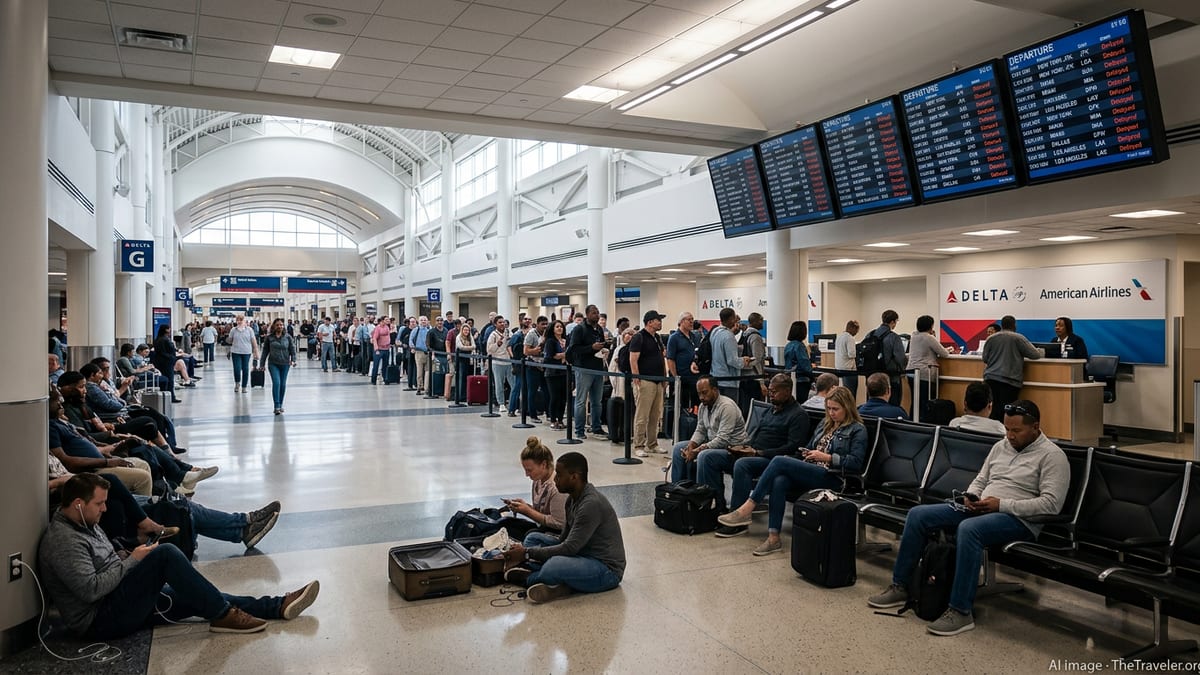
Around two hundred air travelers were left sleeping on terminal floors and scrambling for scarce hotel rooms after a cascading series of delays and cancellations stretched their journeys across two full days, underscoring how quickly routine schedule disruptions can snowball into prolonged airport strandings.
Get the latest news straight to your inbox!
Disruption Turns Routine Trip Into Two-Day Ordeal
Published coverage and social media posts from recent weeks describe roughly two hundred passengers on a busy leisure route who saw an ordinary evening departure turn into a two day struggle to get home. What began as a single delayed flight gradually deteriorated into a chain of rolling cancellations, misconnected itineraries and missed curfews at destination airports.
As hours passed, boarding times were repeatedly pushed back while aircraft and crews were reassigned to other services in the airline’s network. By the time the original flight was finally canceled for the night, many travelers reported that alternative options had either sold out or departed, leaving large groups clustered around service desks in the early hours of the morning.
Publicly available information indicates that some passengers were offered rebooking on flights departing nearly forty eight hours after their original schedules, effectively trapping them at the airport unless they were able to purchase last minute tickets on competing carriers at significantly higher prices.
Families with young children and older travelers were especially affected, according to accounts shared through local media and passenger advocacy channels, with several describing makeshift sleeping arrangements beside power outlets and under departure boards as they waited for clearer information.
Accommodation, Vouchers And Communication Under Scrutiny
The treatment of the stranded group over the two day period has renewed questions about how consistently airlines provide food, water and accommodation when disruptions stretch beyond a single missed connection. Travelers involved in the incident reported that meal vouchers, if offered at all, were often not sufficient to cover the cost of full meals in airport restaurants.
Hotel rooms became a central point of tension. With hundreds of passengers from multiple disrupted flights all seeking beds at once, nearby properties quickly booked out. Some travelers were placed in hotels many miles from the airport, while others said they were advised to make their own arrangements and submit receipts for potential reimbursement at a later date.
Communication gaps appeared to compound the frustration. Passengers cited long queues at customer service counters and inconsistent information between airline apps, gate screens and staff announcements. Publicly available flight tracking data showed multiple schedule changes in short succession, leaving travelers unsure whether to remain near the gate or attempt to rest elsewhere in the terminal.
Consumer advocates note that such breakdowns in communication are a common feature of large scale disruptions, even when the initial cause is outside an airline’s control. When several flights are affected at once, automated systems can struggle to keep pace with rapid operational changes, while call centers and airport teams work through heavy backlogs of requests for assistance.
Weather, Technology And Network Complexity Behind Stranding Risks
The two day stranding of the roughly two hundred passengers reflects broader stresses in the global air travel system. Recent summers have seen a sharp rebound in demand on leisure routes, often surpassing pre pandemic levels, at the same time that airlines and airports continue to face staffing and infrastructure constraints.
Bad weather, air traffic control restrictions and isolated technical issues can quickly cascade across densely scheduled networks. A thunderstorm closing a runway for an hour, an equipment fault taking an aircraft out of service or a short outage in a reservation system can all trigger knock on effects that ripple through subsequent rotations, particularly when spare aircraft and standby crews are limited.
Published analyses of recent disruptions highlight how tightly interconnected operations now are. When one key hub falls behind schedule, downline airports see late arrivals, missed curfews and an accumulation of passengers waiting for rebooked flights. In this environment, it is increasingly common for travelers to find that the next available seat to their destination is not later the same day but one or two days away.
The incident also illustrates how airport infrastructure can quickly reach its limits. Terminals designed to process continuous flows of passengers can become overwhelmed when hundreds of travelers are forced to remain landside for extended periods, putting pressure on seating, restrooms, food outlets and security checkpoints.
Passenger Rights Vary Widely By Route And Airline
The experience of the stranded group has reignited debate about what airlines are obliged to provide when trips unravel. Passenger protections differ significantly depending on where a journey begins, which carrier is operating the flight and whether the disruption is considered within the airline’s control.
On many international routes, regulations require compensation or mandatory assistance such as meals, hotel stays and ground transportation when delays stem from mechanical issues or crew scheduling problems. Other jurisdictions focus more narrowly on refunds for unused tickets, leaving accommodation and incidental costs to be negotiated between passengers and airlines on a case by case basis.
In practice, travelers on the same disrupted flight can receive very different levels of support. Those who reach an agent early may secure hotel rooms or seats on partner airlines, while others in the same queue face long waits and fewer remaining options. Reports from the recent two day stranding suggest that some passengers were able to depart within twenty four hours, while others remained at the airport or in nearby hotels waiting for open seats on later departures.
Travel law specialists and consumer organizations encourage passengers to keep detailed records of their expenses during such events. Receipts for food, accommodation and transport, as well as screenshots of changing flight times, can be important when seeking reimbursement from airlines or claiming through travel insurance policies.
Growing Calls For Stronger Protections And Better Planning
As stories of large groups of passengers stranded for multiple days continue to surface, pressure is mounting on airlines, airports and regulators to improve both planning and protections. Industry observers argue that more resilient scheduling, additional standby resources and clearer minimum assistance standards could help reduce the likelihood and impact of similar incidents affecting hundreds of travelers at once.
Some proposals focus on transparency, calling for airlines to provide real time, plain language explanations of the causes of disruption and the specific help available in each situation. Others urge airports to expand quiet zones, resting areas and overnight facilities so that those forced to stay in the terminal can do so with greater comfort and safety.
For now, recent events involving the two hundred stranded passengers serve as a reminder that even in an era of advanced aircraft and sophisticated booking systems, an ordinary flight can still unravel into a forty eight hour ordeal. For travelers heading into the peak holiday season, the episode highlights the value of flexible plans, comprehensive insurance and a clear understanding of their rights when delays stretch from hours into days.